

September 16, 2025
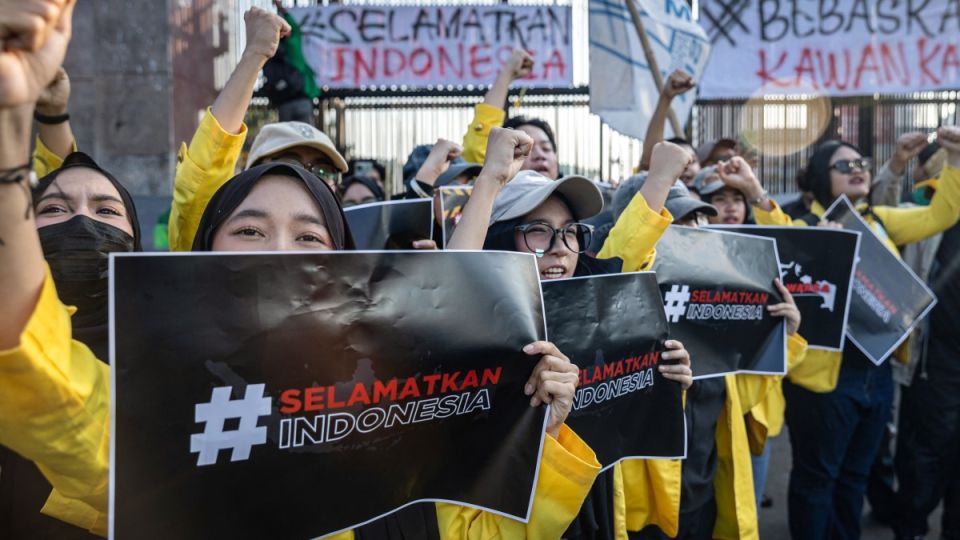
JAKARTA – From viral videos of a young man’s death to the rise of green and pink protest symbols, social media has emerged as the frontline in Indonesia’s recent nationwide demonstrations, amplifying calls for reform and exposing growing distrust in state authority.
What began in late August as student- and labor-led protests over lawmakers’ lavish allowances and growing economic inequality reached a tragic turning point on Aug. 28, when online motorcycle taxi (ojol) driver Affan Kurniawan, 21, was fatally run over by a police vehicle during a demonstration near the Senayan Legislative Complex in Central Jakarta.
Footage of the incident quickly spread like wildfire across social media platforms afterwards, igniting public outrage and triggering renewed calls for streets in protest against police brutality.
Rizal Nova Mujahid of big data consultancy Drone Emprit said content surrounding Affan’s death went viral on an unprecedented scale, drawing nearly 10 billion interactions within just 12 hours.
By comparison, a viral post last August that fueled mass demonstrations, an image of the Garuda Pancasila on a blue background stamped with the words ‘Peringatan Darurat’ (emergency warning), took a full week to reach the same level of engagement.
“I haven’t seen any content generate interaction on this scale. It’s no surprise it triggered demonstrations as massive as those we witnessed last week,” Rizal said on Wednesday.
Read also: President reshuffles cabinet after weeklong protest, replacing Sri Mulyani
On Aug. 29, a day after Affan’s death, protests erupted across Indonesia’s major cities, demanding police accountability. By the weekend, however, parts of the movement had spiraled into chaos, with public buildings set ablaze and the homes of several lawmakers, including then-finance minister Sri Mulyani, ransacked.
Heightened security measures ordered by President Prabowo Subianto, which involved the Indonesian Military (TNI), gradually restored order on city streets, particularly in the capital Jakarta.
But public anger quickly shifted online, giving rise to the so-called 17+8 movement. The numbers refer to 17 short-term demands, such as freezing legislative perks and improving budget transparency, and eight longer-term reforms, including independent audits of the House, police reform and the call for the TNI to “return to its barracks”.
The movement was symbolized by green and pink: green in tribute to Affan and reflecting the color of gig drivers’ jackets, and pink inspired by a viral image of a woman in a pink hijab defiantly waving the national flag in front of a police barricade outside the House complex.
Power in symbolism
Drone Emprit’s Rizal said the 17+8 campaign and its “brave pink” and “hero green” symbols drew 7.5 billion interactions on Indonesian social media between Aug. 30 and Sept. 4.
He noted that while symbols have long helped consolidate Indonesians’ aspirations, such as during the Emergency Warning and Dark Indonesia movements, the latter referring to February’s protests against Prabowo’s austerity measures to fund his flagship initiatives, the 17+8 movement stood out for its accessibility.
“Even people reluctant to post political content could still participate by changing their profile picture to green and pink,” he explained.
Echoing Rizal, Nuurrianti Jalli, an assistant professor at Oklahoma State University’s School of Media and Strategic Communications and an expert on media and digital governance in Southeast Asia, said symbols are as important as slogans because they provide a visual shorthand anyone can adopt.
“[The 17+8 demands and green-pink colors] are similar to Hong Kong’s black umbrellas or Thailand’s three-finger salute. This kind of branding doesn’t just make a movement visible, it expands its reach across demographics and geographies,” she told The Jakarta Post on Thursday.
Read also: Understanding the 17+8 Demands amid democratic decline
Battleground
While most people used online platforms to amplify positive calls for change, Nuurrianti said that social media remained a “battleground”, vulnerable to misinformation, hate speech, provocative content and government crackdowns, including arrests of vocal activists that could stifle freedom of expression.
“Social media becomes both the town square and the battlefield, where democracy plays out in real time, but also where it is policed and constrained,” she said.
Looking ahead, Nuurrianti expects the government to continue refining digital regulations without resorting to outright blackouts.
The challenge, she added, will be for citizens to use social media not only to coordinate protests but also as a catalyst for building broader, lasting coalitions capable of pressing for real reforms.
“The broader trend is toward treating digital communication as essential infrastructure: something governments feel compelled to regulate, but also something they must keep open enough to preserve legitimacy and democratic participation”.