

November 6, 2025
SEOUL – A joint fact sheet summarizing trade and security agreements between Seoul and Washington is expected to cite about $25 billion in US arms sales to South Korea, according to local reports Wednesday. The presidential office, responding to the reports, said the terms “have yet to be finalized.”
An official at President Lee Jae Myung’s office said on the condition of anonymity that the decisions will be made “based on the government’s review of its spending capacity and the security landscape.”
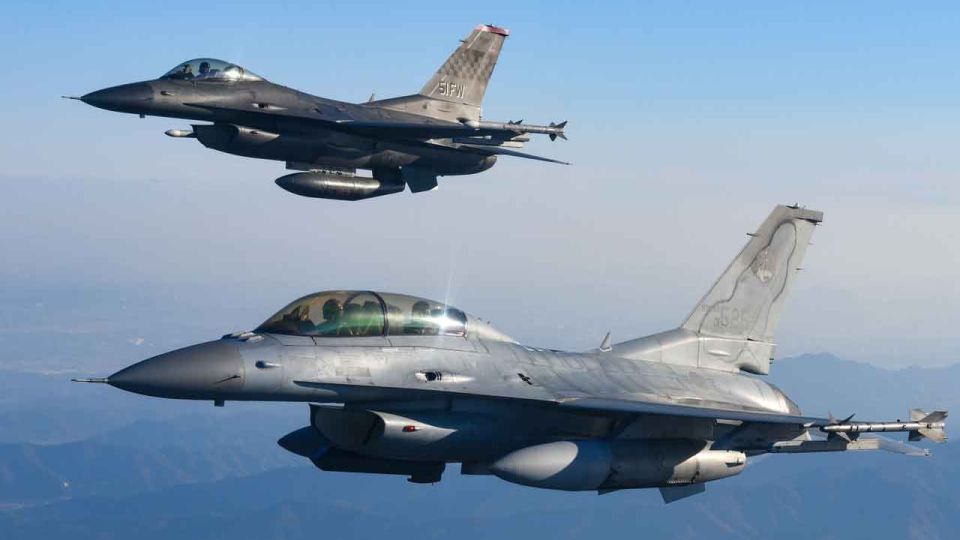
The remarks came amid media speculation about a $25 billion deal to purchase US defense equipment such as helicopters, fighter jets, airborne early warning and control aircraft, ballistic missile interceptors and others, by 2030.
Koo Yoon-cheol, who doubles as deputy prime minister and finance minister, said separately in a radio interview that the joint fact sheet on trade “was on the verge of completion,” while the sheet on security “was being coordinated.”
“Both fact sheets will be signed simultaneously once the terms of security are agreed upon,” Koo said.
As part of a $350 billion investment package in US projects, $200 billion will go to projects that are “commercially rational” and are determined “in good faith” by an investment committee led by US Secretary of Commerce Howard Lutnick. This is aimed at preventing any liquidity crunch in the projects, said Kim Yong-beom, chief presidential secretary for national policy, on Oct. 29.
Kim also said South Korea’s investment commitment in the US will have an annual investment ceiling of $20 billion to ensure stability in South Korea’s foreign exchange market, as Seoul has resisted US demands for an “upfront” cash investment in US projects.
The remaining $150 billion will go toward shipbuilding projects led by South Korean companies and comprise not only cash but also loans and guarantees.
In return, US imports of South Korea-made cars will be subject to a tariff of 15 percent, lower than the current 25 percent, in line with most other South Korean goods under the 15 percent “reciprocal tariff” imposed since Aug. 7, Kim said. He added that goods such as pharmaceuticals, lumber products, semiconductors, aircraft parts and generic drugs will receive most-favored nation treatment or be subject to lower tariff barriers.
Rival parties have maintained differing views over whether either a joint fact sheet or a memorandum of understanding over the details of the deal needs the parliament’s ratification.
Rep. Kim Byung-kee, floor leader of the ruling party, said in a party meeting on Wednesday at the National Assembly that he would work to secure parliamentary approval for the government’s special bill in November. The bill is expected to provide legal grounds for South Korea’s $350 billion investment in the US. Kim was appointed to lead the party’s special committee formed Wednesday to back legislative efforts on US deals.
Both Kim’s party and the presidential office have suggested that ratification would be unnecessary because neither the joint fact sheet nor the memorandum should be considered legally binding.
However, the main opposition People Power Party has claimed that any trade agreement between Seoul and Washington requires parliamentary ratification — a more formal procedure than passing a special bill — given that the agreements involve a tremendous “financial burden on South Koreans” and should be regarded like a treaty. According to the Constitution, a treaty with another country, such as a free trade agreement or defense cost-sharing agreement, must go through a ratification process.