

April 1, 2026
MANILA – As Lent calls Filipinos to prayer, sacrifice, and reflection, new global data suggest the country’s deepest divides may lie not in belief itself, but in how it is lived alongside others.
Drawing on data from the Pew Research Center, Dr. Rogelio Alicor Panao, an associate professor at the University of the Philippines Diliman and an Inquirer data scientist, described a nuanced picture of religious freedom in the Philippines: The state largely steps back, while society does not always follow suit.
A country of faith
The Philippines remains one of the most religious nations in the world, where faith is deeply woven into daily life.
According to the Philippine Statistics Authority’s 2020 census, the country’s population stood at 108.6 million, the vast majority identifying with a religion. Roman Catholics alone account for 85,645,362 Filipinos, or roughly four in five of the population.
Other major religious groups include:
- Islam: 6,981,710
- Iglesia ni Cristo: 2,806,524
- Various Protestant and evangelical groups numbering in the millions collectively
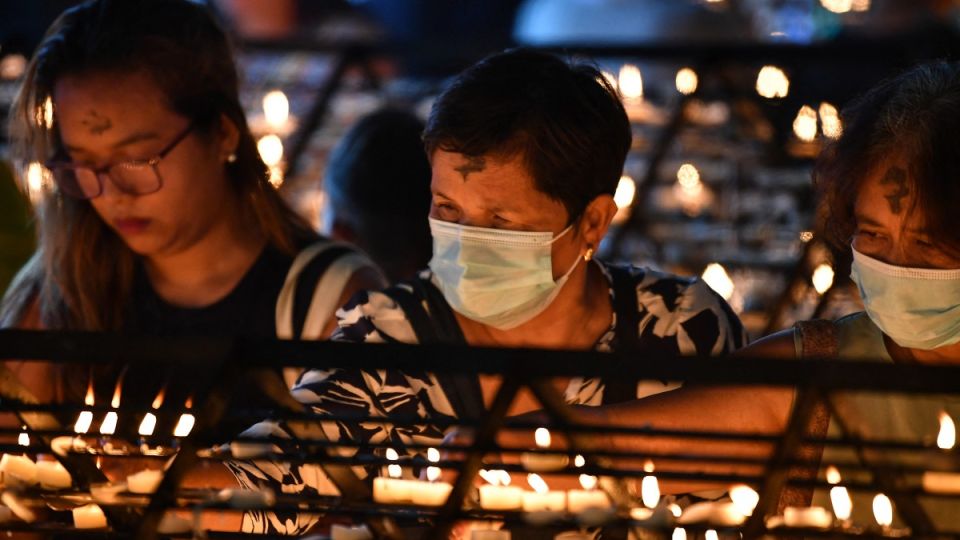
Expressions of religious practice are especially visible during Lent, a 40-day season marked by fasting, prayer, and public rituals.
In the Philippines, traditions such as the Pabasa, Senakulo, and Visita Iglesia continue to draw communities together, reflecting a time for “prayer, fasting, abstinence, and other acts of penance.”
But beneath this shared devotion lies a more complex reality.
Low state restrictions – but rising
Panao said that, by global standards, the Philippines performs relatively well in terms of government-imposed limits on religion.
“In the Philippines, government restriction remains relatively low but is gradually rising, from around 1.0 in the late 2000s to 2.87 in 2022,” he said.
These restrictions, measured by Pew’s Government Restrictions Index, include policies or actions that affect religious practice.
Panao said the increases are often tied to security concerns.
“These shifts often stem from state-level security measures, such as the surveillance of religious groups or administrative requirements to prevent extremism, which, unfortunately, may also interfere with the autonomy of worship,” he said.
This aligns with findings from the US Department of State’s 2023 International Religious Freedom Report, which noted that government security efforts have, at times, intersected with the work of religious groups.
“As part of the government’s campaign against groups pursuing violent opposition to the state […] the government pursued court cases against some religious workers who were identified by the government as communist members or sympathizers,” the State Department said.
The report also cited continued instances of “red-tagging,” or being labeled as affiliated with armed movements, including cases involving religious groups. It said this may expose individuals to risks such as intimidation or violence.
In February 2023, Caritas — the social action arm of the Catholic Bishops’ Conference of the Philippines — defended San Carlos Bishop Gerardo Alminaza after media outfit SMNI tagged Alminaza’s advocacy as “diabolical and demonic,” and labeled him as a “mouthpiece” of the Communist Party of the Philippines.
At the same time, the State Department report emphasized that legal protections for religious freedom remain in place, with the Constitution guaranteeing the free exercise of religion and prohibiting the establishment of a state religion.
It added that existing laws also set requirements for religious organizations, including registration processes tied to tax-exempt status, as well as provisions penalizing acts that “offend any race or religion.”
Persistent social hostility
If the state largely allows religious freedom, society tells a different story.
Panao pointed to consistently high levels of social hostility based on a separate Pew index that measures tensions among groups.
“More striking, however, is the persistence of social hostility. Scores have been consistently high for over a decade, reaching 5.0 in 2021,” he said.
These hostilities include harassment, intimidation, and even violence driven by religious differences.
“These levels point to recurring tensions driven by non-state actors, ranging from religion-related intimidation and the use of force to prevent certain practices, to more severe communal or sectarian conflict,” he said.
Recent incidents echo these findings.
In 2023, a bombing during a Catholic Mass in Mindanao killed four people and injured more than 50 others, an incident the US State Department linked to an ISIS-affiliated group.
Online spaces have also reflected these tensions. The State Department reported that “social media comments denigrating the beliefs or practices of Muslims continued to appear” during the year, pointing to persistent forms of hostility beyond physical attacks.
Freedom on paper, friction in practice
Despite these tensions, the Philippines maintains strong legal protections for religious freedom.
The Constitution guarantees the free exercise of religion and upholds the separation of church and state — a principle that Panao said remains largely intact.
“In sum, the state has largely respected the separation of church and state, and opted out of restricting faith,” he said.
Yet, Panao said, the challenge lies beyond laws and institutions.
“But the country’s complex ethnic and cultural landscape continues to experience friction that has yet to be resolved,” he said.
In regions such as Mindanao, where religious identity intersects with ethnicity and historical factors, tensions have at times come into sharper focus.
Beyond ritual, toward reconciliation
For Panao, the data offer a sobering reflection, especially during a season meant for spiritual renewal.
“If anything, these figures suggest that the path to lasting peace in the Philippines requires more than proselytizing or hollow ritual,” he said. “Besides the spiritual, perhaps the healing we need may also be found in addressing the historical and social grievances that continue to divide us as a people.”
As millions of Filipinos observe Lent, the data highlight ongoing challenges related to religious diversity and coexistence. These reflect broader, continuing questions about the state of religious freedom in the country. /dm