

July 1, 2026
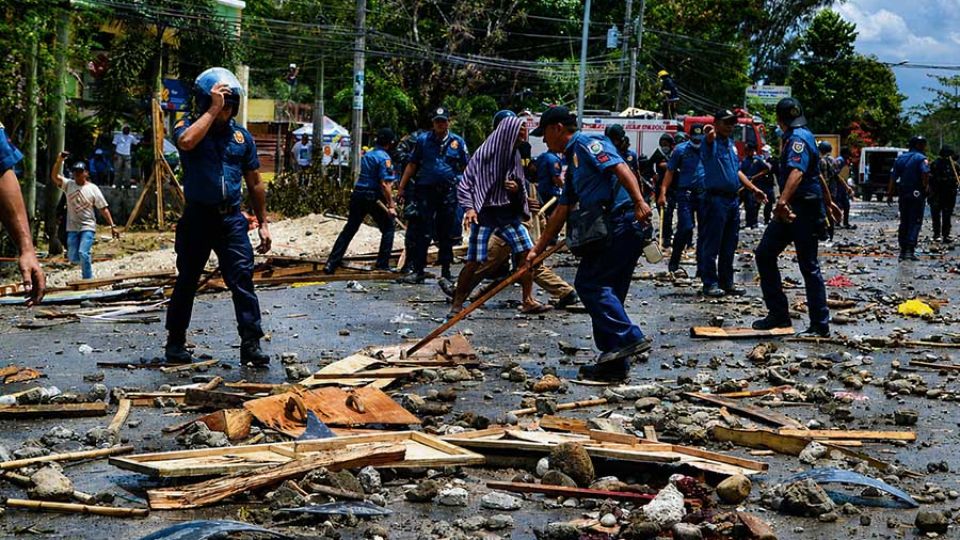
MANILA – The 2016 Kidapawan bloodshed remains a defining moment in Philippine history, exposing the fragility of governance when confronted with climate shocks and food insecurity.
As the country braces for the 2026-2027 Super El Niño, the lessons of Kidapawan are more urgent than ever. Famine is not a natural calamity but a governance failure, and climate shocks act as systemic stressors that destabilize economies, livelihoods and political institutions.
The tragedy revealed that farmers, mostly tenants trapped in debt-driven poverty, exploitative landlord-sharing schemes and market cartels, face chronic food insecurity. Many also have large families, perpetuating generational cycles of deprivation.
Food insecurity is always in their midst. When amplified by climate shocks, it becomes a driver of instability and political violence.
The cumulative socioeconomic impact could exceed P300 billion, equivalent to 1.5 percent to 2 percent of gross domestic product. Such losses ripple across society. Rural employment declines, households face lower incomes, urban consumers confront rising food prices, and the state struggles with fiscal deficits. The social contract between government and citizens is strained, and the risk of unrest grows.
Preventing unrest requires transparent relief distribution, social protection for farmers, inclusive dialogue mechanisms and rapid response systems. Governance reform is not merely about efficiency but also about national security.
Recent insights and pathways for resilience include dietary diversification, buffer stock expansion, cooperative empowerment, water infrastructure investment and Asean benchmarking.
A crisis years in the making
The Philippines today faces multiple but deeply interrelated challenges that converge into a systemic crisis: climate shocks such as the looming Super El Niño, which are eroding agricultural yields and water security; economic fragility, amplified by peso depreciation, rising oil and fertilizer costs, and a debt-to-GDP ratio exceeding 65 percent; governance failures, including corruption, misuse of public funds, weak disaster preparedness and overcentralized rice-centric food strategies; and social vulnerabilities seen in farmer disempowerment, nutritional imbalance from excessive rice dependence, and the heightened risk of unrest seen in the 2016 Kidapawan tragedy.
These pressures are further compounded by global shocks, volatile energy markets, geopolitical conflicts and declining rice exports from Thailand and Vietnam, making import dependence unsustainable.
Taken together, these interlocking crises form a polycrisis in which climate, economic, governance and geopolitical stresses reinforce one another, threatening food security, social stability and national resilience.
The threat of the 2026-2027 Super El Niño underscores the fragility of Philippine food systems and the urgency of decisive governance reforms. Famine is not merely a natural calamity. It is a political and governance failure.
The tragic events of April 1, 2016, in Kidapawan City, where protesting tenant farmers demanding rice aid were met with lethal force, remain a stark reminder of how climate shocks can escalate into social unrest when institutions fail to protect vulnerable populations.
Unless structural reforms are enacted, the specter of Kidapawan could return in new forms: silent famines, rural displacement and widespread social instability.
The warning from Kidapawan
The Kidapawan incident occurred during the 2015-2016 El Niño, one of the strongest on record. Severe drought devastated agricultural production in Mindanao, leaving thousands of tenant farmers destitute.
These farmers, tied to a debt-driven existence and exploitative landlord-sharing schemes, were already living on the margins. When government relief proved inadequate, they staged a protest demanding rice aid. The confrontation escalated into violence, resulting in deaths, injuries and arrests (Quimpo, 2016).
The tragedy revealed three systemic failures: weak disaster preparedness and relief mechanisms, poor communication and trust between farmers and government, and overreliance on rice-centric food security strategies.
It also exposed the structural vulnerability of tenant farmers, whose families often have many children and remain trapped in generational poverty, tilling the soil as their parents did.
When climate shocks hit the food system
El Niño events are cyclical but increasingly severe due to climate change. The Philippines, situated in the Pacific typhoon belt, is highly vulnerable to both droughts and floods.
Super El Niño episodes disrupt rainfall patterns, reduce water availability and devastate staple crop yields (FAO, 2016). Fisheries and livestock sectors also suffer, compounding food insecurity.
The 2026-2027 Super El Niño is already manifesting in insufficient rains for puddled rice planting, reduced fruiting of trees and declining fish catches. These shocks translate into consumer price increases of 15 percent to 25 percent, employment losses of 160,000 to 200,000, declines in household protein intake by 15 percent to 20 percent, and a 20 percent to 30 percent rise in import dependence.
For tenant farmers, climate shocks are catastrophic. Already burdened by debt and exploitative sharing schemes, they lack the buffers to withstand crop failures. Food insecurity is constant, and climate shocks amplify this risk, pushing families deeper into poverty and heightening the potential for unrest.
Why hunger becomes a governance crisis
Famines are rarely caused by absolute food scarcity. They are products of governance failures.
Amartya Sen’s entitlement theory emphasizes that famines occur when people lose access to food rather than when food is unavailable (Sen, 1981).
In the Philippines, governance failures manifest in corruption and inefficiency in relief distribution, debt-driven fiscal constraints limiting social protection, overcentralized food security strategies in rice, and weak farmer cooperatives.
Tenant farmers are the most vulnerable to these failures. Their dependence on landlords and market cartels leaves them disempowered in value chains. Relief systems often bypass them, and social protection is minimal.
The Kidapawan bloodshed exemplified how governance failures transform climate shocks into political crises. Farmers were not merely victims of drought. They were victims of institutional neglect and structural exploitation.
What must change before the next shock
The lessons of 2016 must guide policy now.
Food security must be diversified, relief must be timely and transparent, dialogue must replace confrontation, and governance must be decentralized. Most importantly, tenant farmers must be empowered through cooperatives and social protection systems to break the cycle of debt and generational poverty.
Without these reforms, the Philippines risks repeating Kidapawan in new forms: silent famines, rural displacement and social unrest.
The following strategies are critical: dietary diversification, buffer stock expansion, farmer empowerment through cooperatives, water infrastructure and climate adaptation, regional diplomacy and Asean benchmarking.
Filipinos consume approximately 119 kilograms of rice per capita annually, far above the recommended 90 kg to 95 kg. Excessive rice dependence contributes to dietary imbalances and rising cases of type 2 diabetes.
Policy must promote brown rice consumption, vegetable intake and root crops and maize as alternative caloric sources. Vegetable intake is currently only 40 kg a year per capita, far below the World Health Organization recommendation of 130 kg a year.
Earlier, the proposal was a 40-60 Food Mix Model: rice capped at 40 percent of caloric intake and diversified crops at 60 percent. This requires mobilizing 8 million hectares of agricultural land, including idle and marginal lands, plus urban farming.
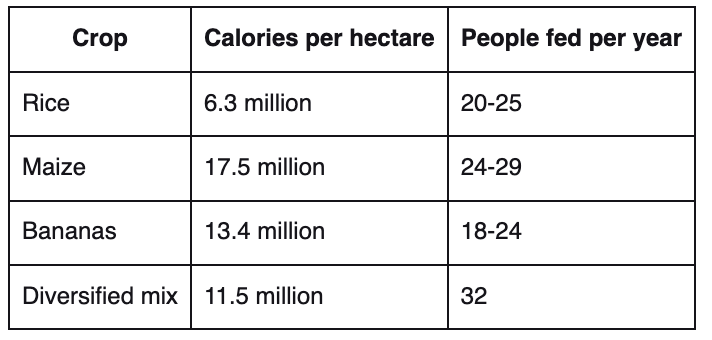
The National Food Authority must expand buffer stocks beyond rice to include maize and root crops. This reduces vulnerability to import shocks and stabilizes prices during climate crises.
Putting farmers at the center
Federated cooperatives can reduce middleman dominance, improve bargaining power and ensure fair distribution of relief. Cooperative economics strengthens resilience by decentralizing food governance.
Investment in irrigation, rainwater harvesting and drought-resistant crop varieties is essential. Climate adaptation must be mainstreamed into agricultural policy.
Food security is a regional issue. Asean cooperation on buffer stocks, trade facilitation and climate adaptation can reduce vulnerability to global market fluctuations.
The cost of another Super El Niño
Ex-ante calculations showed that the ongoing Super El Niño is projected to cause P150 billion to P200 billion in agricultural losses, P80 billion to P100 billion in lost wages due to employment decline, P50 billion to P70 billion in increased food import costs, and P30 billion to P40 billion in health care costs due to malnutrition and metabolic illness.
These figures underscore that climate shocks are not merely agricultural problems but systemic economic crises. The cumulative socioeconomic impact could exceed P300 billion, equivalent to 1.5 percent to 2 percent of GDP.
Such losses ripple across society. Rural employment declines, households face declining incomes, urban consumers confront rising food prices, and the state struggles with fiscal deficits. The social contract between government and citizens is strained, and the risk of unrest grows.
For tenant farmers, these losses are existential. Already living in debt-driven poverty, they face collapsing incomes, rising food prices and worsening malnutrition. Large families are particularly vulnerable, perpetuating cycles of deprivation.
Global shocks, including oil price volatility and declining rice exports from Thailand and Vietnam, further undermine their survival.
Food security as national security
The Kidapawan tragedy revealed that food insecurity can escalate into political violence.
Tenant farmers, trapped in debt cycles and exploitative sharing schemes, are at the heart of this risk. Preventing unrest requires transparent relief distribution, robust social protection for farmers, inclusive dialogue mechanisms and rapid response systems to anticipate and mitigate shocks.
Governance reform must therefore be understood not only as a matter of efficiency but also as a matter of national security.
The choice before the Philippines
The looming Super El Niño is a test of Philippine resilience. The lesson of Kidapawan is clear: famine is not a natural calamity but a governance failure.
Climate shocks will continue, but their human toll depends on how swiftly the nation acts to protect its farmers and secure its food systems.
The Kidapawan tragedy revealed that food insecurity can escalate into political violence, especially among tenant farmers bound to a debt-driven existence, exploitative landlord-sharing schemes and market cartels. These families, often with many children, remain trapped in generational poverty, tilling the soil as their parents did, with food insecurity always in their midst.
When climate shocks strike, this vulnerability becomes combustible, amplifying the risk of unrest.
Preventing such crises requires transparent relief distribution, robust social protection for farmers, inclusive dialogue mechanisms and rapid response systems to anticipate and mitigate shocks. Governance reform must therefore be understood not only as a matter of efficiency but also as a matter of national security.
By embedding caloric yield data and global shock analysis, the case for reform becomes stronger: rice dependence must be capped at 40 percent, diversified crops must supply 60 percent, and governance must evolve to prevent unrest.
The Philippines cannot afford another Kidapawan, whether in the form of violent protest, silent famine or systemic collapse. Only decisive reforms in food systems, farmer empowerment and governance can forestall a repeat of 2016 and ensure resilience against the converging crises of climate, poverty and geopolitical shocks. /dm
Dr Danilo Josue, Ph.D., was former vice chancellor for research, extension and development and retired professor 6 in agronomy and farming systems at Mindanao State University-Maguindanao.
Dr Teodoro C. Mendoza, Ph.D., is a retired professor and University of the Philippines scientist at the Institute of Crop Science, University of the Philippines Los Baños.