

February 6, 2026
THIMPHU – After a devastating fire season in late 2024 and early 2025 that left large swathes of forest charred and communities on edge, the country’s forests are breathing a cautious sigh of relief this winter.
The Department of Forests and Park Services (DoFPS) has confirmed a notable decline in forest fire incidents this season, both in number and severity, compared to the same period last year.
During the peak fire months between November 2024 and March 2025, about 50 forest fire cases were recorded nationwide, with an estimated 12,000 acres damaged. While still significant, this marks a sharp reduction from last year, when uncontrolled fires burned extensively in western Bhutan, particularly in Paro.
“The number of reported cases is lower, the total area burned is significantly reduced, and the severity of outbreaks has been less destructive,” a DoFPS official said, adding that the decline was confirmed by satellite monitoring and field verification, not underreporting.
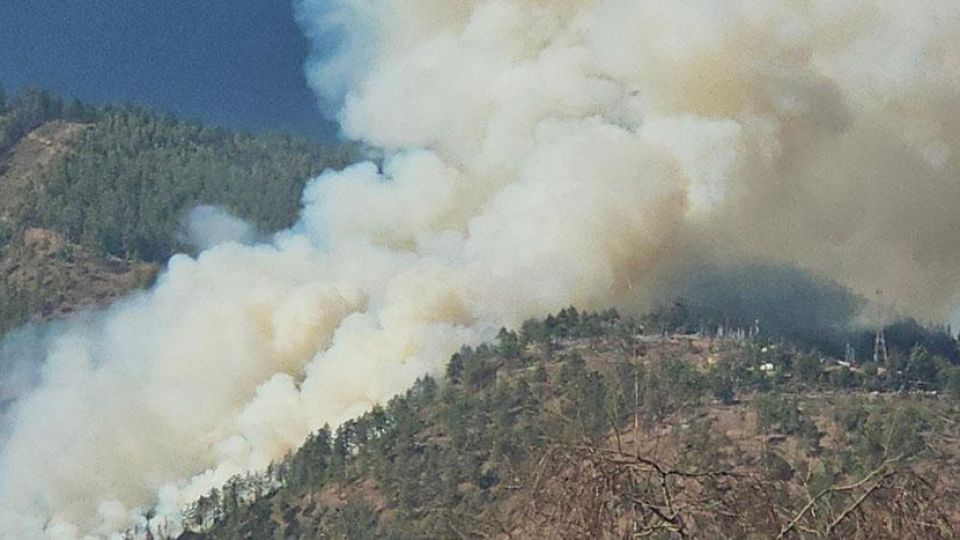
This season, major outbreaks were reported in Wangdue, while fires in Thimphu’s Sangaygang and in Trashigang were contained more quickly.
Except for the recent Wangdue fires, prolonged and large-scale fires common last year have largely been avoided.
The improvement comes against a sobering backdrop.
Between 2020 and 2024, the country recorded 261 forest fire incidents that burned about 70,696 acres of forest.
Over the same period, forest cover declined from 2.73 million hectares (71.13 percent) recorded during the first National Forest Inventory conducted between 2012–2015 to 2.67 million hectares (69.71 percent) in 2023, according to the National Forest Inventory Volume II: State of Forest Carbon Report.
Fire remains a key driver of this loss.
DoFPS attributes this season’s relative success to strengthened prevention efforts, particularly aggressive awareness campaigns and a renewed emphasis on fines and penalties.
Officials said they used all available media platforms such as television, radio, and social media to reach wider audiences, while field staff conducted door-to-door campaigns and consultative meetings in fire-prone gewogs.
Preventive measures have also been scaled up on the ground.
Fire lines were established in high-risk zones, especially around monuments and lhakhangs in Thimphu and Paro. Patrolling was intensified, with foresters deployed at strategic locations even during public holidays and religious ceremonies.
Inter-agency coordination has also been reinforced through the Inter-Agency Firefighting Coordination Group, which brings together the police, armed forces, local governments, and other stakeholders for rapid response.
In Thimphu, the mechanism has been in place since 2019, while community engagement continues through regular awareness programmes.
Yet officials acknowledge that enforcement has historically lagged behind the scale of destruction.
Between 2020 and 2024, Bhutan recorded 284 forest fire cases that burned over 33,166 hectares, but only 55 cases were apprehended.
Fines collected during that period amounted to Nu 917,292, a modest sum relative to the damage caused. However, low apprehension rates and inconsistent follow-through weakened the deterrent effect.
In response, stricter measures were introduced under Section 339B of the Forest and Nature Conservation Rules and Regulations (FNCRR) 2023, significantly increasing fines, restoration costs, and suppression charges to strengthen accountability.
This season also brought renewed attention to the balance between enforcement and compassion.
In the Sangaygang fire case, involving a minor, DoFPS confirmed that penalties would be processed under the FNCRR 2023 and enforced through parents or guardians.
The department said it aims to combine deterrence with restorative justice, including sapling plantation and reforestation, while upholding child protection principles.
Looking ahead, DoFPS plans to further strengthen its response capacity.
Specialised fire extinguishers are set to be deployed in the five most fire-prone dzongkhags – Thimphu, Paro, Wangduephodrang, Mongar, and Trashigang, once implementation modalities are finalised.
If the pilot proves effective, the department plans to procure a larger disaster stock for future fire seasons. CCTV cameras are also being installed in Thimphu as a pilot initiative for early detection and deterrence.
While the reduced fire incidents this season offer some reassurance, officials caution against complacency, with forest cover already under pressure and climate variability intensifying fire risks.