

January 20, 2026
SEOUL – The short-lived pilot program to bring Filipino domestic caregivers into Korean households in the capital left workers earning just half the national average and performing tasks that went beyond their contracted duties, according to a new study.
“The policy was built around securing inexpensive labor rather than recognizing care as skilled work,” said Lee Mi-ae, a professor at Jeju National University’s Research Institute for the Tamla Culture and author of the study.
She said caregivers were treated as replaceable labor rather than rights-bearing workers, despite being recruited through a government program.
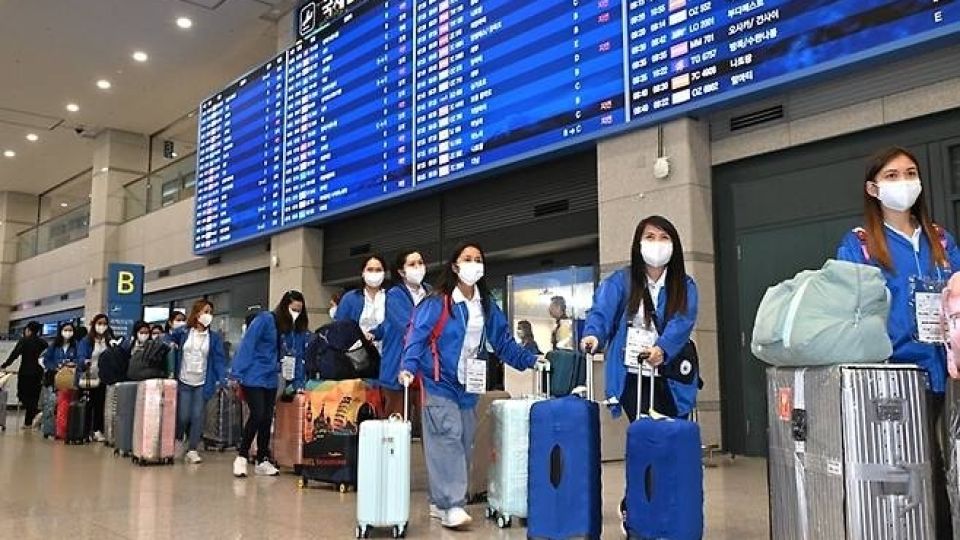
Launched in 2024 by the Seoul Metropolitan Government and the Labor Ministry, the pilot brought 100 Filipino caregivers to Korea in an effort to make child care more affordable, ease labor shortages and reduce women’s career breaks.
But officials later decided not to expand it into a full program, and the scheme was scrapped after just a year — a move critics say reflected rushed planning, a lack of public consensus, and a failure to meet its aim of providing affordable care.
The study, published in the Korean Journal of Immigration Policy & Administration, analyzed surveys and interviews with 21 Filipino caregivers in their 20s and 30s conducted in April and May last year.
It found that during the first six months of the program, workers earned an average 1.92 million won ($1,300) per month before tax, equivalent to 51 percent of Korea’s average monthly wage in 2024.
Housing was provided, but workers faced monthly deductions of up to 520,000 won to pay for it.
After tax, insurance and other deductions, average take-home pay fell to about 1.18 million won. Some workers took home less than 1 million won.
Researchers said large, mandatory deductions were a key reason net pay dropped so sharply.
Base hourly wages were set well below those of Korean caregivers and hours were shorter — most participants worked a 30-hour week — limiting overall earnings.
Hourly wages averaged 9,860 won, about 27 to 35 percent lower than rates typically paid to Korean child care helpers and domestic workers, though as employees their national insurance charges would have been lower than self-employed providers.
Caregivers also reported what the study described as “task expansion,” saying they were frequently asked to clean homes, wash dishes, care for pets or tutor children in English — duties beyond the child care role they were hired for.
Although the workers were officially employed under a government scheme, their visas were tied to their employers, making job changes difficult and leaving them in a vulnerable position, the study said.
Lee noted that this mirrored earlier patterns seen among ethnic Korean caregivers from China, whose limited labor mobility exposed them to exploitation.
Lee urged policymakers to allow caregivers to retain residency when changing employers, guarantee core labor rights and formally recognize the economic value of domestic and care work.
“Without moving beyond the low-wage framing, Korea risks repeating the same cycle,” she wrote, calling for a system that pairs quality care with decent jobs.