

February 3, 2026
JAKARTA – Five years after the military coup that dismantled democracy and triggered instability in Myanmar, ASEAN has yet to make headway in resolving its dilemma on the conflict, with the latest regional meeting again exposing divisions among member states on the issue.
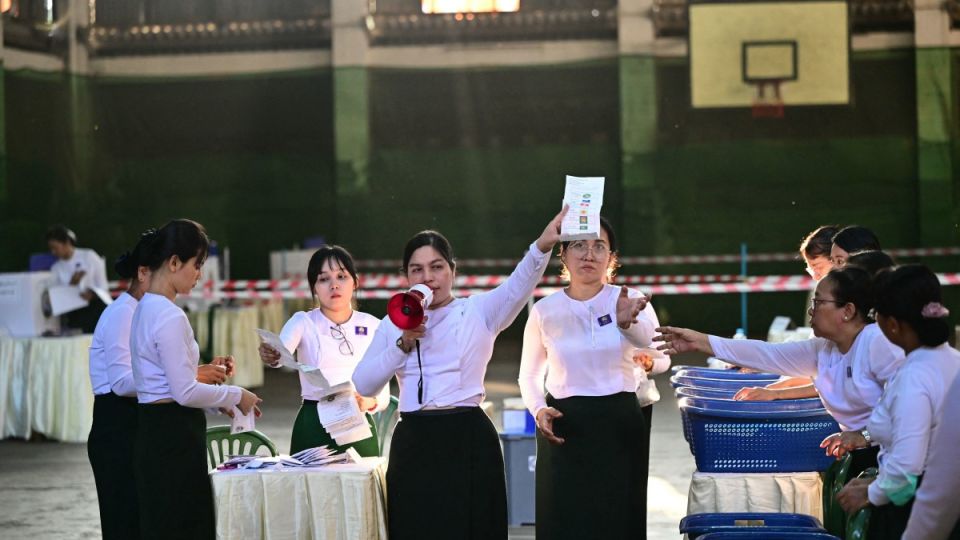
Myanmar just had its first general election, five years after the military overturned the elected civilian government. The election was widely criticized, as it was held amid the exclusion of major opposition parties, tight curbs on dissent and escalating armed fighting.
The poll was later followed by an extension of state of emergency in 63 townships that was first imposed in July 2025, as reported by The Irrawaddy.
The latest developments may mark the start of a more dangerous phase in Myanmar, analysts said, that is marked by hardening resistance by the junta while further entrenching the instability that has strained the country’s political order and regional diplomacy.
“As the junta seek to reassert control over the country, resistance by anti-junta, pro-democracy groups may persist in some regions, with a potential to escalate into civil wars,” said Jakarta-based Centre for Strategic and International Studies (CSIS) researcher Lina Alexandra.
“If a larger conflict erupts, there could be war in our own backyard. This remains an unresolved regional crisis.”
Hope for progress in the crisis resolution was raised as ASEAN top diplomats gathered in Cebu, the Philippines, last week for the first Foreign Ministers’ Meeting under Philippine chairmanship. The Myanmar crisis took center stage during an extended informal consultation on the implementation of the Five-Point Consensus and the retreat session.
But optimism quickly faded after Thursday’s retreat, when Philippine Foreign Minister Theresa Lazaro, who was appointed as this year’s Myanmar special envoy, said ASEAN ministers had failed to reach a consensus on whether to endorse the election results, even as some member states continued to review the poll outcome.
“It’s not an expression of support, but with a view that these elections might be something positive,” Lazaro said on the issue of some member states reviewing the poll results, as quoted by Reuters.
Divisions laid bare
With the Cebu talks falling short of progress on the Myanmar crisis, experts say the bloc has been exposed as fatigued, divided and increasingly uncertain about its diplomatic capacity.
While limited by its strict adherence to noninterference and consensus-based decision-making, CSIS researcher Lina noted ASEAN has been further weakened by a lack of unity and inconsistent engagement among member states, signaling waning political interest and the failure to sustain momentum that led to the adoption of the Five-Point Consensus in 2021.
Signed by all ASEAN members and Myanmar’s junta in 2021, the Five-Point Consensus called for the immediate cessation of violence, constructive dialogue among all parties, appointment and engagement of a special envoy as well as humanitarian assistance. But it has for years fallen short of securing meaningful compliance from the junta.
“Increasingly clueless about what it can do next, ASEAN seems to be fatigued with the issue,” Lina said. “While some members, such as Malaysia, continue to voice their objections, others have gradually fallen silent. The lack of unity is unfortunate.”
Malaysia, which chaired the bloc last year, has been among the more vocal critics of Myanmar’s military-led government. Malaysian Foreign Minister Mohamad Hasan said ahead of the Cebu talks conditions surrounding the country’s voting process do not meet the threshold for a credible election.
Some other member states, however, have taken a more pragmatic view of the election.
Thai Foreign Minister Sihasak Phuangketkeow told reporters that the elections could improve engagement with the junta, as long as it agrees to certain conditions including expanded humanitarian access and reduced violent attacks on resistance groups.
“We think that we have to engage with the regime in Nay Pyi Taw, the new one. They’re going to form a government probably in March,” Sihasak said as quoted by Reuters.
Dewi Fortuna Anwar, senior ASEAN researcher at the National Research and Innovation Agency (BRIN), cautioned against actions that could lend legitimacy to the election. Treating the vote as a normal political process would only serve to embolden the junta, she warned.
“What the junta hopes with this election is that people would forget how unfree and unfair it all is; that they will think Myanmar is back to normal,” Dewi said, noting the junta’s continued atrocities and denial of humanitarian access.
“That’s all [the junta] care about: being recognized.”