

January 6, 2026
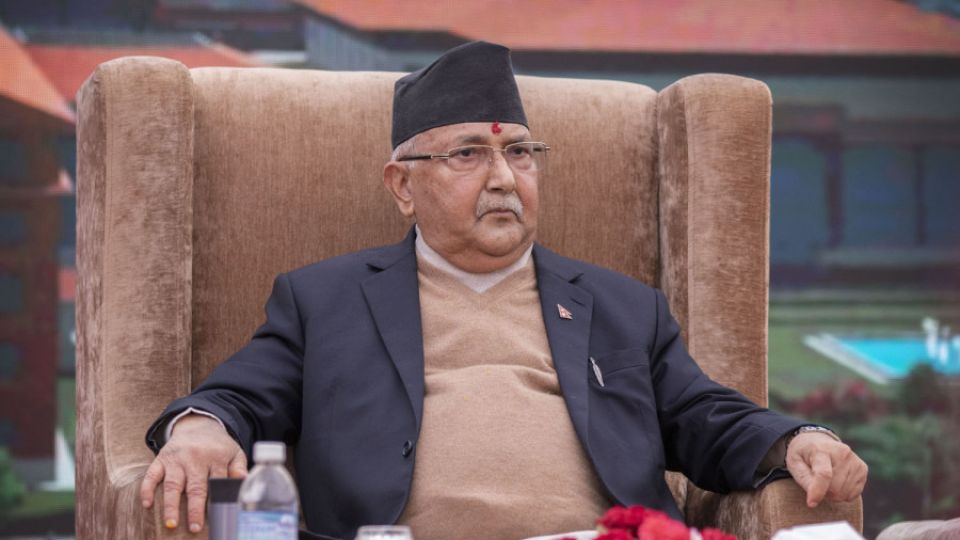
KATHMANDU – Nearly four months after the deadly Gen Z-led protests, CPN-UML chief KP Sharma Oli, who was prime minister at the time, recorded his statements before the Gauri Bahadur Karki-led inquiry panel as well as the National Human Rights Commission on the same day on Sunday.
Oli, who had been discrediting the Karki panel saying it is biased, submitted his written statement when a team reached his Gundu-based residence to serve him a notice to appear for questioning.
Six days after recording the statement of the then home minister Ramesh Lekhak, the inquiry commission on Sunday had decided to summon Oli. Lekhak and Oli were the last persons to be quizzed by the Karki panel and the human rights commission.
“We have received the written statement of the former prime minister. The team, which visited his residence to hand over the summons, got his written statement,” Bigyan Raj Sharma, a member of the panel, told the Post. Oli wished to record his written statement immediately after receiving the summons.
Oli had reached the constitutional human rights commission right after giving his written statement to the Karki-led inquiry. A five-member team led by its member Lily Thapa had asked around three dozen questions on the use of force that killed 19 youths on the first day of the protest on September 8, and on the subsequent violence in the following day. The death toll from the two days of protests has reached 77.
“The question-answer session lasted two and a half hours. He answered all the questions,” Thapa told the Post. “We posed questions regarding his role as the head of the government and chairperson of the National Security Council during the two-day protests that led to huge loss of life and property.”
As per an official involved in recording the statement, Oli said he appeared before the commission out of respect for human rights and his high regard for the commission.
“He claimed that he stands for a fair inquiry conducted in the right manner,” said the official. Oli, however, denied personal involvement in ordering the police force to open fire on the first day of protest. Oli said the prime minister does not issue orders to the police, according to the official.
Oli had assured that he would appear before the human rights commission on Friday. However, he did not show up that day citing poor health. “Today [Sunday] he, accompanied by several leaders, arrived at 4 pm, the exact time he had pledged. However, no one else was allowed inside the room during the question-answer session,” said the official.
The constitutional human rights watchdog has been investigating the loss of life on the first day of the protest on September 8 and the unprecedented property destruction on the second day on September 9.
In its preliminary investigation, the commission blamed the government’s failure to anticipate the intensity of the Gen Z demonstrations, as well as the declining morale of security agencies, for the huge loss of life and property.
In a brief report made public on September 26, the commission had said that the first half of the first day of the protest on September 8 was peaceful. “Incidents of arson, followed by the deaths of protesters in police shootings later in the day, resulted in [further] violence. Monitoring revealed that the deaths caused by police firing on the first day led to indiscriminate arson and vandalism on the second day,” read its preliminary report. “The government’s inability to assess possible causes that could have led to such incidents reflects a serious weakness. The decline in the morale of security personnel after the incident has created further challenges in the maintenance of law and order.”
Thapa said they have recorded statements of 78 officials and political leadership who were in the government during the protest. Along with Oli, it has recorded the statement of Lekhak, then foreign minister Arzu Rana Deuba, information and communications minister Prithvi Subba Gurung, then chiefs of Nepal Police and Armed Police Force, Nepal Army generals, among others. It also talked to other stakeholders including victims.
“The commission will come up with a comprehensive report in the next 15 days,” said Thapa.
The Karki-led panel is also in the final phase of concluding the investigation. Sharma said that with Oli submitting the written statement, they will take a necessary decision regarding restrictions on his movement.
The inquiry commission barred Oli and Lekhak, among other officials, from leaving the Kathmandu Valley.
Similar restrictions on Lekhak and other officials were lifted right after they recorded their statements.
“We will take a necessary decision in a day or two,” said Sharma. Oli and his party, CPN-UML, have been raising questions about how elections can be held while there are restrictions on the movement of the chair of one of the country’s largest parties.
The extended tenure of the panel expires on January 24.