

May 26, 2026
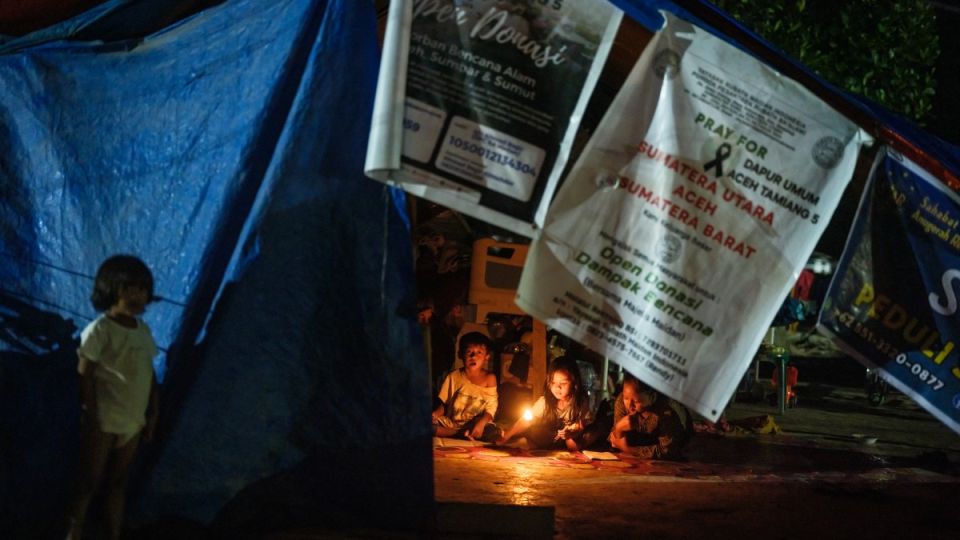
MEDAN – At least four people were killed, and three others hospitalized from suspected carbon monoxide poisoning during the widespread blackout that plunged nearly all of Sumatra into darkness over the weekend, as businesses across the island grappled with heavy losses caused by the massive power disruption.
One of the fatal incidents occurred in Air Putih district, Batu Bara regency, North Sumatra, where two employees of a mobile phone accessory shop were found dead and two others unconscious inside the shop where they worked and lived on Saturday morning.
Air Putih Police Chief Adj. Comr. Rahmat Hutagaol said the victims were discovered after the shop owner repeatedly failed to contact the employees.
“The shop owner then asked the store supervisor to check on the workers. When the supervisor arrived, the shop was locked from the inside,” Rahmat said on Sunday.
“The supervisor later sought help from nearby residents to force open the door and after the door was broken down, residents found the four employees lying on the floor inside a room,” he added.
The two victims were pronounced dead at the scene, while the other two were found in critical condition but still breathing. The surviving victims were rushed to Bidadari Hospital in Batu Bara regency, where they remain under intensive treatment.
Rahmat said authorities are still investigating the exact cause of death, but preliminary findings suggest the victims were exposed to a lethal level of carbon monoxide emitted by a gasoline-powered generator that had been switched on inside the shop after the blackout struck Sumatra on Friday night.
The second incident occurred in X Koto district, Tanah Datar regency, West Sumatra, where two students died and another was left in critical condition after allegedly inhaling carbon monoxide fumes from a mosque generator during the prolonged blackout.
X Koto Police Chief Insp. Martheriko said the incident began after five students gathered at a mosque near their homes on Friday night to charge their mobile phones using a generator amid the widespread blackout.
“The students obtained permission to switch on the generator, which had been placed inside the mosque’s secretariat room, at around 9 p.m. local time,” Martheriko said.
He said all five students initially remained together in the room, but two later chose to return home. The remaining three stayed overnight inside the room, which was tightly enclosed and had limited ventilation, allowing carbon monoxide from the running generator to gradually accumulate throughout the night.
“The victims were unaware of the dangers posed by generator exhaust fumes in a confined space without adequate air circulation,” he said.
At around 5:30 a.m. the following morning, the three students were found unconscious by the mother of one of the victims, who had gone to the mosque to wake them up.
Local residents immediately rushed the victims to Ibnu Sina Yarsi Islamic Hospital in Padang Panjang, where two of the students were pronounced dead on arrival.
The surviving victim remains in critical condition and is undergoing intensive treatment, Martheriko added.
A massive blackout hit nearly all parts of Sumatra on Friday at 6:44 p.m., affecting North Sumatra, Aceh, West Sumatra, Riau, Jambi, and South Sumatra. In some areas, the disruption lasted up to 28 hours.
According to state-owned electricity utility PLN, 176 main substations and 543 distribution substations were affected, cutting around 5,334 megawatts of electricity supply and disrupting service for approximately 13.1 million customers.
Authorities said the blackout was triggered by a disturbance in PLN’s main transmission network in Merangin, Jambi, after it was struck by lightning.
The incident destabilized Sumatra’s interconnected power system, creating a sudden imbalance between electricity supply and demand across the grid. This resulted in oversupply in some areas and shortages in others, which caused fluctuations in system frequency and voltage and triggered automatic shutdowns of power plants, leading to cascading outages across multiple regions.
Energy and Mineral Resources Deputy Minister Yuliot Tanjung said Sumatra’s northern grid is heavily dependent on electricity supplied from the southern part of the island. When the disturbance occurred in areas such as Jambi, the imbalance quickly spread through the interconnected system, resulting in a widespread blackout.
“Restoration efforts took time because the system had to be restarted gradually and in stages. The government and PT PLN prioritized reactivating power sources that could be brought back online more quickly, including hydroelectric, geothermal, diesel and gas-fired plants. Coal-fired power plants, however, required a longer recovery period of around 12 hours before they could resume operation,” he said on Monday as quoted by Kompas.com.
PLN claimed that electricity had been fully restored across Sumatra by Sunday. However, residents reported that blackouts persisted in several areas, while others experienced renewed outages shortly after power had been restored.
Irfan, a resident of Jalan Gajah Mada in Medan, North Sumatra said electricity in his neighborhood had only returned to normal for one day before going out again. He said the latest outage occurred at around 8:30 a.m. on Monday.
“I have reported the blackout to PLN officers because there are many public facilities in this area, including hospitals and hotels,” Irfan told The Jakarta Post.
The prolonged electricity disruption has also led to significant losses for businesses across Sumatra.
Muslim, a poultry farmer in Perbaungan, Deli Serdang regency, North Sumatra, said the outage had caused ventilation and cooling systems in his poultry houses to stop working, causing hundreds of chickens to die.
“Electricity was out for 28 hours straight in our area, and it is essential for poultry farming. Many chickens died because of the power outage,” he said on Monday.
Muslim said he was relatively fortunate compared to other farmers who suffered losses reaching hundreds of millions of rupiah. His own losses were estimated at around Rp 20 million (US$1,127) after about 500 chickens died in a single day.
In Medan, several eateries that depend on electricity for cooking and food processing were forced to halt operations or continue under severe limitations.
Mareva, a restaurant operator on Jalan Tempuling, Medan, said her business is heavily dependent on electricity for cooking rice, grinding spices and other food preparation, as well as for preserving ingredients in refrigerators.
“The impact of this blackout has been severe. The power has been out for more than 15 hours straight. We couldn’t cook, and many food ingredients were spoiled,” said Mareva on Saturday as quoted by Kompas.id.
The director of the Medan Legal Aid Institute (LBH), Irvan Saputra, said PLN should provide compensation for the blackout. He referred to Article 4 of Law No. 8/1999 on Consumer Protection, which guarantees consumers the right to comfort, safety and security in the use of goods and services.
Irvan added that similar protections are outlined in Article 29 paragraphs 1(a) and 1(b) of Law No. 30/2009 on Electricity, which state that consumers are entitled to reliable electricity services with good quality and continuity.
He also pointed to Articles 6 and 6A of the 2018 Energy and Mineral Resources Ministerial Regulation, which explicitly require PLN to provide compensation when service quality is poor, including prolonged outages that cause losses to customers.