

April 9, 2026
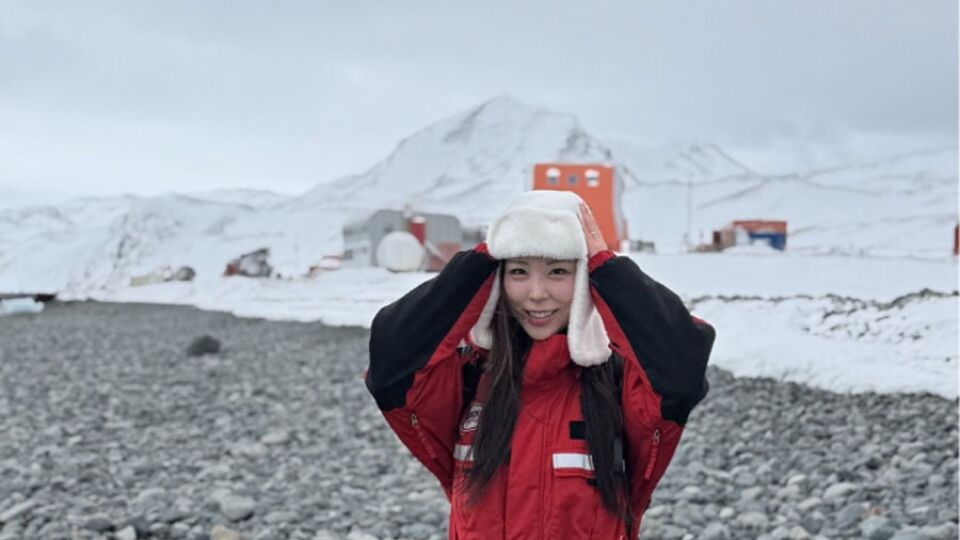
SEOUL – Last winter or summer depending on where you see it — Kim Hee-soo’s mornings began quietly, wind brushing past, snow crunching underfoot and, at times, the soft shuffle of penguins crossing her path.
Near Marian Cove, where an icy bay teems with wildlife, the 30-year-old nurse walked each day to a small clinic at King Sejong Station on King George Island, one of South Korea’s two Antarctic research bases, located about 120 kilometers from the main land mass of Antarctica.
“Marian Cove came into view before the station, and I would pass penguins on my way to work,” Kim said in an interview with The Korea Herald, just days before returning home on March 5, when her three-month stint drew to a close.
It was a setting far removed from the pace of her previous life. Before Antarctica, Kim worked in the emergency room and trauma center of a university hospital in Seoul, where days were filled with ringing call bells, flipping charts, hurried footsteps and patients’ groans.
“Antarctica offers a kind of calm you don’t find elsewhere,” she said. “Worries about what comes next don’t feel as immediate here.”
Operated by the Korea Polar Research Institute, King Sejong Station — along with Jang Bogo Station — supports research on climate change and other scientific fields.
Around November each year, some 20 personnel are dispatched for yearlong missions to one of the most isolated environments on Earth. To provide on-site medical support, two to three doctors are recruited by Gachon University Gil Medical Center and assigned to each station.
Kim’s assignment, from December to March, marked the first time a nurse had been included in such a deployment.
She had long hoped to work abroad, but did not expect her first posting outside Korea to be in such an extreme setting. The transition happened quickly.
“I had my interview in early December and left for Antarctica just five days after being selected. As it was such an unfamiliar place, I had little idea how to prepare,” she said.
A graduate of Daegu-based Gyeongbuk University’s College of Health, Kim began her nursing career in 2019 in the emergency room and trauma center of a university hospital in Seoul. She later obtained a US nursing license while steadily studying English — preparation, she said, for an opportunity she hoped would come one day. And that, she believes, played a key role in her selection for the Antarctic assignment.
“Since researchers from many countries visit the station, the authorities were looking for someone who could speak English and respond quickly in emergencies. I think my experience as an ER nurse and my US nursing license helped,” she said.
Life as the lone nurse
Life in the polar regions is as harsh as it is beautiful. Biting cold, fierce winds, treacherous terrain and unpredictable wildlife are dangers lurking at every turn. Conditions can shift quickly, turning a short walk to see patients into something far more demanding.
“The dormitory was only about a 10-minute walk from the station clinic, but I remember one morning when that short distance felt endless,” she said. “A blizzard set in, with strong winds pushing against me and snow swirling in every direction.”
Medical care, too, required adjustment. With limited equipment and no easy way to repair or replace it, maintenance and prevention became even more important.
“In Antarctica, it is not easy to repair medical equipment when it breaks down, so we had to check it regularly and make sure to request essential supplies from Korea,” she said.
Working alongside only one doctor, Kim handled a wide range of responsibilities, assisting with prescriptions and conducting health assessments to supporting minor procedures and treatments.
Her first patient had a boil that kept growing.
“I made a small incision and drained it. Then I monitored it, changing the dressing every day,” she said.
More serious cases required a transfer. Patients needing surgery, such as those with fractures, had to be transported by helicopter and taken to Chile, the closest country at about 1,000 kilometers away, she explained.
In such an environment, staying healthy herself became part of the job.
“I worked with the mindset that if I got sick, I wouldn’t be able to care for others,” she said.
Though isolated, Kim shared her everyday Antarctic life beginning in December via social media, from morning meals to building igloos with colleagues, to stay connected with loved ones and inspire fellow nurses eager to gain experience abroad.
“There was some pressure in being the first nurse from Korea to take this path, something few others have done. I felt I had to do well so it could help others who might come after me,” she said.
“Caring for others in such extreme conditions was a truly valuable experience that helped me grow not only as a nurse, but also as a person.”