


December 17, 2025
SEOUL – On a weekday morning in Seoul, a group of women introduced themselves in a mix of accents: Indian, Danish, French, American, German and more. Some wheeled strollers. Others arrived straight from school drop-off.
Nearly all of them, at some point in their lives, had been the person at the center of a meeting room, a project or a team.
In South Korea, many now find themselves identified first as something else: someone’s mother or someone’s wife — an “expat spouse.”
One of them is 43-year-old Yolekha Mallier, who arrived in Seoul from Seattle two years ago. With two young children, she carried with her a decadelong career leading product teams at Amazon. She always had a certainty that work — meaningful, stimulating work — would anchor her identity.
The move had been her family’s choice for a global adventure, a safer city and an experience they wanted their children to have.
But as her husband stepped into an office full of colleagues, projects and structure, she found herself alone in a city she had never visited, trying to fill long hours between school drop-off and pickup.
“I loved being in Seoul,” she said. “But inside I kept wondering: What am I doing with my life?”
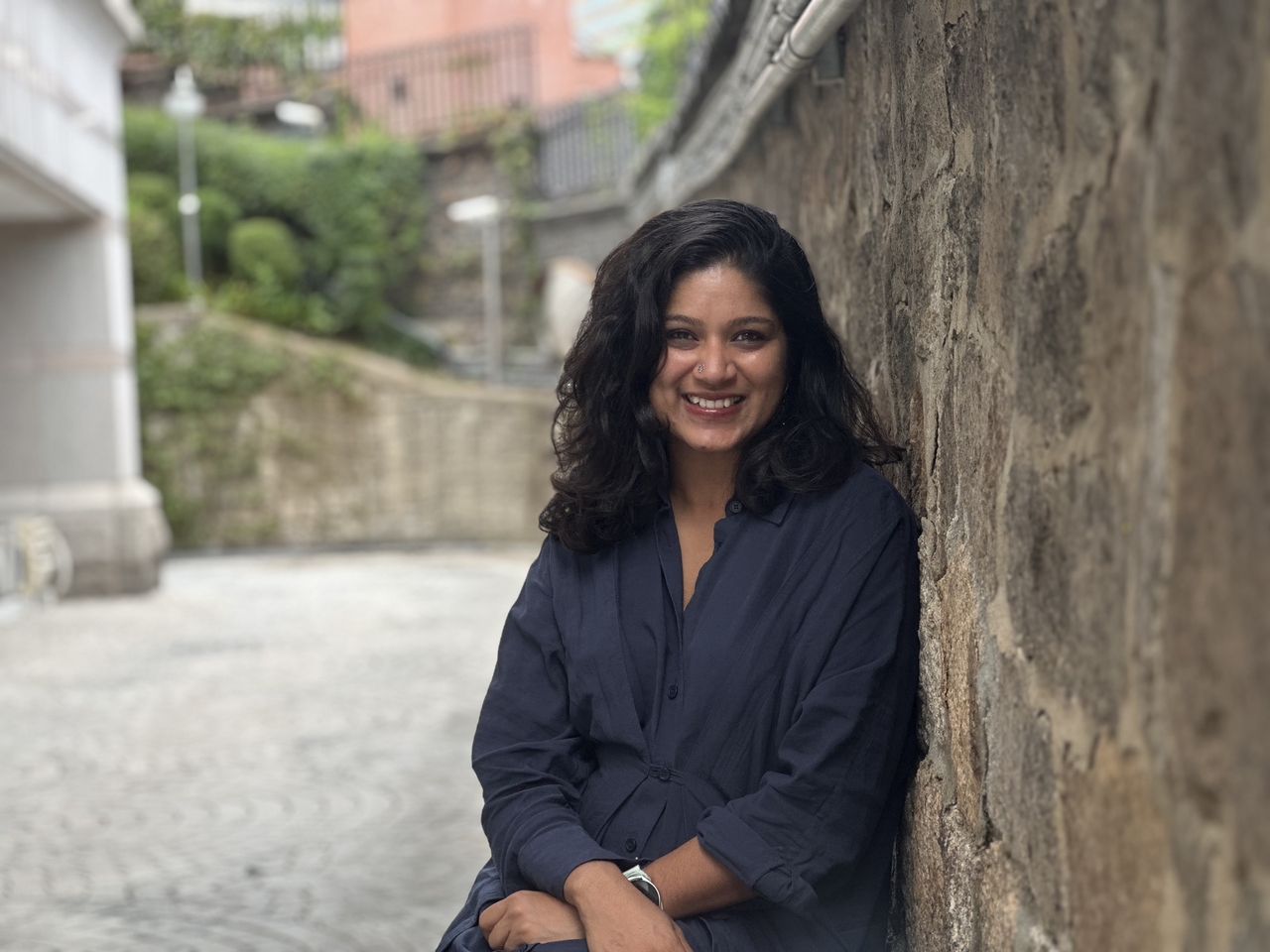
Yolekha Mallier, an American who moved to Seoul in 2023, shares her story as an expat spouse. PHOTO: THE KOREA HERALD
Mallier was not always understood, often facing stereotypes about what an expat spouse’s life should look like.
“Many people assume being an expat spouse means long breaks and financial comfort, a cushy life,” she said. “I remember one of my closest friends asking what I would even do in Korea — as if I’d just sit around having coffees and lunches. It comes with a lot of judgment.”
And one question, delivered bluntly, cut the deepest.
“You’re so ambitious. Why go somewhere you can’t work?”
When relocation strips away more than a job
For Inger Winther Johannsen, the free fall came unexpectedly.
Back in Denmark, Winther Johannsen had a career she loved rooted in public welfare. With genuine passion, she developed programs for families and children in vulnerable situations, supported advocacy groups and led nonprofit teams.
When she came to Seoul in early 2022 after her husband moved for his career, she assumed she would eventually continue in similar work.
But within weeks of arriving, she found herself walking the city alone with her toddler, while her husband stepped into office life.
“I was much more lonely than I anticipated,” she said. “I’d sit in a cafe with my laptop, smiling at random people, hoping they’d say hi.
“You assume you’ll just rebuild your life the way you had it before. It doesn’t work like that.”
The loss was not dramatic, she said, but a quiet daily erosion of professional identity. A sense of being “unseen” in ways she had never experienced in Denmark.
That feeling is intensified by the structure of expat life. A work visa can, in theory, be obtained through a 20 million won ($13,600) deposit visa, or a status change after a year or more on the ground, and some companies will sponsor spouses directly.
But much of that information circulates quietly through human resources departments rather than clearly on immigration websites, she said.
Still, she sensed that her time in Korea could be more than an interruption. If she could not simply import her old life to a new country, she could build something in the place she was now rooted.
“I realized that if I was going to live here, I needed to invest here,” she said. “Otherwise, what was the point of moving?”
A community takes shape
What the two women lacked in their early months was not just work, but professional companionship — a space where they could talk through their ideas, careers and ambitions with no need to apologize for wanting more.
That space did not exist.
So Winther Johannsen built it.
Inspired by a Danish group that helped new mothers stay professionally engaged during parental leave, she envisioned something similar for expat spouses — a place where they could gather for intellectually stimulating talks, leadership discussions and conversations about purpose, not just parenting or logistics.
Calling the community the Gallery, she expected maybe a dozen women to show up at first. Instead, it grew quickly. Over the past three years, the Gallery has hosted 37 events, drawing around 865 participants from more than 20 countries.
“It turns out, a lot of us were missing the same thing,” Winther Johannsen said.
The Gallery hosts lectures and events each month, featuring inspiring leaders, entrepreneurs and experts.
“These conversations deepen our understanding of leadership, global citizenship and Korean business culture. This reminds us that even during a career pause, we are never just spectators: We are active participants in a rich, global community of learning and inspiration,” she added.
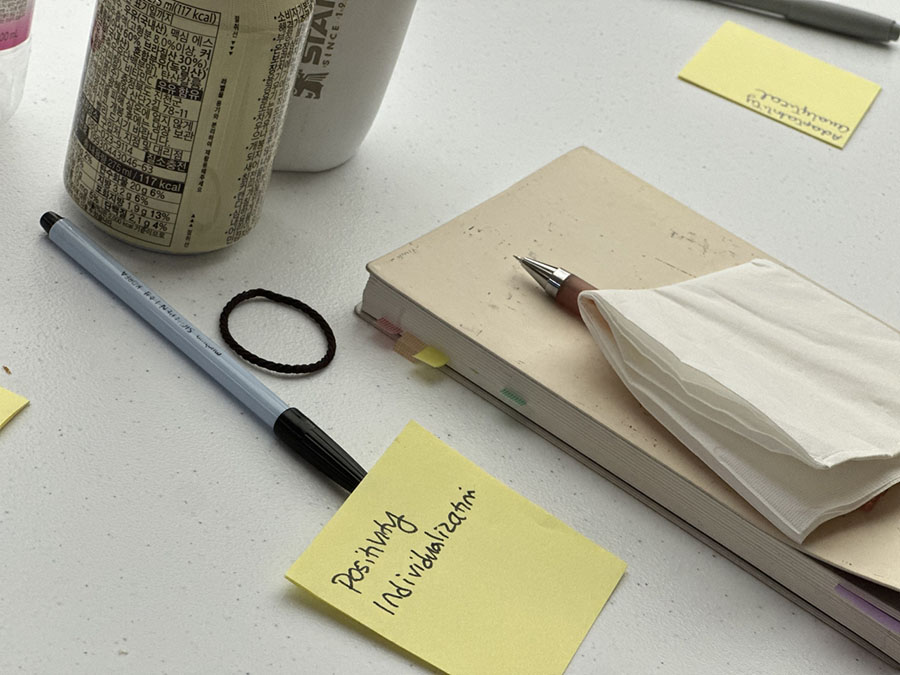
Notes of women participating in a leadership talk held by the Gallery at the British Embassy in South Korea on Sept. 23. PHOTO: THE KOREA HERALD
Unpacking new ambition
When Mallier walked into her first event with the Gallery last year, she felt something she had not felt since leaving Amazon: recognition.
“It felt like everyone there could finish my sentences,” she said. “They understood the confusion, the ambition, the guilt, the hope.”
Through the space, she gained not only support, but purpose. She began exploring nonprofit work, eventually joining Open Arms, a group providing English education to children in welfare homes. Today, she serves as its executive director.
Her days in Seoul are still structurally similar: school drop-off, a few hours of email and planning for Open Arms, some time for exercise and writing, school pickup and kid-centered evenings. But her sense of self within that schedule has shifted.
“I love that I have the time to explore and that my work now is aligned with what I care about,” she said.
“I’m using this time to build toward the job I want three or four years from now, whether that’s here, back in the US or somewhere else.”
These reinventions of life and purpose for many women are why the Gallery exists and what keeps it growing, Winther Johannsen said.
“There is so much of our professional value — and maybe even personal value — that is connected to job titles and paychecks,” she said.
“Gallery doesn’t fix visas or rewrite immigration law. But it can remind you that your skills are still real, your ambitions are still valid and you’re not the only one feeling this way.”
Asked why she keeps doing it — on top of her consulting work, nonprofit projects and family life — Winther Johannsen is matter-of-fact.
“Purpose is directly connected to my happiness,” she said. “When I do something that creates positive change, it makes me happy. Gallery makes me happy.”
The Gallery is now run by a team — Ann Fuell, Giulia Ceccacci, Julyann Hwang, along with support from members who have come and gone — and Winther Johannsen is quick to stress that it thrives because of collective effort.
“It’s very much a team project,” she said. “Running Gallery with cool and inspiring women, our committee meetings are both fun and professionally stimulating. I could never do this alone.”
“Just come,” Winther Johannsen tells women who hesitate, worried they are not “senior enough” or “ambitious enough” to join.
“You can sit at the back and just listen. You might learn something. And you might remember what you’re capable of,” she said. “Your skills didn’t disappear just because your job did.