

May 12, 2026
TANGKAK – Everyone makes mistakes. What matters is that society is willing to give them a chance to start over.
“We shouldn’t write them off entirely because of their past,” said Ong Chee Siang, the owner of Tangkak Food Court.
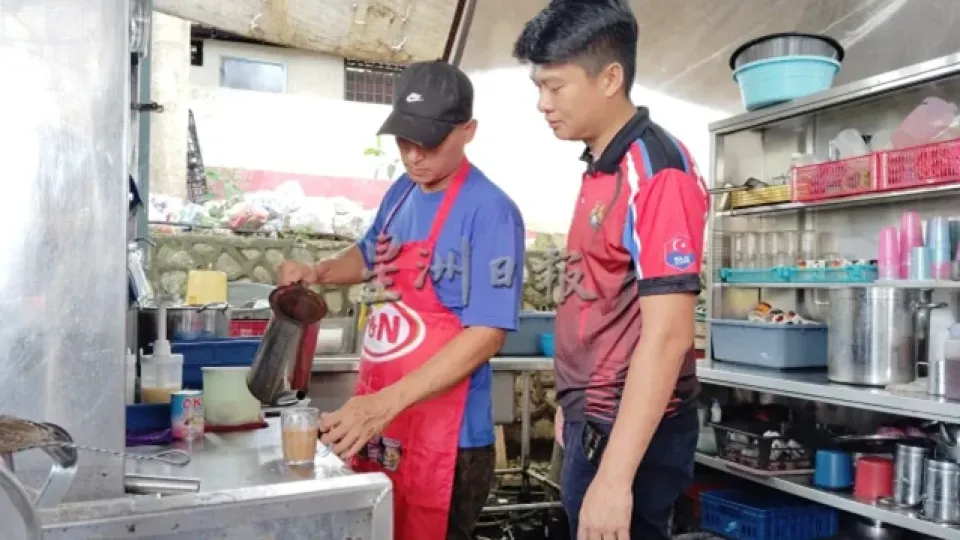
Also a Tangkak district councillor, Ong has hired 14 parolees – 12 Chinese and two indians under the Licensed Release of Prisoners Programme (PBSL).
These individuals, referred to as “Prospeks” (Persons with Prospect), are granted conditional release to work before completing their full sentence.
At the food court, they handle tasks such as taking orders, cleaning, and brewing coffee.
The early release allows them to learn new skills and adapt to social environments, preparing them for life after regaining freedom.
Currently, six individuals are working at the food court, as others have returned to their hometowns or moved on after completing their sentences.
Speaking to Sin Chew Daily, Ong admitted that he initially applied for the programme due to labour shortages.
“At first, I was worried about how customers would perceive us. There were even rumours that this was a dangerous place because I hired ‘criminals,’ which put me under a lot of pressure,” he said.
However, after working with them, his fears vanished.
Many customers have praised the parolees for being hardworking, sincere, and maintaining a positive attitude.
Ong noted that his staff used to consist mainly of foreign workers, which often led to issues with work permits, communication and cultural differences on hygiene matters.
Those problems have since disappeared.
He said that those eligible for the PBSL programme are low-risk offenders with good conduct records.
The Prison Department imposes strict conditions: parolees must check in daily via mobile phone, stay at the accommodation provided by employers after work hours and avoid all illegal activities.
“Officers conduct surprise checks. If they violate the rules, they are sent back to prison immediately and may face extension of their sentences,” Ong said.
One personally teaches them skills like brewing coffee and offers emotional support. Having heard stories of other employers exploiting parolees by withholding wages or forcing them to work 18-hour days, Ong ensures his staff receive meals, accommodation and a salary slightly above the minimum wage.
These parolees are made up of former electricians, university students and renovation workers.
Their diverse skills have often helped solve maintenance issues at the food court, a bonus for Ong.
One of them is Yong, 46 from Batu Pahat who shared his story.
After a divorce years ago, Yong was jailed for making criminal threats. Struggling with the stigma after his release, he fell into the wrong crowd and was jailed again for a drug related offense.
“Being in prison is like being isolated from the world. On my first day at the food court, I was blank and anxious,” he shared.
“About 20 people asked about my background. I told them the truth, “ he said.
Yong’s sentence ends on June 27. He plans to stay on the right path and live a quiet life with his family.
“Having a job, a bed, and a pillow is already so much better than prison,” he said.
Another parolee, Ouyang, 35, from Penang, said he chose to be honest about his past with patrons, who was sentence to 14-month jail for a drug-related offence.
He was surprised to receive encouragement from the patrons in return.
Woring at the food court for the past three months has given him a stable income to plan for his future when his sentence ends on Aug 31.
“We must bear the consequences of our mistakes, but we also need a chance to start over so we don’t fall back into old habits because we can’t find work,” he said.