

June 1, 2026
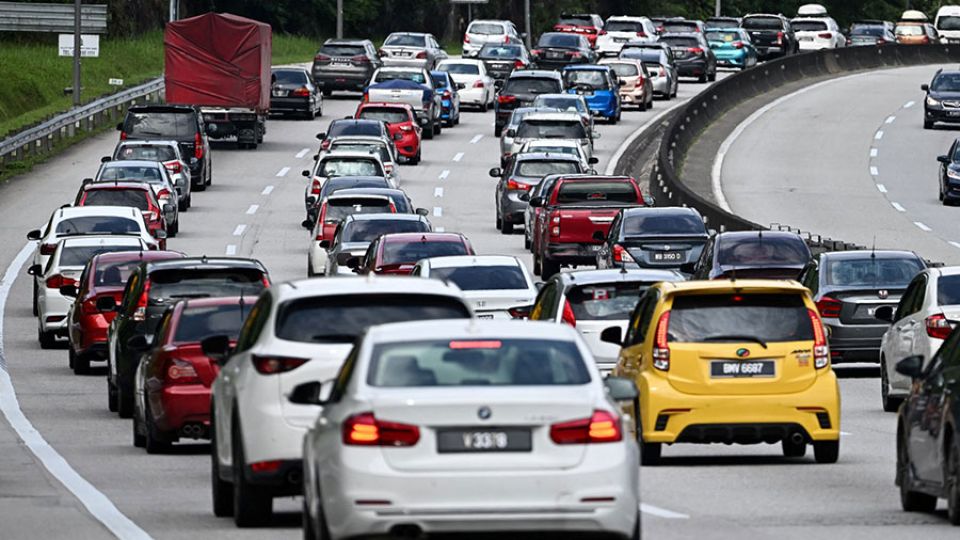
KUALA LUMPUR – Despite government efforts to rationalise fuel subsidies and promote work-from-home (WFH) arrangements, government data shows a slight increase in petrol usage.
This persistent trend in fuel consumption remains a cause for concern, according to Nurhisham Hussein, Senior Economic and Finance Advisor to the Prime Minister’s Office (PMO).
The government is still investigating the root causes, he said.
One possibility is that while people are saving fuel during the workweek, they are travelling significantly more during weekends and long public holidays.
Lowering quotas yields little impact on fuel consumption
Nurhisham admitted that existing government measures—including cutting fuel quotas and rationalising subsidies—have so far failed to significantly reduce overall fuel consumption.
Nevertheless, he stressed that any move to adjust RON 95 petrol subsidies will be the government’s absolute last resort and will be delayed as much as possible, given its direct impact on household expenses.
No guarantee of stable oil prices after July
Analysts generally expect July and August to be a “fairly difficult” period for the global oil market due to a rebound in demand coupled with persistent physical supply shortages.
Consequently, there are no guarantees that fuel prices will remain stable between July and September; the current market sentiment is simply overly optimistic.
Nurhisham explained the temporary reduction in oil imports by China, combined with increased production by major oil-producing nations, has temporarily eased market anxieties.
However, countries cannot rely on reserves indefinitely.
China will inevitably resume imports and other nations will need to rebuild their strategic stockpiles.
“While oil prices are temporarily stable right now, the outlook for the global oil market remains uncertain, particularly in the third quarter of this year,” he said.
Speaking during a recent episode of the Keluar Sekejap YouTube podcast—hosted by former Health Minister Khairy Jamaluddin and former Umno Information chief Shahril Sufian Hamdan—Nurhisham pointed out that the government still has several policy options on the table.
However, because fuel prices and the cost of living are highly sensitive issues, the government will proceed with extreme caution.
He disclosed that the policy options currently under consideration include:
Raising the subsidised petrol price from RM1.99 per litre to RM2.05 or RM2.10, or reducing the monthly subsidised quota further.
However, he reiterated that these are strictly “last resorts.”
He noted that the government has already reduced the subsidised RON 95 petrol quota from 300 litres to 200 litres per month.
In reality, this measure only affects about 10% of drivers nationwide, meaning roughly 90% of motorists remain unaffected by the 200-litre cap.
Any further measures involving the rationalisation of petrol subsidies are expected to be deferred for as long as possible.
“Petrol is a highly sensitive topic because it directly impacts people’s wallets. Even if we do adjust petrol subsidies, it will be delayed for as long as we can manage.”
Curbing water and food waste
On food security, Nurhisham revealed that while the overall food supply remains sufficient in Malaysia, a significant volume of vegetables, chicken, and eggs are still discarded due to expiration.
He urged citizens to curb waste, noting that conservation should extend beyond fuel consumption to water and food.
He explained that various sectors are interconnected. For instance, if the fertilizer supply is disrupted, farmers may struggle to cultivate crops, leading to a drop in overall agricultural output.
Regarding healthcare, he assured that the supply of medicines and medical supplies remains adequate, adding that the Ministry of Health has prepared alternative solutions should any shortages arise.
Additionally, Nurhisham stated that because the government had previously been overly generous with diesel subsidies, it is now continuously tightening the Subsidised Diesel Control System (SKDS) for the logistics sector.
“In the beginning, we gave out too much. Now that we have more data, we are tightening the system to save costs,” he said.
He added that the government also recently announced the expansion of the SKDS to include four-wheel drives (4WDs) and pickup trucks across Peninsular Malaysia, Sabah, and Sarawak.