

February 3, 2026
KATHMANDU – Prime Minister Sushila Karki has said that leaders of the September’s Gen Z movement exerted strong pressure on her to appoint specific individuals as ministers while forming the interim government, forcing her to induct figures who had earlier resigned from ministerial posts to contest elections.
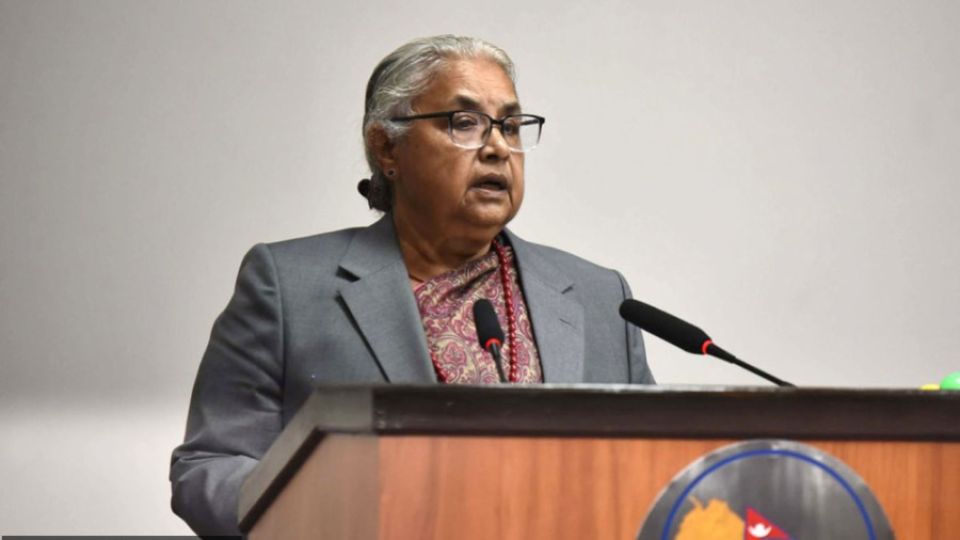
Addressing the National Assembly on Monday, Karki said the pressure came during the initial phase of government formation after she was appointed prime minister in September last year, when the country was facing a political vacuum and the interim administration had to be formed outside the traditional party structure.
“After I took the oath on September 12, 2025, the Cabinet was not formed immediately,” Karki told the upper house. “We are not people from political parties, which is why we had to find people from outside (not associated with the parties). There was immense pressure from Gen Z leaders to include certain individuals as ministers.”
The prime minister revealed that the names put forward under pressure included Mahabir Pun, Kulman Ghising, Jagdish Kharel and Bablu Gupta. She said some of them were reluctant to join the Cabinet, but the pressure from Gen Z leaders left her with little choice.
“The pressure was that we had to include them in the Cabinet,” she said. “I had to plead with folded hands to bring some of them into the government.”
Karki also said that pressure was exerted to include Gupta in the Cabinet. Recalling the circumstances under which Pun joined the government, she said youth leader Sudan Gurung had personally brought him in. “Pun was brought from the streets, where he was selling books, embraced and persuaded by Sudan Gurung,” the prime minister said.
She further stated that, even at the time of appointment, she had agreed to allow some ministers, including Ghising, to leave the Cabinet if they chose to contest elections. “The pressure was to appoint them, but there was also pressure that they should be free to leave whenever they wanted,” Karki said.
She shared that Pun was also inducted under similar circumstances and had left the cabinet dissatisfied with the government’s inability to introduce the laws he advocated for.
“Pun left angrily,” Karki told the House. “He asked for a few laws to be introduced. Even as they were necessary, it was not possible to enact them in a short period.”
Karki was appointed prime minister on September 12, 2025, a day after President Ramchandra Paudel exercised his constitutional authority to appoint her as head of an interim government following the September 8–9 protests and the resignation of then prime minister KP Sharma Oli.
She was given a six-month mandate to lead the country and hold elections by March 5, 2026, marking her tenure as Nepal’s first female prime minister and executive head.
In her first appearance before the House, she said that she did not become prime minister to rule the country.
“I accepted the responsibility of prime minister in extraordinary circumstances, following the call of the change-seeking younger generation. The decision was taken in consultations with political parties and discussions with the President. It was necessary to bring the disrupted constitutional system back on track and to save the country from crisis,” she said.
Hailing the National Assembly as an institution of maturity and senior statesmanship, she said her government will honour and adhere to the guidance received from the House.