

April 8, 2026
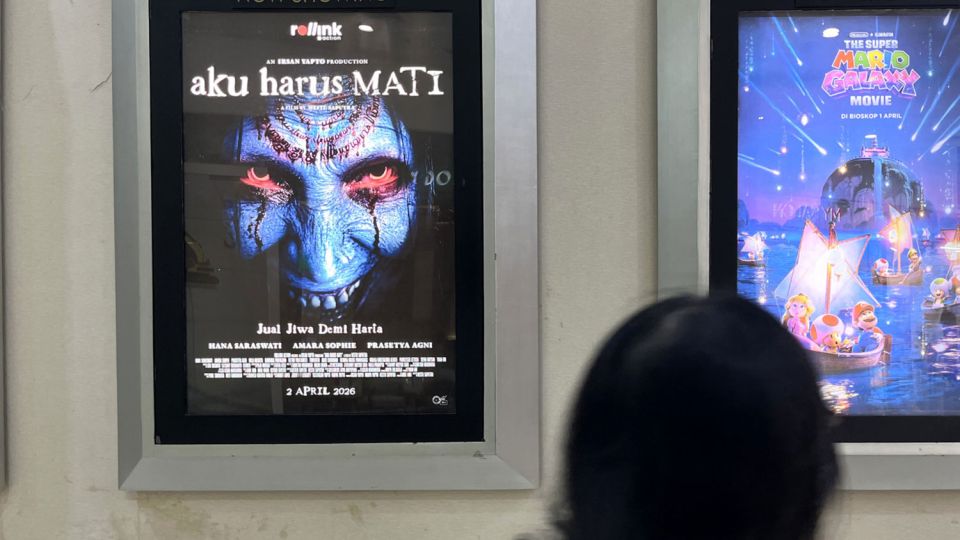
JAKARTA – Promotional billboards for the horror film “Aku Harus Mati” (I Must Die) have drawn widespread criticism over concerns that they could encourage suicidal ideation, particularly among vulnerable groups such as children, amid rising mental health issues among the country’s youth.
The posters have been displayed on roadside billboards across Jakarta and several other cities since March 27 to promote the film, which premiered in cinemas on April 2.
Featuring the phrases “I Must Die” and “Sell My Soul for the Wealth” against the backdrop of a blue, red-eyed creature, the billboards have alarmed child protection advocates, despite being recently taken down.
Indonesian Child Protection Commission (KPAI) commissioner Diyah Puspitarini warned that the phrase “i must die” could normalize suicidal behavior among children, who may lack the capacity to critically process such messages.
“Such words can affect children’s mental health because they are not yet able to properly regulate [or interpret] the information they receive,” Diyah told The Jakarta Post on Monday.
She added that the messages could trigger suicidal tendencies in vulnerable children, noting that Indonesia already faces a relatively high prevalence of child suicide.
According to the Global School-Based Student Health Survey (GSHS), conducted in coordination with the government, the proportion of children experiencing suicidal thoughts rose from 5.2 percent in 2015 to 8.5 percent in 2023. Over the same period, suicide attempts increased from 3.9 percent to 10.7 percent.
KPAI recorded at least 115 child suicide deaths between 2023 and 2025.
Piprim Basarah Yanuarso, head of the Indonesian Pediatric Society (IDAI), warned that repeated exposure to such messaging could embed harmful ideas in children’s subconscious and potentially lead to self-harm.
“For toddlers or early school-age children who are just learning to read, these phrases are problematic. Children should be encouraged to embrace life, yet these posters suggest how they must die,” Piprim said.
He also highlighted the broader mental health context, citing a March 9 Health Ministry report indicating that around 10 percent of Indonesian children suffer from depressive and anxiety disorders.
“Advertisements should not only focus on profits, but also consider their broader impact on society, including children and adolescents with mental health vulnerabilities.”
The Jakarta administration moved swiftly to remove several of the billboards after receiving public complaints that the imagery was disturbing and disrupted the comfort of road users. At least three billboards were taken down in West Jakarta and Central Jakarta.
“Content like this, created merely to attract public attention through insensitive advertising that impacts the community, should not be repeated,” Governor Pramono Anung said on Monday, as quoted by TribunJakarta.com.
Film producer Iwet Ramadhan said over the weekend that the billboards would be taken down as soon as their promotional period had ended, noting that public reactions were beyond the filmmakers’ control.
“Public response is something we cannot control. We may have certain intentions, but how people respond is never fully within our control,” he said, as reported by Kompas.com. (vdy)