

June 19, 2026
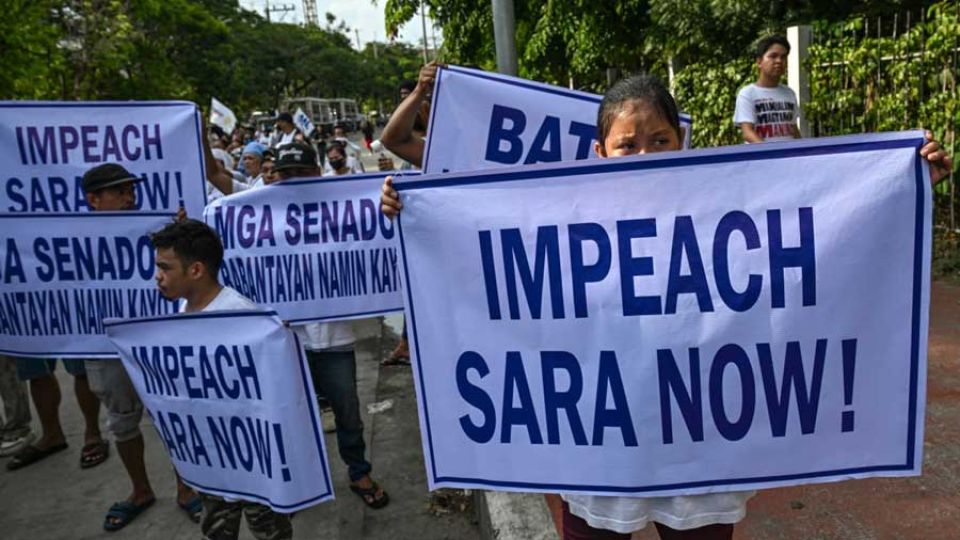
MANILA – The impeachment proceedings against Vice President Sara Duterte moved into crucial phase as the impeachment court commenced its pre-trial conference on Thursday, June 18.
Whatever happens in today’s proceeding, which may appear procedural, will pave the way for the formal trial scheduled on July 6.
This is the final major step before senator-judges begin hearing evidence and arguments from the prosecution and defense teams that could determine Duterte’s political future.
Why the pre-trial conference matters
A pre-trial conference is not where the prosecution and defense battle over the guilt or innocence, but was designed to streamline the impeachment trial and prevent unnecessary delays once the trial begins.
At this stage, prosecutors from the House of Representatives, together with private litigators and lawyers representing Duterte, are expected to discuss procedural matters, identify issues to be resolved, and agree on evidence that may no longer be disputed.
The conference also allows both sides to submit witness lists, mark documentary evidence, and raise preliminary motions that could affect the conduct of the trial.
During the pre-trial conference, both the House prosecution panel and Duterte’s defense counsel will also set trial dates, sequencing of the presentation of evidence and possible modification of the order of trial.
Here’s the rundown of what happened that led to this day:
The Sara Duterte impeachment moved from House vote to Senate pre-trial brief submission in just over a month, hitting every major procedural milestone between May 11 and June 15, 2026.
On April 29, the House committee on justice found sufficient ground to impeach Duterte.
Voting 257 against 25 and nine abstentions, the House of Representatives voted to impeach Duterte on May 11, surpassing the one-third constitutional threshold of 106 votes.
On May 14, the House formally transmitted the four Articles of Impeachment to the Senate with Secretary General Cheloy Garafil overseeing the transmittal.
The Senate convened as an impeachment court on May 18, with senator-judges taking their oaths in red robes, formally opening the trial and bidding Duterte to answer the charges.
Security at the Senate was tightened ahead of the VP’s response deadline, as her camp prepared to submit its answer.
The Senate impeachment court set a deadline of 7 p.m. on Monday, June 1, for Duterte to file her answer, which she submitted through her lawyers on that date.
Her lawyers filed the answer seeking dismissal of the articles of impeachment, with Duterte indicating readiness to appear “if necessary” during the trial.
Both the House prosecution panel and Duterte’s defense camp filed their pre-trial briefs with the Senate on June 15, 2026, containing summaries of witnesses, evidence, and arguments.
Prosecution, defense teams
The impeachment battle will be led by two high-profile legal teams representing the House prosecution panel and Duterte’s defense.
The prosecution panel is composed of Reps. Gerville Luistro (Batangas 2nd District), Terry Ridon (Bicol Saro), Ramon Rodrigo Gutierrez (1-Rider), Ysabel Maria Zamora (San Juan City), Lorenz Defensor (Iloilo 3rd District), Jose Manuel “Chel” Diokno (Akbayan), Leila de Lima (Mamamayang Liberal), Arlene Bag-ao (Dinagat Islands), Jonathan Keith Flores (Bukidnon 2nd District), Lordan Suan (Cagayan de Oro City 1st District), and Joel Chua (Manila 3rd District).
The House previously assigned prosecutors to specific articles of impeachment, with individual lawmakers handling particular allegations.
Veteran litigators, former government lawyers, law firm partners, and legal academics were likewise assigned private prosecutors, with the “first batch” bringing together lawyers from three law firms –PECABAR Law; Kapunan and Castillo Law Offices; and SALiGAL Law.
Among the most prominent members is veteran trial lawyer Lorna Kapunan, founder and senior partner of Kapunan and Castillo Law Offices.
Meanwhile, lawyers from the law firm Fortun Narvasa & Salazar will defend Duterte.
Led by veteran litigator Philip Sigfrid Fortun, the Duterte panel is composed of Gregorio Narvasa II, Sheila Sison, Carlo Joaquin Narvasa, Roberto Batungbacal, Justin Nicol Gular, Lindon Miguel Bacquel, David Ronell Golla VII, Maria Selena Golda Fortun, Clarlaine Radoc, Francesca Marie Flores, Miguel Carlos Fernandez, Reynold Munsayac, Mark Vinluan, Ralph Bodota, and Michael Wesley Poa.
What’s next?
Once pre-trial proceedings are completed, the Senate impeachment court will begin the formal trial slated next month.
At this stage, house prosecutors present evidence and witnesses, with the defense eventually cross-examining them. Duterte’s camp will also present their own evidence and witnesses.
Throughout the proceedings, senators serving as judges may seek clarification and ask questions through the presiding officer. Ultimately, they will determine whether the evidence is sufficient to convict or acquit the vice president.
Under the Constitution, a conviction requires a two-thirds vote of all Senate members. This means at least 16 of the 24 senators must vote in favor of impeachment.
If convicted, Duterte would not only lose her position as Vice President but could also be permanently disqualified from holding any public office.
However, impeachment is separate from criminal liability, and the Constitution provides that a convicted official may still face prosecution and punishment under existing laws.