
January 8, 2026
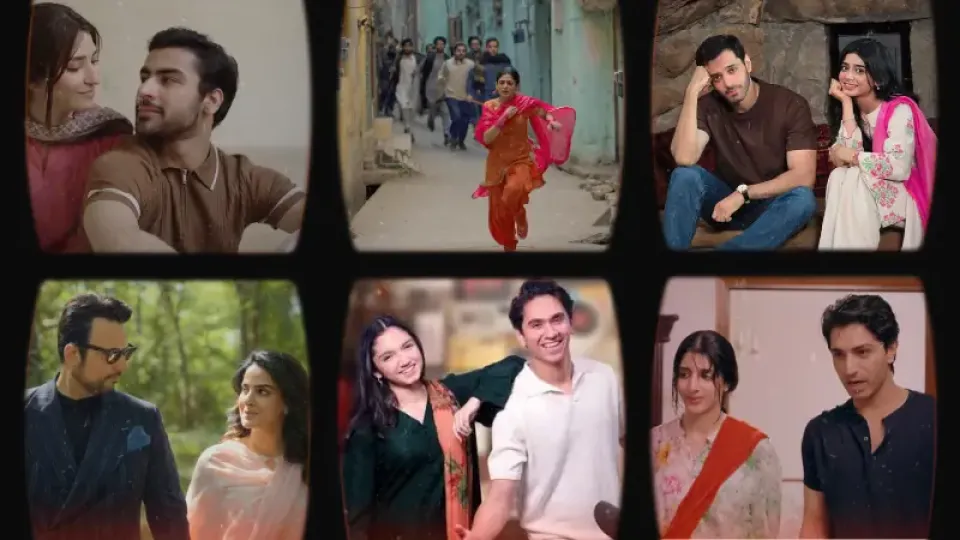
ISLAMABAD – If you look back at Pakistani television in 2025, one absence stands out: there was no defining drama, no cultural moment that unified viewers, no love story that became collective memory. Unlike the preceding year, when audiences passionately shipped couples and dramas dominated conversations, 2025 felt scattered. Viewers watched many dramas, discussed a few, and truly held on to even fewer.
However, what 2025 lacked in blockbusters, it compensated for in moments of courage, empathy, and experimentation. A handful of dramas dared to do more than entertain; they tried to communicate, question, and, in rare cases, transform.
For this review, the dramas of 2025 have been divided into three categories: the dramas that truly worked, good, but not quite there, and the ones that missed the mark. The first category highlights dramas that achieved narrative, emotional, or social impact and resonated widely with audiences. The second comprises dramas that showed promise or achieved partial success but ultimately fell short in some aspects. The third features dramas that, despite resources or star power, failed to leave a meaningful impression on viewers.
These categories are informed by my viewing experience, online reviews, and audience reactions across social media platforms, including YouTube, X, and closed Facebook groups, reflecting both critical and popular reception.
The dramas that truly worked
Tan Man Neelo Neel
This was not just the best drama of 2025; but it was arguably the bravest attempt in the history of Pakistani television.
What Tan Man Neelo Neel accomplished in its final 15 minutes is something that decades of awareness sessions, seminars, and policy discussions have struggled to achieve. By addressing mob lynching and false blasphemy accusations head-on — and by showing the real faces of actual victims — the drama humanised tragedies often reduced to headlines or statistics. The haunting background track ‘Hum Khud Hi Apnay Dushman’ jolted an entire collective conscience.
The brilliance of the drama lay in its structure. For 10 episodes, it quietly built a human connection. Viewers laughed with the characters, rooted for them, and invested emotionally in their futures. Then, in the final episode, the unthinkable happened — abruptly, painfully, and without cinematic cushioning. The shock worked because it mirrored reality: violence is rarely announced; it arrives suddenly.
This was not entertainment. It was a public service message. It changed perspectives, allowing viewers to empathise with victims as human beings rather than abstract figures. Today, Tan Man Neelo Neel stands as a case study in strategic communication for countering violent extremism.
Parwarish
In an era where intensity is often confused for shouting, Parwarish proved that love can be loud in quieter ways.
The drama portrayed families that argue yet still show up for one another, teenagers who exist beyond being side plots, and flawed parents without being villains. Mental health was treated as part of everyday life — not as a sensational twist. In a landscape crowded with jealousy, chaos, and women tearing each other down, Parwarish chose empathy.
Its power lay in relationships: messy, imperfect, but rooted in care. It asked a simple yet profound question — what does healthy parwarish (upbringing) look like today? Even months after its finale, the story lingers because it offered emotional honesty. It showed families not as idealised units, but as deeply human systems that can grow without becoming toxic.
Beyond a family drama, Parwarish was a reminder that parenting does not mean control, but closeness; that siblings may fight yet still protect one another; and that women can support rather than sabotage each other. In a ratings-driven industry, it proved that empathy can still be compelling.
Jinn Ki Shadi Unki Shadi
In a year dominated by heavy themes and recycled formulas, this drama stood out simply by being fun, unique, and competent. Blending comedy, romance, and the supernatural, it offered escapism without insult. The writing was self-aware, the performances committed, and the pacing tight.
Rather than relying on melodrama, it embraced whimsy. Characters were allowed to be eccentric without becoming caricatures, and emotional beats were earned rather than forced. The drama proved that Pakistani television is at its best when it experiments thoughtfully. It succeeded because it dared to be different and trusted its audience to come along.
Jama Taqseem
Few dramas this year generated as much debate as Jama Taqseem. The show began with promise, portraying the emotional and cultural dislocation women often experience within joint family systems. At its core, the drama explored transitions — from joint families to nuclear living, from dependence to independence, from tradition to negotiation.
Beyond the central couple’s journey, some of the most compelling moments came from the conversations between Qais and Laila’s parents. Their reflective exchanges, rather than loud confrontations, offered subtle lessons about compromise, ageing, and autonomy. The drama acknowledged something rarely discussed: parents, too, struggle with purpose once their children move on.
Qais’ mother rediscovering joy through cooking and starting a YouTube channel, and Laila’s parents choosing travel later in life, conveyed a gentle but powerful message — engagement keeps people alive. The drama promoted agreeing to disagree as a legitimate form of coexistence. While it faltered later in handling sensitive themes, its initial insight and emotional intelligence deserve recognition. Its early handling of harassment and abuse was sensitive and affecting.
Pamaal
Pamaal emerged as one of 2025’s most talked-about domestic dramas precisely because it refused easy moralising. Anchored by a powerhouse central performance from Saba Qamar opposite Usman Mukhtar, the series is a tense domestic drama that tracks a marriage strained by control, resentment and attempts at reconciliation.
What made Pamaal compelling was its refusal to flatten its characters into villains and saints: the husband is neither cartoonishly abusive nor comfortably redeemable, and the wife’s struggle is shown in emotional, often uncomfortable, detail.
The writing leaned into intensity rather than melodrama, and the camera stayed close to the private textures of a troubled relationship — arguments, small mercies, shame, and the messy work of repair. Overall, Pamaal stands out as a strong and memorable drama, making it one of the notable watches of 2025.
Meem Se Muhabbat
Although it premiered in late 2024, Meem Se Muhabbat maintained a strong cultural presence well into 2025. The drama drew audiences through effective on-screen chemistry and emotional familiarity, offering a sense of comfort.
It largely remained within safe narrative boundaries, making it more reassuring than transformative, yet undeniably enjoyable and memorable. At its core, the drama is character-driven, centred on a quiet and emotionally layered relationship shaped by family pressures, social expectations, and personal hesitation. Instead of portraying love as instant or idealised, it presents it as a gradual process grounded in understanding, restraint, and moral responsibility.
This grounded premise became the drama’s key strength, allowing Meem Se Muhabbat to deliver a sincere and mature narrative that stood out through emotional realism in a television landscape often dominated by excess and spectacle.
Good, but not quite there
Dil Dhoondta Hai Phir Wohi
Dil Dhoondta Hai Phir Wohi is a distinctly emotional drama that diverges from typical romantic or revenge narratives by focusing on love, memory, and human resilience. The series is about a devoted couple whose relationship is tested when the husband is diagnosed with early-onset dementia, forcing his spouse to shoulder the emotional and practical burdens of caregiving while trying to preserve their connection.
The drama’s sensitive portrayal of dementia highlights an important social issue, though its heavy thematic focus and deliberate pacing may make it a more reflective experience for some viewers.
Overall, Dil Dhoondta Hai Phir Wohi stands out for its thematic ambition and social relevance, even as its deeper emotional focus makes it a more contemplative rather than broadly entertaining series.
Biryani
Biryani is a good, average drama that began with a fresh and engaging premise. The story unfolds in a setting that is both culturally rich and regionally grounded, showing local traditions, family dynamics, and everyday life of the community.
While the plot lost some momentum in the middle episodes and became slower and repetitive, the performances — especially Sarwat Gilani’s nuanced and elegant acting — kept viewers engaged. Critics singled out her elegance, emotional control, and screen presence as the drama’s best asset, often elevating otherwise thin material.
Overall, Biryani may not have been groundbreaking, but it delivered a moderately entertaining and culturally textured story that resonates with audiences.
Shar Pasand
Sher Pasand is a psychological family drama that revolves around a married couple whose move to a new neighbourhood triggers social manipulation, rivalry, and moral unravelling. The series combines high production values with a star-studded cast, creating a visually polished and atmospheric viewing experience.
The reception has been mixed: many viewers praised the performances, music, and overall mood, noting that the drama generated significant conversation and engagement on social media, while others criticised the slow pacing and episodic structure. Overall, Sher Pasand was a good watch for its ambition and character-driven storytelling, even if it divided audience opinion.
Main Manto Nahin Hoon
The much-hyped Khalilur Rehman Qamar drama, despite a star-studded cast including Humayun Saeed and Sajal Aly and high production value, failed to leave a lasting impression. Centred on a controversial teacher-student romance, the storyline drew widespread criticism for its problematic premise and awkward execution.
The drama’s central romance often felt forced, and the characters’ interactions lacked authenticity. Even performances, while technically competent, could not salvage the narrative, and the drama’s conclusion left viewers largely disappointed. Some found the music to be the only redeeming quality. Overall, Main Manto Nahin Hoon generated buzz but struggled to engage audiences meaningfully.
The ones that missed the mark
Dayan
Dayan felt less like storytelling and more like an attempt to fool the audience. The premise hinged on a character returning after plastic surgery — yet with the same face, same mannerisms, and only a wardrobe upgrade. That no one recognised her pushed the show’s credibility to a breaking point. Casting two different actors could have saved the illusion.
This was also Mehwish Hayat’s return to television — a comeback that deserved a stronger script. Instead, spectacle replaced substance, leaving viewers disengaged despite initial curiosity.
Masoom
Masoom had all the ingredients of a hit on paper — a talented star cast featuring Imran Ashraf, Sonya Hussyn, and Mikaal Zulfiqar, coupled with high production value — but ultimately failed to leave a lasting impression.
The drama revolved around Dilshad, a provincial singer navigating love, betrayal, and family secrets, but the narrative struggled with uneven pacing, predictable twists, and derivative plot lines. While the performances were competent, the story itself did not engage viewers meaningfully. Despite its potential, Masoom serves as an example of a drama with strong talent that could not translate ambition into impact.
Ek Jhooti Kahani
While audiences were initially excited to see a fresh on-screen pair in Mohib Mirza and Zara Noor Abbas and expected a fun rom-com, Ek Jhooti Kahani turned out to be tedious and cringeworthy. The story, built around a “fake bhabi” and five sisters-in-law, relied on a clichéd premise that offered little originality. The comedy felt cold and forced, the pacing dragged excessively, and even the promising cast could not salvage the uninspired writing.
Overall, Ek Jhooti Kahani struggled to engage, with a clichéd premise, uneven pacing, and uninspired writing, despite a promising cast.
Sawal Yaar Piya
Despite a high-profile cast including Feroze Khan, Durefishan Saleem, and Ahmed Ali Akbar, Sawal Yaar Piya failed to resonate with audiences and can be considered a disappointment. Centred on a love triangle and family tensions, it struggled with predictable plot lines, forced romantic dynamics, and uneven pacing. Critics and commentators noted that the drama’s characters were underdeveloped, the plot felt predictable, and the romantic dynamics were uneven, resulting in a narrative that struggled to fully engage.
Social media reactions highlighted awkward dialogues and lacklustre performances. While the production value and soundtrack were commendable, they could not compensate for a narrative that felt clichéd and disconnected, placing Sawal Yaar Piya firmly in the “bad” category, despite its ambition.
Quiet wins in unlikely slots
Interestingly, some of the year’s most satisfying viewing experiences came from slots outside the conventional prime-time battleground: Bharam, Mohra, and Judwaa, airing in the 7 pm and 9 pm windows — all performed steadily and built loyal followings. Their frequent airing schedules (daily or four times a week) allowed for consistent viewership and steady engagement, making these dramas particularly accessible and appealing to audiences who prefer regular, easy-to-follow serials.
Rather than relying on sensational twists, these serials focused on steady storytelling, carefully drawn characters, and slow-burn narrative arcs, which rewarded regular viewing and created appointment-based loyalty. Their success demonstrates that, for certain segments of the audience, availability, familiarity, and consistent engagement can matter as much as star power or prime-time slots.
What 2025 ultimately revealed
Pakistani television in 2025 felt like an industry in transition. The appetite for regressive romance, glorified obsession, and recycled suffering is clearly diminishing. Audiences are more vocal, more critical, and less forgiving of lazy writing. At the same time, the year showed that scale and star power no longer guarantee cultural relevance.
What viewers responded to were sincerity, narrative clarity, and characters who felt human rather than symbolic. The absence of a defining love story may feel like a loss — but it may also signal a shift. Perhaps the future of Pakistani drama lies not in iconic couples alone, but in stories that trust audiences to engage with complexity.
2025 may not have given us a phenomenon, but it did offer a direction. And that, in its own way, is worth paying attention to.