

January 23, 2026
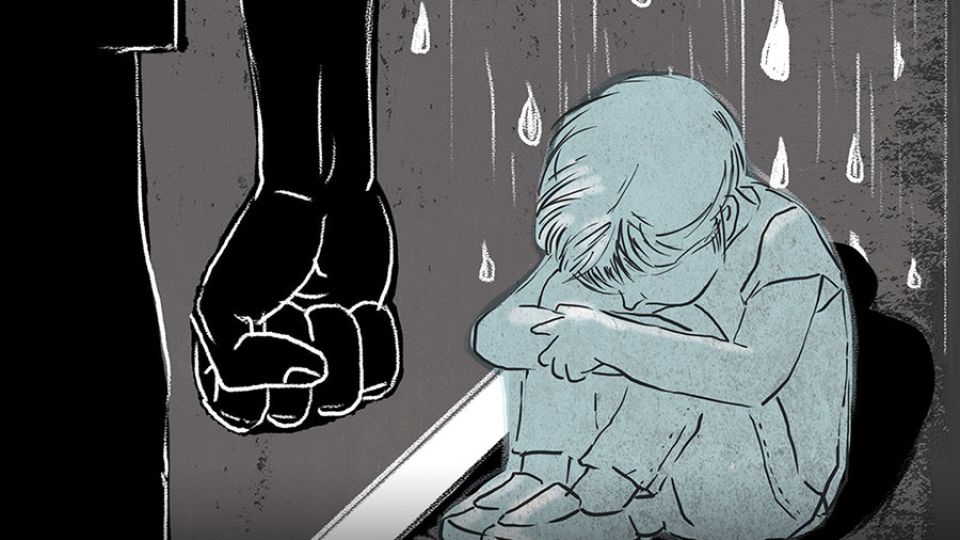
SEOUL – On Aug. 25, 2025, a first-year student at a high school in North Gyeongsang Province took her life after severe sexual and physical abuse by her boyfriend. Testimony revealed rape and subsequent harassment from other classmates, while the school failed to provide any type of protection for the victim.
Perpetrators of school violence often escape legal consequences due to being underage, and many contend that official penalties under the ministry guidelines are a slap on the wrist.
Bullying at school is one of the most severe issues among adolescents in South Korea, with the victims subject to severe physical and mental damage. A July survey by local civic group Blue Tree Foundation showed that 39.9 percent of victims had experienced self-harm urges.
While authorities are limited in meting out harsh punishment against minors, the government has been making efforts so that the offenders face the consequences of their actions even after graduation. This includes the recent imposition of records of school violence being considered in college admissions, which was first mandated for all universities for the 2026 school year.
Even without tangible disadvantages, offenders can later see their public reputations ruined if their past is revealed. Several celebrities have seen their careers sent into a downfall for the decisions they made as underage students.
Any type of physical, mental or financial damages inflicted by physical, sexual or cyber violence is punishable under the Act on Prevention and Countermeasures Against Violence in Schools, enacted in March 2021.
Upon learning of an offense, the school must conduct an investigation, which it can handle it by itself in minor cases. More serious cases can be submitted to the deliberation committee under the regional education office, which includes teachers and legal experts.
Those found guilty of school violence face punishment on a nine-level scale, beginning with the lightest penalties of a written apology to the victim, banning contact with the victim and volunteer work. Levels 8 and 9 entail forced transfer and expulsion.
Severe cases such as bodily injury can be subject to criminal punishment if the assailant is aged 14 or older. Offenders under 14 years old legally cannot be punished by the Criminal Act.
Punishments for school violence remain on students’ records, with more severe punishments preserved for longer. Records for level 1 through 3 are deleted upon the student’s graduation, while levels 4 and 5 are preserved for two years after graduation and levels 6 and 7 are preserved for four years.
Records for level 4 to 7 punishments can be removed with graduation upon deliberation and consent from the victim, but level 8 punishment stays for four years without exception. Level 9 punishment leaves a permanent record on the student’s transcript.
Level 6 — suspension from school — and higher is regarded as a severe punishment by the Education Ministry, and accounts for roughly 1 in 5 of the cases where punishments were meted out by authorities.
School violence records can have negative effects on one’s life after graduation, for either getting a job or applying to college.
Admissions for 2026 marked the first year when all colleges and universities were mandated to reflect school violence records in the admissions process, with varying levels of penalties for each institute.
According to data revealed by Rep. Jin Sun-mee of the ruling Democratic Party of Korea, 2,460 out of 3,273 college applicants (75 percent) with school violence records were rejected by their desired universities. Among major universities in Seoul, only one out of 151 applicants with such a school violence record was accepted.
But there is a limitation in school violence records penalizing offenders, as most will be removed by the time offenders complete their tertiary education. School violence records lead to penalties in college admissions — not automatic rejection — meaning they can still be accepted to higher education institutes.
Around 79 percent of high school students in the country moved on to higher education in 2025. Male students typically have a two-year gap due to mandatory military service.
There is also a concern that the new policy will lead to more litigations concerning school violence, potentially exposing victims to secondary violence related to legal proceedings.
While records of school violence disappear after a few years — except in cases of expulsion — their wrongdoings can emerge even years later by the victims. Such revelations have grounded the careers of several celebrities, particularly in a series of accusations in 2021 that stalled the careers of singers, athletes and other figures in the public eye.
One such prominent case was the alleged school violence of twin volleyball stars Lee Jae-yeong and Lee Da-yeong, which led to their indefinite suspension from the Korean professional league and national team. It was alleged that the twins inflicted physical and verbal violence that even involved a dangerous weapon against teammates as minors.
Jisoo, an actor, was accused of being a bully in high school in March 2021. He issued an apology for what he said was “wrongful actions in the past,” but was booted off KBS drama series “River Where the Moon Rises,” in which he had been a main character.
He claimed that most of the accusations were false, but a court in 2024 ordered his agency to compensate producers of the TV show with 1.4 billion won ($954,000) for damages inflicted.
Other revelations have come out involving beloved celebrities since then, with some cases not confirmed and others turning out to have been supposed misunderstandings.
Comedian Hong Hyun-hee was accused of being a bully in high school, but she denied the allegation and pursued legal charges. The person who made the accusation later said her memory had been mixed up concerning the incident. She apologized for the online post just three days after writing it.
Singer Park Cho-rong of K-pop girl group Apink was also accused of bullying by a schoolmate, and the two sides sued each other for defamation and false accusation. After a year of litigation, Park’s agency in March 2022 said all charges had been dropped and the two sides settled their misunderstanding.
Song Ha-yoon, another actor, was accused in 2024 of past school bullying, fueled by the revelation that she was subject to forced transfer — the second-highest level of punishment for school bullying. Her agency admitted to the transfer, but denied the allegation that she had physically assaulted the accuser for 90 minutes, as claimed.
Another person came forward and wrote a post in 2025 saying that she had also been assaulted by Song.
The incident led to many of Song’s scenes being cut from drama series “A History of Losers,” with her main role eventually reduced to a supporting one. The show airing was postponed for various reasons. It encountered another hiccup when male lead Cho Byeong-kyu also faced a series of allegations concerning school violence.
Cho sought compensation against the person who made the allegations, but he lost his lawsuit in November 2025. The court said evidence submitted by Cho was not sufficient to definitively say the accusations were false.
Barring Hong’s case where the misunderstanding was sorted out in mere days, most of the aforementioned celebrities experienced significant downturns in their respective careers.
The Lee twins in volleyball have not yet been reinstated in the Korean league, while the popularity of other aforementioned stars has waned since, indicating that a dubious past can have lasting impacts, at least in the lives and careers of celebrities.