

December 22, 2025
JAKARTA – The government is still hoping to secure a tariff deal with the United States before the year draws to a close, as Coordinating Economy Minister Airlangga Hartarto is expected to meet with the US Trade Representative (USTR) just days ahead of the Christmas and New Year holidays.
Haryo Limanseto, spokesperson for the Office of the Coordinating Economy Minister, told The Jakarta Post on Friday that Airlangga, who flew to the US on Thursday, is scheduled to meet USTR Jamieson Greer as early as Monday, just three days before Christmas, when most activity, including government business, typically comes to a halt.
“We naturally hope that [the agreement] can be concluded as soon as possible and be beneficial for both sides,” Haryo said, adding that Jakarta is looking to secure the deal before the end of 2025, which is just two weeks away.
Indonesia’s technical team, tasked with the legal drafting process, arrived in the US capital about a week ago to pave the way for Airlangga. However, it remains unclear whether an agreement can be secured as soon as the senior minister arrives.
Read also: Prabowo seeks to close US tariff deal by year-end: Airlangga
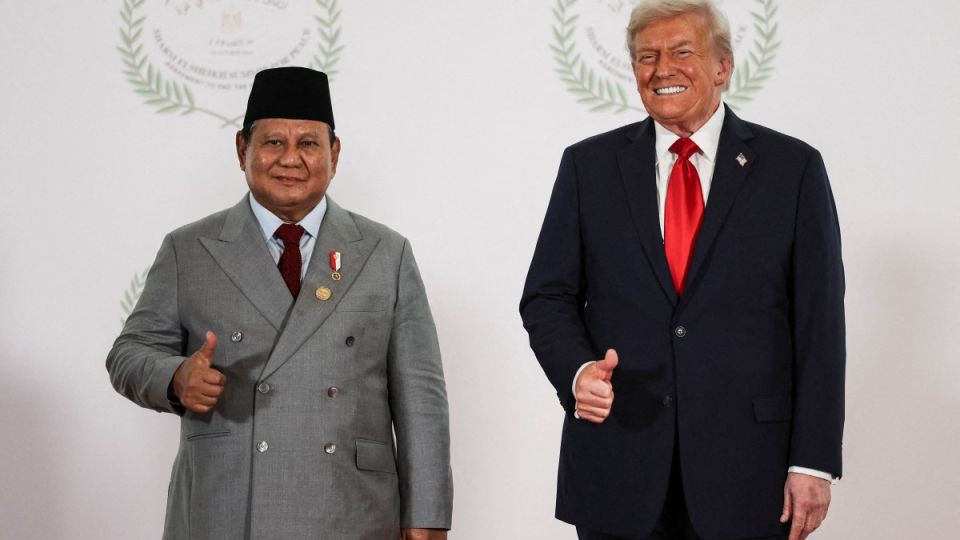
Airlangga said on Monday that President Prabowo Subianto and US President Donald Trump would likely meet next year to sign the Agreement on Reciprocal Trade (ART) once the legal process is completed.
Indonesia was among the first countries to secure a framework tariff agreement with the US government, which lowered duties on Indonesian exports from a threatened 32 percent to 19 percent in July in exchange for various concessions.
Airlangga said that “nothing new” would surface in the deal beyond what had already been agreed upon around five months ago.
Although Jakarta and Washington released a joint statement at the time, the two sides have yet to sign the ART, unlike Malaysia and Cambodia, which signed their agreements on the same day their joint statements were released in October.
However, the pacts signed by Malaysia and Cambodia included a clause requiring the two countries to “consult with Washington” before entering into digital trade agreements with other countries, as well as to align with US sanctions and economic restrictions.
The Financial Times reported in November that Jakarta refused to accept the so-called “poison pill” clause, arguing that it would undermine Indonesia’s “economic sovereignty”. Airlangga responded by saying that “they’re different agreements, not the one with Indonesia”, but declined to elaborate further, citing a non-disclosure agreement signed by both sides.
The Financial Times separately reported on Dec. 10 that US officials had grown increasingly frustrated with Indonesia, viewing Jakarta as reneging on the terms outlined in the joint statement, putting the deal at risk of collapse.
The report said Greer believed Jakarta was “backtracking” on several commitments by attempting to make certain provisions nonbinding, particularly those related to industrial non-tariff barriers, US agricultural exports and digital trade issues.
Airlangga responded to the report on Dec. 12 by saying that “there are always dynamics in every negotiation”, and subsequently deployed a technical team and planned a visit to Washington shortly after the article was published. He also held a conference call with Greer on the evening of Dec. 11.
One issue still being ironed out in the legal drafting is the list of commodities exempt from the reciprocal tariff. Airlangga said on Tuesday that “cacao, chocolate and other” commodities have been included in the US executive order.
He added that a separate bilateral agreement would cover palm oil, and that Indonesia’s textile and garment exports to the US would be subject to the 19 percent reciprocal tariff.
Among the concessions Jakarta has offered Washington is an energy deal, under which the Indonesian government would commission state-owned energy firm Pertamina to procure products from the US, Airlangga explained.
Read also: Trade deal with US ‘still on’ despite reported rift
Centre for Strategic and International Studies (CSIS) analyst Muhammad Habib told the Post on Friday that the US would likely use the ART agreements with Malaysia and Cambodia as benchmarks for Southeast Asia and be “reluctant to go beyond that”.
“But we know that what happened to both is not only a matter of triggering domestic dynamics but also invites questions from other economic powerhouses,” Habib said.
“The question is whether we are confident that our deal, which appears to have been crafted in a hurry, will better safeguard Indonesia’s economic sovereignty. If so, from what side?”