

May 14, 2026
JAKARTA – The rupiah has continued on its downward path since breaching its historic low two weeks ago amid global pressure, but the government is sending mixed signals about the need to activate a bond market response mechanism.
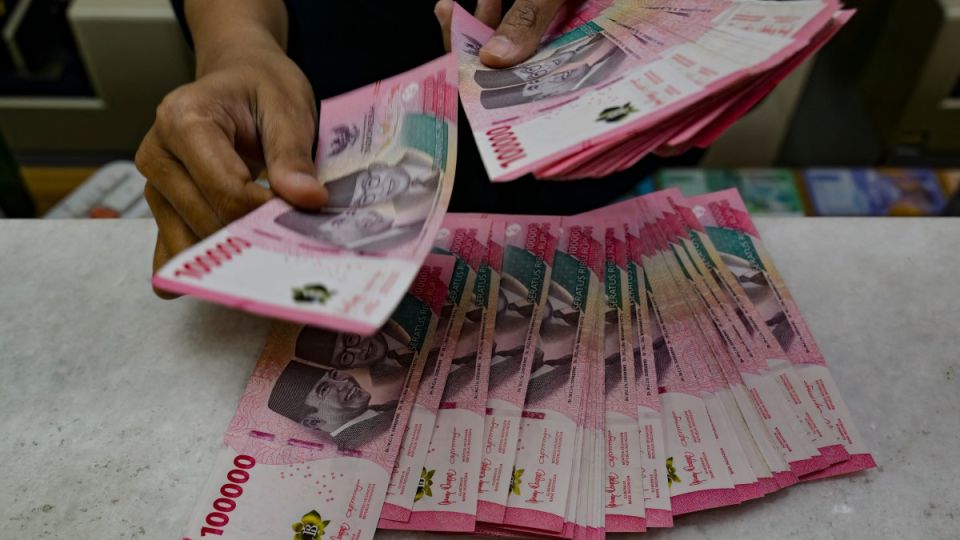
Readings from Investing.com showed the rupiah touching as low as 17,557 per United States dollar on Wednesday, sustaining a losing streak for a fourth day.
The currency has been on a depreciating trend that began when the US-Israeli war against Iran broke out on Feb. 28, dropping in late April below Rp 17,300, a low that had prevailed for almost three decades, since the Asian financial crisis in 1998.
When confronted about the depreciation, Finance Minister Purbaya Yudhi Sadewa has on multiple occasions pointed to the central bank, arguing that the “rupiah is the domain” of Bank Indonesia (BI), notwithstanding economists highlighting fiscal concerns as one of the exacerbating factors.
Last week, Purbaya floated the idea of activating an existing policy called the bond stabilization framework (BSF), which he said was one active measure the government could take to buttress the currency.
The BSF would involve carefully timed buybacks of government bonds to prevent yield spikes during volatile markets, but government officials have been conveying conflicting messages when asked to elaborate on the details of its implementation.
In the past, activating the BSF was based on a crisis management protocol, which, as Deputy Finance Minister Juda Agung explained last Thursday, distinguishes between four statuses: normal, alert, warning and crisis.
The framework could only be activated when the Financial System Stability Committee (KSSK), an authority board comprising the Finance Ministry, BI, the Financial Services Authority (OJK) and the Deposit Insurance Corporation (LPS), adopt a status other than “normal” to justify the intervention.
Juda said the status was in part determined by yields and volatility, but “under current conditions, the market mechanism is still in play; there’s no need to activate” the framework, given that the circumstances “are still normal for now”.
While Indonesia’s 10-year bond yield has been fluctuating since the war began, it has not demonstrated excessive volatility and has been moving within reasonable margins, sustained on a plain that is generally lower than over the past two years.
Nevertheless, Purbaya said his office would deploy the bond stabilization fund, which is one part of the BSF, but refused to divulge whether the protocol status would be escalated from “normal” to any other level.
Juda said the fund would be made up of the government’s excess cash, but Purbaya said it would involve the so-called special mission vehicle, a term used by the ministry as an umbrella for companies under its control, such as PT SMI and PT SMF.
Purbaya said last week that the fund could be deployed any time but retracted his statement on Monday, saying it would not be activated yet, “because it’s not a crisis now”. However, local media reported on Tuesday that Purbaya said it would be activated on Wednesday.
Without activating the framework, the government has been conducting bond buybacks through debt switching, in which the government exchanges maturing debt securities with new ones.
Meanwhile, BI senior deputy governor Destry Damayanti issued a statement on Tuesday saying the central bank was intervening in the foreign exchange market to stabilize the rupiah amid the Middle East conflict, skyrocketing oil prices, mounting global uncertainties and high US dollar demand during the pilgrimage season as drivers behind the ongoing depreciation.