

September 17, 2025
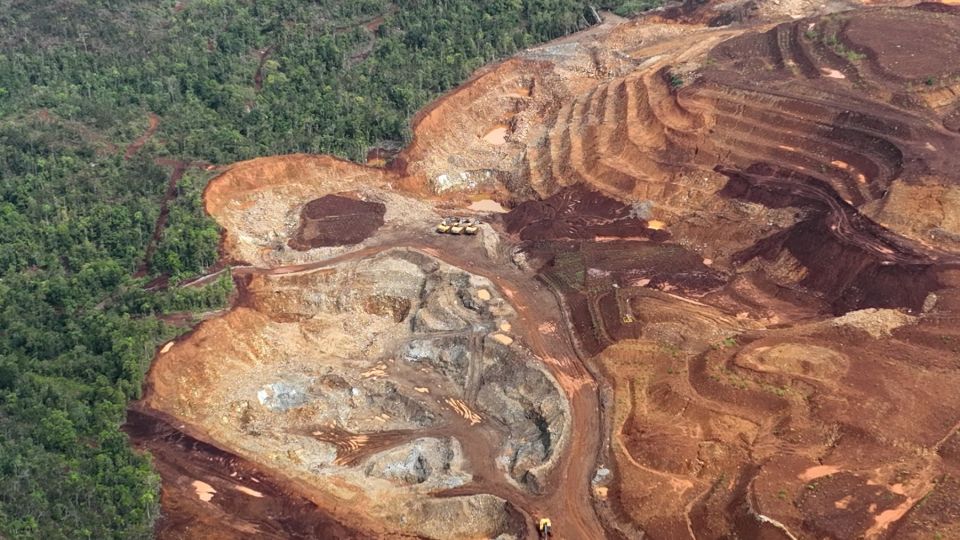
JAKARTA – The government has vowed to implement stricter environmental oversight following its decision to allow mining company PT Gag Nikel to resume its operations in Raja Ampat, despite strong public opposition against the controversial project over concerns about damage to the ecosystem.
The regency is named for the Raja Ampat archipelago, a cluster of small islands and shoals in Southwest Papua that sits in the Coral Triangle and hosts some of the world’s most pristine reefs, its clear blue waters making it a popular diving spot and a marine tourism haven.
Environment Minister Hanif Faisol Nurofiq said President Prabowo Subianto had instructed him to carry out more frequent environmental auditing of Gag Nikel, a subsidiary of state-owned mining company Aneka Tambang (Antam).
“If we previously conducted inspections every six months, we will now carry them out every two months to assure the public that the environmental impacts caused by Gag Nikel can be mitigated properly,” Hanif said on Monday, as quoted by Kompas.com.
A day earlier, the environment minister confirmed that Gag Nikel had resumed its mining operations on Gag Island on Sept. 3.
The company had been under a suspension of operations since June, which was lifted after the ministry reviewed data related to its mining activities.
Hanif also noted on Sunday that the nickel miner had received a “green” rating from the government, indicating the company had complied with environmental standards that the Environment Ministry assesses each year.
Read also: Govt seizes part of nickel site in Weda Bay over forest violations
However, he emphasized the ministry would not hesitate to halt Gag Nikel’s operations if they were found to cause environmental damage on the island.
“Of course, there will always be concerns. That is why we must strike a balance between development and environmental protection,” he said on Sept. 14, as quoted by AFP.
Gag Nikel operates one of five nickel mines in the Raja Ampat archipelago, a region celebrated for its marine beauty and exceptional biodiversity.
All mining activities in the regency were halted in June following widespread domestic and international outrage over the environmental risks posed by nickel extraction in the ecologically sensitive area.
Despite mounting pressure from the public and environmental groups, the government stopped short of imposing a total ban on nickel mining in the region, revoking the permits of four companies.
Energy and Mineral Resources Minister Bahlil Lahadalia cited a violation of prevailing regulations for the government’s decision to revoke the licenses of PT Kawei Sejahtera Mining, PT Mulia Raymond Perkasa, PT Anugerah Surya Pratama and PT Nurham, none of which had submitted their 2025 Work Plan and Budget (RKAB) report.
Mining companies must submit a RKAB for approval by the energy ministry before it can commence operations, including exploration activities.
Gag Nikel was initially allowed to continue mining activities because its RKAB for this year had been approved, but the government later suspended its operations to assess any potential environmental damage.
In 1998, the government granted Gag Nikel a 50-year special mining license under a Contract of Work (KK). Ten years later, Antam acquired Gag Nikel’s operations and was cleared to begin operations in 2018 after securing the necessary permits, including approval for its environmental impact analysis (Amdal).
Read also: Ministry reviews nickel mining in Raja Ampat after outcry
According to a study by Greenpeace Indonesia, nickel mining activities on the islands of Gag, Kawe and Manuran in Raja Ampat have resulted in the destruction of more than 500 hectares of forest and vegetation.
The group warned that the resumption of Gag Nikel’s mining operations could further threaten Raja Ampat’s marine ecosystem, which is home to 75 percent of the world’s known species of hard corals.
“The environmental impact will be irreversible, potentially causing the island to sink due to the [increasing] climate crisis. Eventually, we risk losing the island itself,” Arie Rompas, a forest campaigner at Greenpeace Indonesia, told AFP.
Indonesia has the world’s largest nickel reserves and is the biggest producer of the metal used in electric vehicle batteries and stainless steel, the news agency reported.
An export ban in place since 2020 has spurred a domestic boom in the nickel mining and processing industry, which is central to the country’s economic growth strategy.