

December 12, 2025
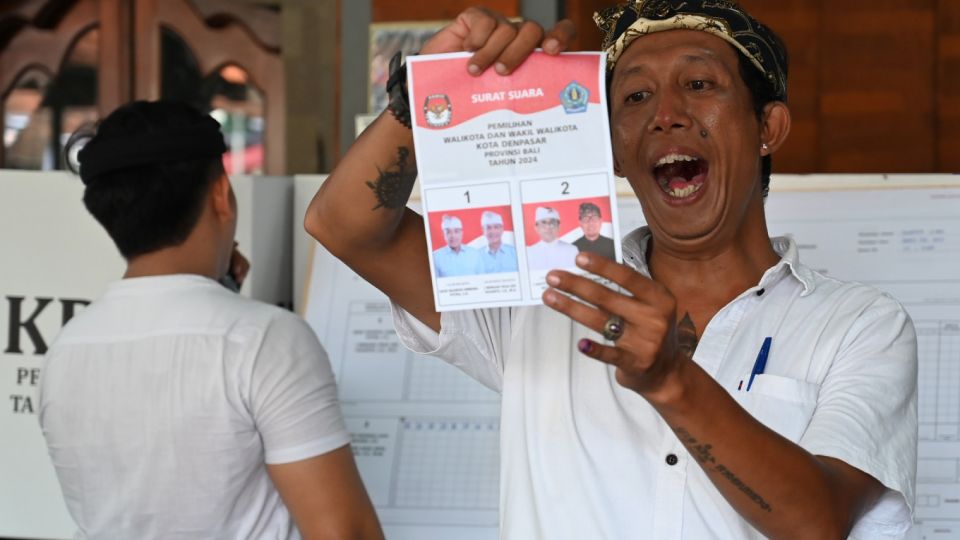
JAKARTA – President Prabowo Subianto has once again raised the idea of scrapping direct regional head elections to cut costs, ahead of a planned revision to election rules at the legislature and despite persistent opposition from pro-democracy activists who have warned of a possible rollback of democratic safeguards.
The Prabowo administration and the government-controlled House of Representatives have been seeking to introduce sweeping changes to election laws, prompting debates over potential changes to electoral systems, including the prevailing direct voting for governors, regents and mayors.
Speaking at the 61st anniversary celebration of the pro-government Golkar Party in Jakarta on Friday, Prabowo said that having regional heads be elected by regional legislatures (DPRD) was an idea worth considering because it might offer a more affordable approach while maintaining democratic principles.
“If we have already elected members of legislatures at the provincial and regental levels, why not have them [legislators] also choose governors and regents?” said Prabowo, who chairs Gerindra Party, the de facto leader of the ruling coalition.
He pointed out that similar systems were already practiced in some countries such as Malaysia, India, the United Kingdom, Canada and Australia, stressing that “the richest countries in the world use cost-effective political systems”.
Direct elections for governors, regents and mayors have been in place since 2005 as part of the reforms and decentralization process instituted after the 1998 fall of the authoritarian New Order regime under the country’s longtime leader, Soeharto, former father-in-law of Prabowo.
But Prabowo on Friday criticized the high cost imposed by direct elections, arguing that expensive elections are “a major source of corruption”, and that lowering election costs could prevent the political system from “being dominated by wealthy individuals”.
This was not the first time the President had criticized direct elections for regional heads. Two months after he assumed office last year, Prabowo suggested that he would support the idea of abolishing direct elections, citing the heavy financial burden the voting system placed on both the state and candidates.
During his unsuccessful 2014 presidential campaign, Prabowo described direct elections as a “Western idea” incompatible with Indonesia’s culture, saying the system encouraged vote-buying.
Discussions on the revision to election rules are set to begin next year, with lawmakers exploring the possibility of combining all laws governing regional, legislative and presidential elections and political structures into a sweeping omnibus law.
A House committee that will draft the bill is expected to be formed in January next year, according to Arse Sadikin Zulfikar, deputy chairman of House Commission II overseeing home affairs, who is also a Golkar politician.
Speaking at the Golkar event on Friday, party chairman Bahlil Lahadalia reiterated Golkar’s proposal from last year to return to the old indirect regional elections to simplify the electoral system. He urged that these changes be considered in the deliberation of the new election law next year.
“If the costs are too high, it restricts opportunities for capable individuals who lack [campaign] funds, including in elections for regents, governors and mayors. This is something that deserves careful consideration,” Bahlil said.
The renewed push immediately sparked outrage among civil groups, who believed indirect polling would be a setback to democracy.
“We firmly reject any proposal or legislative attempt to make regional elections indirect, as it contradicts the principle of popular sovereignty in the Constitution and democratic principles instituted after the 1998 reform movement,” Haykal from the Association for Elections and Democracy (Perludem) said on Saturday.
“Scrapping direct regional elections will not solve the underlying issues behind high political costs,” Haykal said, noting that “these costs stem not from the direct election system itself, but from transactional politics and unaccountable nomination process”.
“Rather than reviving the idea of indirect elections, lawmakers should focus on improving rules to address vote-buying,” he said, including by increasing transparency in political funding.