

March 11, 2026
JAKARTA – President Prabowo Subianto has claimed that Indonesia maintains its long-standing “free and active” foreign policy, underscoring that Jakarta will continue to avoid aligning with any country or bloc despite rising geopolitical tensions, in his first public statement since the US-Israel war on Iran began nearly two weeks ago.
Speaking to mayors, regents and governors in a video conference from his private residence to inaugurate hundreds of new bridges in disaster-hit regions on Monday, Prabowo said the world is currently facing a period of great uncertainty and challenges, citing ongoing wars in Europe and the Middle East.
Amid escalating tensions across multiple global flashpoints, Prabowo reaffirmed that Jakarta’s long-standing nonaligned position remains the most appropriate strategy, underlining that Indonesia’s global positioning has not changed.
“Our nation is on the right track,” the President said. “We stand on a path of nonalignment. We remain committed to our free and active foreign policy. We do not wish to join any bloc. We respect all powers. We respect all nations. That is Indonesia.”
Although Indonesia is geographically distant from these conflicts, the world has “in truth become smaller”, he said, adding that the unabating conflict in the Middle East particularly would be felt throughout the world, including in Indonesia.
“Because of the war in the Middle East, we must be ready to face tough times,” he said.
Against this backdrop, Jakarta plans to project its national motto “Bhinneka Tunggal Ika”, or unity in diversity, into its relations with other nations, he said, arguing that the principle can serve as a foundation for peace internationally.
“We respect all nations, we respect all religions, we respect all races, we respect all ethnic groups. This is what has allowed Indonesia to enjoy peace today. We coexist among hundreds of ethnic groups, yet we remain harmonious,” he said.
Still on track?
Indonesia has for decades adopted the free and active doctrine as the core foundation of its diplomacy, in a principle that has allowed Jakarta to engage competing powers while keeping its national interests front and center, from the Cold War to today’s superpower rivalry.
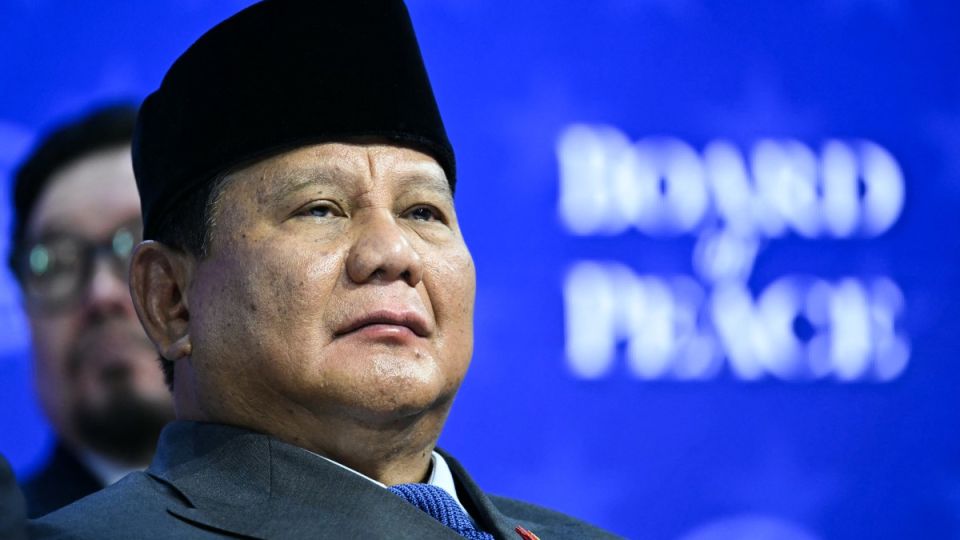
Yet questions have recently mounted over Indonesia’s ability to maintain such a posture following its unprecedented entanglement with the United States through the Agreement on Reciprocal Tariffs (ART), as well as its membership in the Washington-led Board of Peace for Gaza.
The trade deal mandates Jakarta to align with certain US national and economic security measures, including sanctions imposed on any third countries with which Indonesia may partner. The Board of Peace, meanwhile, has appointed Indonesia as deputy commander of its peacekeeping force, the international stabilization force (ISF), as part of Washington’s broader push to position itself as a global peace broker.
Accusations that Jakarta is drifting away from its free and active foreign policy have intensified following what many perceive as Indonesia’s muted response to Washington’s attack on Iran, with the government refraining from condemning or naming an initial aggressor.
Criticism grew when Prabowo only sent his condolences over the death of former Iranian leader Ayatollah Ali Khamenei four days after the strike that killed him, and only after public calls to do so had mounted.
Message to home
Amid pressure both at home and abroad, international relations expert Ahmad Rizky M. Umar told The Jakarta Post that Prabowo’s reassertion of Jakarta’s stance was likely aimed at a domestic audience, given that the speech was delivered to regional leaders and regional chiefs of the military and the police.
The President’s insistence of an unchanged, nonaligned stance was mostly “rhetoric” and must be “taken with a grain of salt”, Umar of Aberystwyth University said, as it was most likely aimed at reassuring Indonesians that the government is capable of maintaining its independence amid an increasingly complex geopolitical landscape.
Yet, he said, there was little doubt that Indonesia’s foreign policy has shifted in recent months, particularly on matters of war and sovereignty.
“In the context of Iran, we have not clearly asserted our foreign policy position at all. We should be rejecting war, the invasion of one country by another, and rejecting the killing of a head of state, as these violate national sovereignty,” Umar said.
“If Prabowo and the foreign minister continue down this road, people will continue to be skeptical. They will question whether Indonesia is truly upholding its free and active policy, or merely trying to appease one particular power,” he added.