

January 15, 2026
BATAM – An Indonesian migrant worker from South Sulawesi, identified only as MRI, has escaped the death penalty after a six-year legal battle over an alleged 2020 murder.
The release was a result of cooperation among the protection task force at the Indonesian Consulate General in Johor Bahru, the Indonesian Embassy in Kuala Lumpur and law firm Gooi and Azura.
The legal case involving MRI began in 2020 when he was charged under Article 302 of the Malaysian Penal Code with murdering a friend. The incident was believed to have stemmed from a debt dispute.
Since then, the legal team and Indonesian representative offices in Malaysia have worked to test every piece of evidence and pursue legal avenues to ensure MRI received a fair defense.
The process culminated on Jan. 5, when judges at the Temerloh High Court ruled that MRI should be acquitted and discharged. The court found there was insufficient evidence to impose the death penalty on MRI.
Temerloh is a city in the Malaysian state of Pahang, one of the states overseen by the consulate general, in addition to the states of Johor, Negeri Sembilan and Malaka.
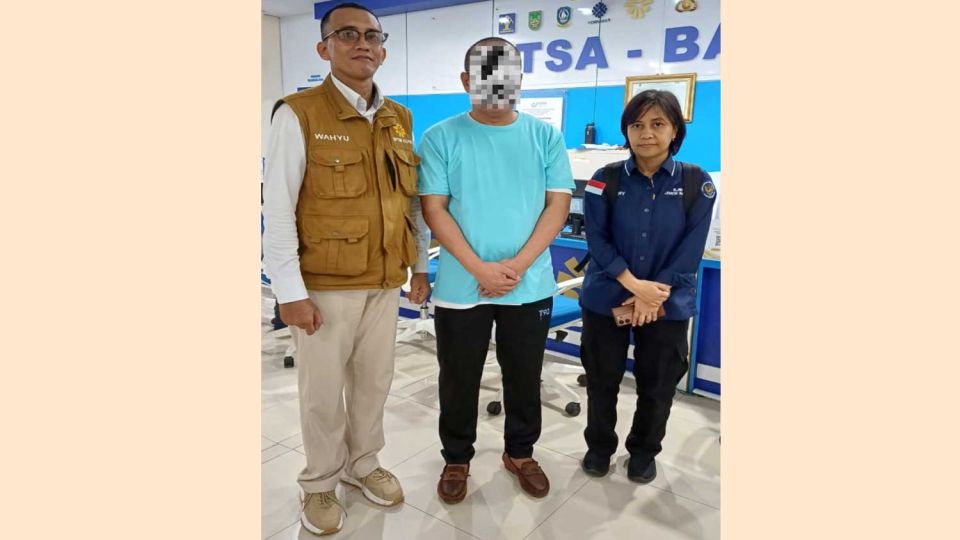
After the verdict, the Indonesian Consulate General in Johor Bahru acted immediately by providing temporary shelter, and processing the necessary immigration documents. MRI was repatriated to Indonesia through Batam regency in the Riau Islands.
“The process of returning MRI to his family who is residing in North Kalimantan will be handled by the BP3MI [Indonesian Migrant Workers Protection Service Center] Riau Islands,” the consulate general’s consular diplomat, Leny Marliani, said in a written statement on Saturday.
MRI’s case was one of dozens of significant cases handled by the Indonesian Consulate General in Johor Bahru. In 2025, the consulate general and team of lawyers had given legal defenses for 76 Indonesians facing the death penalty. A majority of the cases were related to drugs.
The consulate general emphasized that legal assistance provided to Indonesians had not merely been aimed at securing acquittals, but at ensuring they received their legal rights in accordance with the principle of due process of law.
“The main principle of protection is to ensure that every Indonesian receives just treatment before the law,” Leny said.
“The Indonesian Consulate General in Johor Bahru is committed to always present, guard and ensure that every Indonesian receive a dignified legal defense.”
The step also aligns with government policy to strengthen protection for Indonesians abroad, which has been pursued by the current government, especially for those working in vulnerable sectors in Peninsular Malaysia.
Meanwhile on Thursday, the Indonesian Consulate General in Johor Bahru facilitated the first deportation of the year with 163 Indonesians, including two children, being repatriated from Malaysia.
The children were an 8-month baby girl and a 6-year-old boy, while the adults consisted of 111 males and 50 females.
Most of the deportees were from the Pekan Nenas Immigration Detention Depo (DTI) while three others were listed as vulnerable and had been sheltered temporarily at the consulate general.
“The Indonesian Consulate General in Johor Baru continues to expedite the deportation process for Indonesians who have completed their detention period,” Leny said in a written statement on Thursday.
This year’s first deportation used a ferry departing from Stulang Laut Port and arriving in Batam Center International Ferry Terminal.
Although the deportation went smoothly, Leni said many deportees did not have travel or residency documents. This forced the consulate general to issue at least 125 travel documents in lieu of passports (SPLPs) so the deportees could return home (nvn)