

January 27, 2026
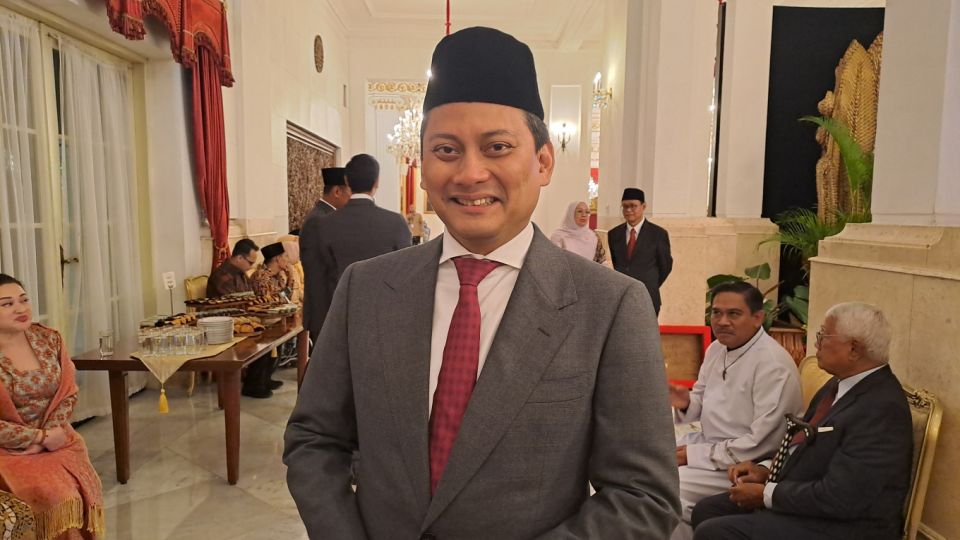
JAKARTA – The House of Representatives has officially picked Thomas “Tommy” Djiwandono to become a senior official at Bank Indonesia (BI) following his confirmation hearing on Monday in which he addressed market sentiment and guaranteed the central bank’s independence during his tenure
Tommy, who currently serves as a deputy finance minister, went through the screening interview conducted by members of House Commission XI, which oversees financial affairs. The House came to the decision swiftly after wrapping up the interview.
Mukhamad Misbakhun, the commission’s chairman, announced Tommy’s selection to the media mere minutes after the candidate left the building, saying that he was “a figure that can be accepted by all political parties” and that the decision would be brought to the plenary session the very next day.
The future deputy governor addressed market sentiment during his presentation in the hearing, acknowledging that the “assumptions made about him were not good” given his familial ties with President Prabowo Subianto.
He said there was “no other way” to ward off the naysayers “but to work as hard as I can”.
President Prabowo nominated Tommy, his nephew, on Jan. 19 to replace former deputy BI governor Juda Agung, who resigned with immediate effect on Jan. 13, according to BI. On the same day, Finance Minister Purbaya Yudhi Sadewa stated that Juda was slated to take Tommy’s position as deputy finance minister.
Both the rupiah and the yields on Indonesia’s 10-year bond were hit by Tommy’s nomination, given concerns about BI’s independence.
The rupiah, which has already been battered by global uncertainties, experienced a sharp weakening shortly after the news of Tommy’s nomination broke. The currency flirted with its historic low against the US dollar last week but has since regained its footing by a respectable margin.
The bond yield, however, continued its rise from the ballpark of 6.1 percent in December to 6.3 percent following the nomination. The figure rose again to 6.41 percent on Friday but receded to 6.33 percent on Monday, reflecting a worsening investor perception of the risks of Indonesian bonds.
BI Governor Perry Warjiyo revealed on Wednesday that all nominations originated from his recommendations to the President and vowed that BI would maintain professionalism and data-based decision-making irrespective of what played out in the deputy governor race.
Tommy was nominated alongside two other candidates: Solikin M. Juhro, an assistant governor at the central bank, and Dicky Kartikoyono, likewise an official at BI. Solikin went through the screening interview on Friday while Dicky took his on Monday, shortly before Tommy.
The nominees have built their careers within the monetary policy authority, save for Tommy, who has served as deputy finance minister since July 2024, an appointment some experts had described as problematic.
Tommy emphasized “synergy” between the fiscal and monetary authorities during the hearing, which has to be reinforced without hurting BI’s independence and while staying on track with “the mandate”.
He said the monetarist approach adopted by Finance Minister Purbaya, which puts heavy stress on liquidity availability, was “worth considering” given his view that it would boost growth.
Tommy wrote in the presentation deck that the burden-sharing scheme “will not be continued” but did not state this during the hearing. When reporters asked for confirmation on the matter, he answered: “Burden sharing is a concept of the past”.
The scheme, which enlists the central bank in shouldering the cost of financing the state budget, was introduced during the coronavirus pandemic in 2020. It allows BI to buy government bonds in the primary or secondary market but returns all or part of the interest it earns on the coupon.
Introduced as a crisis response in 2020 as a lifeline thrown to the state to allow for a selling spree as the government strove to keep economic activity going, the scheme remains in place today, long after the pandemic ended.
Tommy is the son of Soedradjad Djiwandono, BI governor in the 1990s who was married to Prabowo’s sister Biantiningsih Miderawati Djiwandono, and also served as deputy CEO of Arsari Group, which belongs to Prabowo’s brother Hashim Djojohadikusumo.
The future deputy governor attended Haverford College in Pennsylvania, in the United States, for his undergraduate degree and earned a master’s degree in international relations and international economics from Johns Hopkins University.
Questions arose regarding Tommy’s political affiliation when his nomination emerged but he revealed in the interview that he had not been a member of Prabowo’s Gerindra Party since the end of last year, which he said was “part of the commitment to BI independence”.