

March 23, 2026
JAKARTA – In the final days of Ramadan, shoppers begin filling markets and boutiques in search of the perfect Lebaran outfit. For many Indonesians, the clothes worn on Idul Fitri are part of the celebration itself, carrying them from morning prayers to a day of visiting relatives and friends.
With so many silhouettes, shades and statements competing for attention, choosing the right ensemble can feel overwhelming. To help navigate the sartorial maze, some of the country’s leading designers share how to step into Lebaran with polish and confidence.
While white and off-white remain the festive season’s perennial favorites, they are no longer the only choices.
“People used to wear the same outfit from the morning prayer at the mosque all the way through to their visits with friends and relatives,” said modest wear designer Itang Yunasz.
“Now it’s different. White or ivory still feels appropriate for the mosque but later, when they go out to spend the day visiting family and friends, they usually change into something more stylish and festive,” he said.
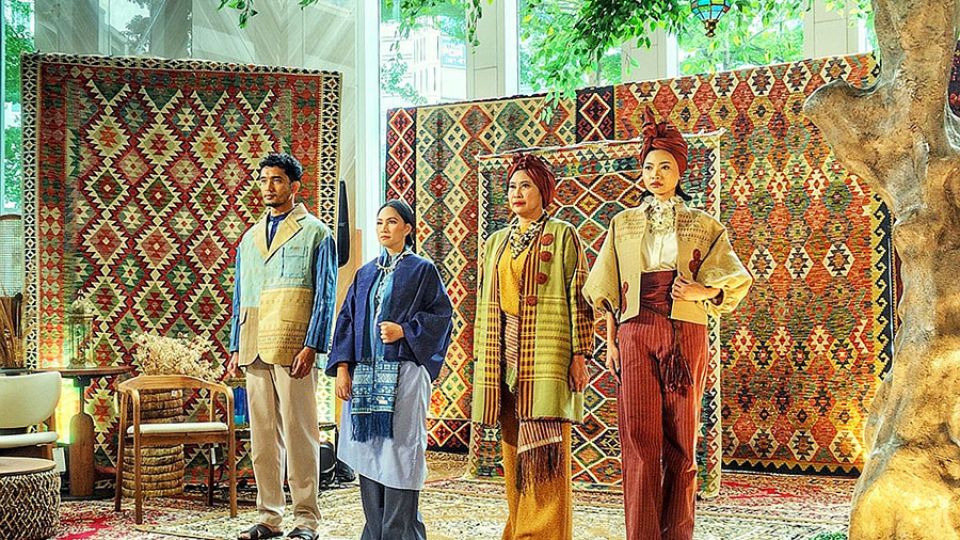
Itang unveiled his creations for this year’s Lebaran on Feb. 9 at the Sopo Del Tower in South Jakarta. His lineup combined two Batak textiles by Tobatenun: ulos Ragi Hotang, known for its intertwining motif of rattan vines, and ulos Sadum, adorned with repeating geometric designs inspired by Arabesque art.
The textiles were paired with panels of rayon, linen and bamboo viscose in a palette dominated by shades of blue and earth tones, while bold wine accents gave the outfits a fresh, contemporary feel.
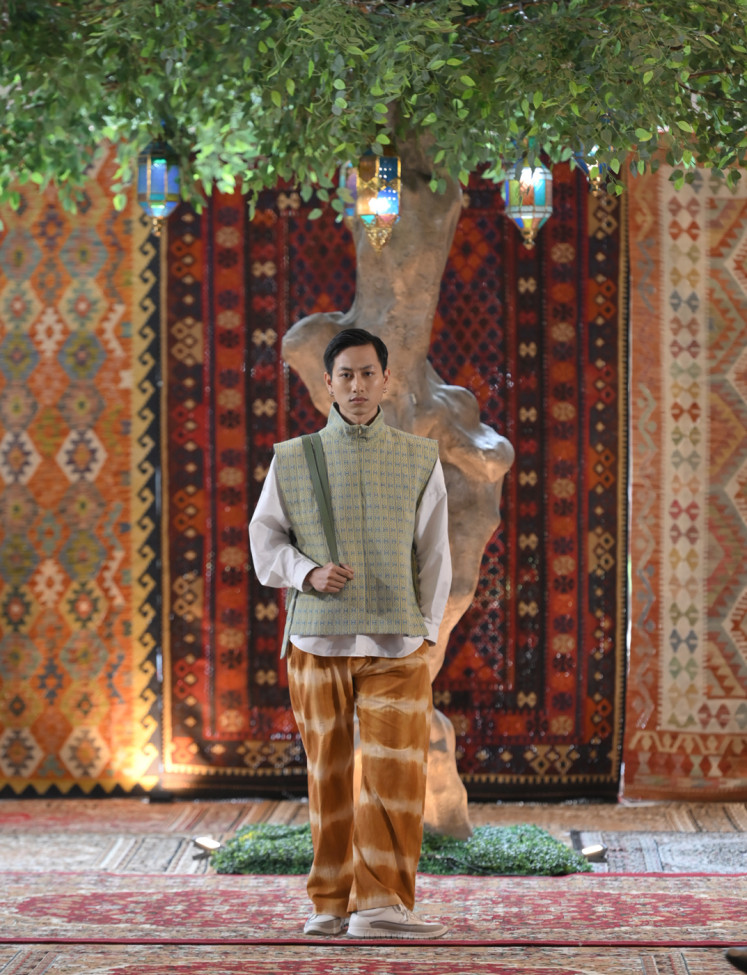
A model showcases menswear by Amot Syamsurimuda, featuring a tailored vest made from Tobatenun’s Tenun Dobar paired with tie-dyed straight leg trousers in earthy tones and a crisp white shirt, during a Ramadan-Idul Fitri 2026 fashion show on Feb. 9 at the Sopo Del Tower in Kuningan, South Jakarta. PHOTO: THE JAKARTA POST
Contemporary twist
Eva Margawaty, the fashion and beauty entrepreneur behind online shop Bilik Ayu, also sees the same color direction emerging.
“I see earthy tones becoming very prominent in Lebaran this year,” she said.
In collaboration with ready-to-wear label Sissae, Eva unveiled an Idul Fitri capsule collection titled Anggrek (orchid) on Feb. 13 at Plataran Dharmawangsa in South Jakarta.
Rendered in warm, grounded hues, the lineup feels polished and elegant, with Javanese- beskap jackets taking center stage.
Crafted from velvet and finished with charming details such as a column of buttons trailing down the back, the jackets reinterpret the traditional silhouette with a contemporary touch.
“Beskap has that neat, distinctly Indonesian look,” Eva said.
“And they’re actually versatile. For something formal, you can pair them with tailored pants or a long skirt. But you could just as easily wear one over a miniskirt for a chic, modern twist.”
Ega Augustia, cofounder and creative director of modest wear label Glashka, agrees.
“Beskap is really having a major moment this year,” she said. “So many brands are releasing their own versions, from classic neutrals to bold colors.”
Glashka’s Raya 2026 collection, also presented on Feb. 9 at the Sopo Del Tower, features beskap crafted from Tobatenun’s tenun Naarta, a handwoven textile made with two-color threads inspired by gemstones.
Rendered in soft pastels, long a Lebaran favorite among Indonesian women after white, these tailored pieces look stylish and elegant.
Beyond beskap, industry insiders expect Java’s traditional blouse kebaya to be popular this holiday season, particularly kebaya janggan. Its tailored structure and high collar create a graceful look suited for visiting family elders during Idul Fitri.
“Kebaya janggan can also be worn beautifully over a long tunic and pants, creating a clean, streamlined silhouette,” Itang said.
“Layering is very much in right now,” he added, with many women mixing and matching pieces to create more varied looks.
“It’s part of the style and the lifestyle people are embracing today.”
The appeal lies in how easily layers can transform an outfit. A long, lace vest, for instance, can instantly elevate the simple, ankle-length Muslim dress gamis into something more refined for holiday visits.
Beyond refreshing the look, “Layering can soften fuller figures and add structure to slimmer frames,” Itang explained.
Essential batik
For many people batik remains a go-to for holiday outfits, as it is part of Indonesia’s cultural identity. Aside from aesthetics, batik also carries meanings that resonate with the spirit of Lebaran.
“Batik is never created by just one person,” House of Representatives Speaker Puan Maharani said on Feb. 27, during the launch of the Raya collection from Alleira Batik at the Grand Hyatt Jakarta.
“It takes many hands to produce a single piece. That’s why batik reflects the Indonesian spirit and our tradition of gotong royong [mutual assistance], making it especially meaningful for Hari Raya, a celebration rooted in togetherness,” she emphasized.
For women, Alleira Batik’s festive collection features caftans, long dresses and flowing overcoats made from silk, cotton and jacquard, adorned with batik motifs and discreet embroidery. Floral elements blend with traditional patterns in a palette that leans toward luminous whites accented with gold touches.
While polished and elegant outfits remain a fashion staple for the holiday, some younger consumers, particularly men, are opting for styles that feel more relaxed and versatile this year.
Designer Amot Syamsurimuda reflects this shift in his men’s collection Mulak, which means “returning home” in Batak, presented at the Sopo Del Tower on Feb. 9.
Draws on the Batak textile heritage, his creations incorporate Tobatenun’s tenun Dobar (downpour) and Habut (fog) in calming shades of blue and white. Their silhouettes are defined by relaxed-fit shirts, Bermuda shorts, tailored vests and flared trousers, and some pieces feature shibori stitches that add subtle texture.
“Loose-fitting silhouettes are actually quite fashionable these days,” Amot said.
Practicality also plays a role, as many consumers are seeking outfits they can wear beyond the holiday.
“That’s why many prefer simpler, more versatile pieces,” he added.

A model presents a dusky rose velvet ‘beskap’ (Javanese jacket) paired with an off-white batik culotte from Sissae × Eva Margawaty’s Lebaran 2026 collection on Feb. 13, 2026, during a fashion show at Plataran Dharmawangsa in Kebayoran Baru, South Jakarta. PHOTO: THE JAKARTA POST
Finishing touches
For those who enjoy wearing jewelry, the festive season is often the perfect occasion to bring out pieces in gold, studded with diamonds and other precious stones.
“Gold jewelry enhances our confidence, while diamonds make a statement,” said Rolly Soesanto, general manager of Frank & Co.
Among the jewelry styles gaining attention today are those using rose gold and adorned with fancy color diamonds, valued for their distinctive, rare hues.
When styling jewelry for Lebaran, however, balance is key.
“Don’t wear jewelry from top to bottom and risk being a show-off,” said Rolly, advising instead to choose a single statement piece.
A diamond solitaire ring, for example, can serve as a focal point, while it can also be stacked with ordinary rings worn daily for a layered look.
Men who prefer to wear jackets, including beskap, for Lebaran visits can add a small decorative touch, such as a lapel pin or brooch.
“Chain brooches are especially trendy for men these days,” Rolly said. “Because men’s jackets are usually plain, a chain brooch can add a strong statement detail.”
He also suggests adjusting accessories throughout the day, opting for simpler pieces for daytime gatherings and bolder ones for evening events.
Before rushing out to buy something new, however, it may be worth taking another look at the clothing hanging in the wardrobe.
“You can actually recycle items you already have and mix and match them to create a new silhouette,” said Edo Fernando Susilo, retail manager at Jewels of Eden in South Jakarta’s Pacific Place.
Edo suggests preplanning, setting aside a little time before Lebaran to revisit one’s wardrobe and experiment with different combinations and looks.