

April 2, 2026
MANILA – The Department of Foreign Affairs (DFA) has asked Iran to designate the Philippines as a “non-hostile” country, despite its close defense ties with the United States, to ensure the safe passage of Philippine-flagged vessels and oil shipments through the Strait of Hormuz.
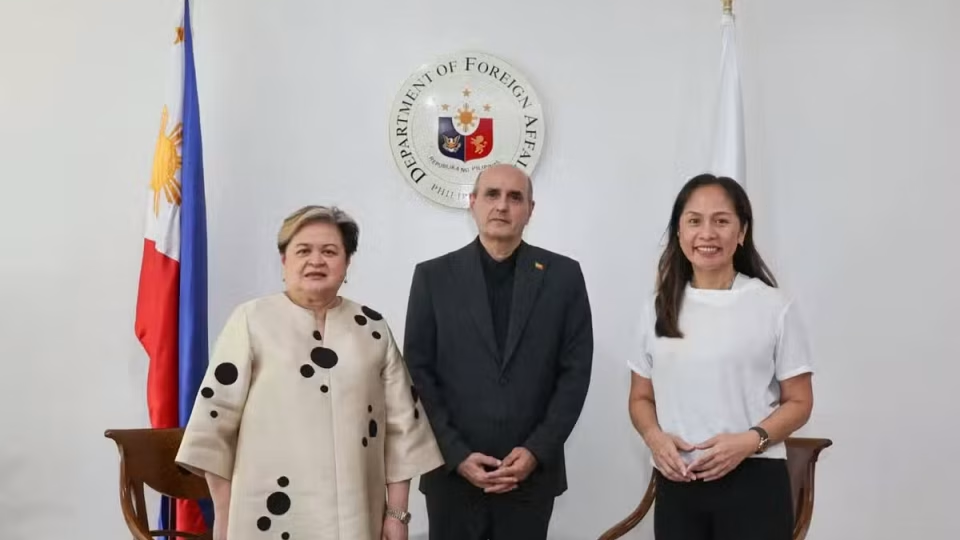
The request was made during a meeting between Foreign Affairs Secretary Maria Theresa Lazaro, Energy Secretary Sharon Garin, and Iranian Ambassador to the Philippines Yousef Esmaeilzadeh on Wednesday, according to Palace Press Officer Claire Castro.
Sharing details of the bilateral meeting, Castro said Lazaro emphasized that the designation is “vital for the protection of our seafarers and our energy supply.”
The Department of Energy is finalizing the details for the “immediate transmission” of information on the concerned vessels.
Lazaro is expected to meet Iranian Foreign Minister Abbas Araghchi on Thursday to personally secure these commitments at the highest level.
Castro: Iran says it has been ‘awaiting’ PH outreach
According to Castro, Esmaeilzadeh said Tehran “has been awaiting our outreach and reaffirmed their strong willingness to assist the Philippines with our specific requests.”
Manila, in turn, has agreed to route all detailed requests through official diplomatic channels to expedite processing.
“The meeting was exceptionally warm and open. Given their stated readiness to cooperate, we are highly optimistic about a favorable outcome,” Castro said.
The Philippines is committed to “deepening cooperation” with Iran, particularly on energy, Manila’s foreign secretary said Wednesday, as the import-dependent archipelago competes with other regional countries for urgently needed oil.
Fuel prices have reached historic highs in the Philippines since treaty ally the United States and Israel launched strikes on Iran on Feb. 28, forcing the partial closure of the vital Strait of Hormuz.
President Ferdinand Marcos Jr. earlier ordered officials to negotiate with Iran for the safe passage of Philippine-bound oil tankers through the Strait of Hormuz as the conflict in the Middle East showed no signs of ending soon.
Castro said the talks with Iran were suggested during a meeting on Monday of the Unified Package for Livelihoods, Industry, Food, and Transport committee called by Marcos.
The committee is headed by the president and was created after he issued an executive order declaring a national energy emergency. /mcm