

January 29, 2026
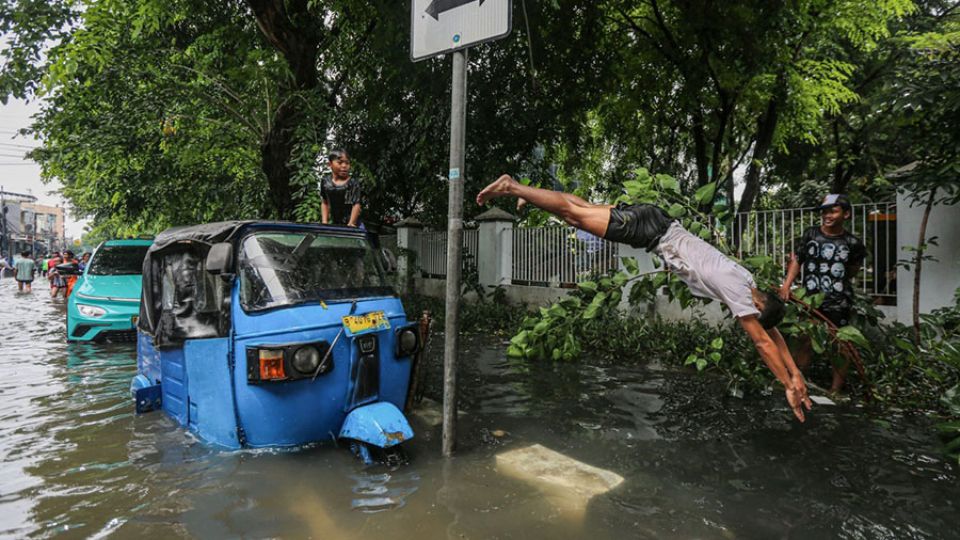
JAKARTA – The Jakarta provincial administration has widened its weather modification efforts to the skies over the capital’s satellite cities until next week, with an aim to curb intense rainfall that recently triggered flooding in the city.
On Tuesday, the Jakarta Disaster Mitigation Agency (BPBD) dispersed 3.2 tonnes of salt, also known as sodium chloride, and quicklime also known as calcium oxide into clouds to disperse them.
The cloud seeding operation involved four flight sorties at altitudes between 900 and 3,700 meters above sea level over the northern and southern parts of Jakarta, as well as Bekasi and Bogor in the neighboring province of West Java.
“We are also launching [cloud seeding] at the borders because there’s indeed a possibility of high rainfall in the coming days in Tangerang and South Tangerang [in Banten] as well as Bogor and Bekasi [in West Java],” Jakarta Governor Pramono Anung said on Tuesday, as quoted by Antara.
He added the move was aimed at preventing flooding from neighboring cities.
Over the past few years, authorities have been relying on cloud seeding at different times as ways of inducing rain to combat drought, or diverting rain clouds to other desired places. For the method to work, salt and quicklime are dispersed to the sky from an aircraft to trigger rain at a certain time.
The operation was initially scheduled to run until Tuesday. However, the provincial administration extended it through Feb. 2 to further reduce rainfall intensity in Jakarta.
At least 97.8 tonnes of sodium chloride and calcium oxide have been disbursed in the cloud seeding operation since Jan. 12.
The Meteorology, Climatology and Geophysics Agency (BMKG) previously issued a warning about potential heavy rainfall and other extreme weather conditions in southern Sumatra, Java, Bali and Nusa Tenggara islands until the end of the month.
The extreme weather may also trigger floods and landslides, BMKG head Teuku Faisal Fathani said in a statement on Jan. 20.
Several factors influence the recent weather and climate conditions, such as severe tropical cyclone invests forming over the Indian Ocean. The latest invest monitored by the weather agency was called Invest 98S, and that formed on early Wednesday.
An intensifying Asian monsoon, followed by a cold surge from mainland Asia, was among the atmospheric conditions triggering increased rain cloud formation over the archipelago.
The Jakarta BPBD has warned against risks of tidal flooding in the city’s northern coast following a high tide warning issued by the BMKG. Several areas were declared prone to the tidal flood, including Ancol, Cilincing and Tanjung Priok in North Jakarta.
“Residents living in the coastal areas of North Jakarta are urged to increase their vigilance against potential tidal flooding, which is expected to occur from Jan. 27 to Feb. 3,” Jakarta BPBD acting head Isnawa Adji said on Wednesday.
The local disaster agency also announced that flooding that had paralyzed some areas in East, South and North Jakarta last week had begun to recede. The City Hall has pledged to cover all medical costs for flood victims.
At least two people reportedly died during the recent flood in Jakarta.