

July 15, 2026
JAKARTA – The line outside the Nyi Ageng Serang Public Library showed little sign of shrinking on Friday afternoon. Just two days after reopening on July 8, the South Jakarta library had already reached capacity, leaving dozens of visitors waiting patiently for their turn to enter.
For many, the wait was a small price to pay for a free, comfortable place to read, study or simply unwind with a book.
Andrea, a 30-year-old Jakarta resident, was among those willing to queue. She told The Jakarta Post that she had been eager to visit the library since seeing it on social media.
“I first heard about this library through social media. After seeing videos on Instagram, it looked like such a comfortable place,” Andrea said.
Having frequently visited the revitalized Jakarta Library at the Taman Ismail Marzuki arts and culture center in Cikini, Central Jakarta, Andrea said she was pleased to see another modern public library open in the city.
Reopened in 2022 after a major revitalization under then-governor Anies Baswedan, the Cikini library has become one of Jakarta’s busiest public libraries, drawing up to 3,600 visitors on weekdays. Andrea said Nyi Ageng Serang offered a similarly extensive collection, but much closer to her home.
Originally established in 1978, the Nyi Ageng Serang library was forced to close in 2020 because of operational disruptions during the COVID-19 pandemic. Governor Pramono Anung officially reopened the facility last week, following repeated calls from residents for more free and accessible public libraries.
“We didn’t expect enthusiasm to be this high. More than 100 people queued to enter,” librarian Salwa said, “We’ll continue improving our services so visitors can enjoy the library comfortably.”
When the Post visited on Friday, staff were limiting entry because the library had reached capacity. Visitors waited outside until others left.
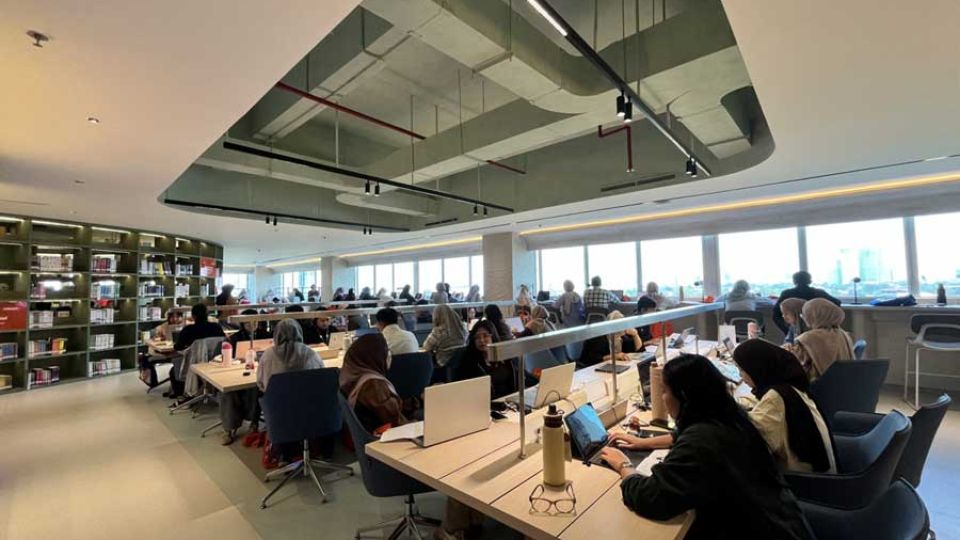
Inside, the library resembled less a conventional reading room than a modern community hub. Young people filled shared tables with laptops, browsed shelves of fiction and non-fiction, or listened to vinyl records in a dedicated music corner.
Its collection includes around 20,000 books spanning literature, religion, philosophy, psychology, technology and the social sciences.
“This place is really comfortable,” said another visitor, Ira.
“No wonder it’s so crowded even though it’s only been open for a few days. It shows that many young people actually enjoy reading. Maybe we’ve just been waiting for a free place where we can do it.”
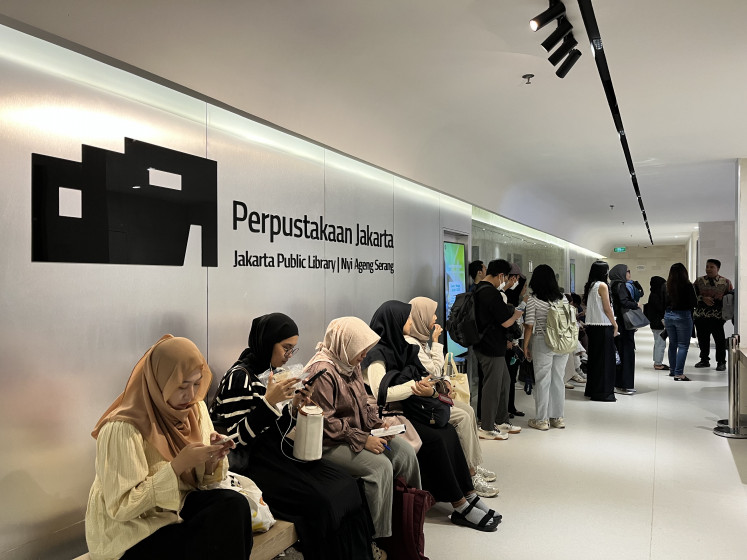
Visitors queue outside the Nyi Ageng Serang Public Library in Rasuna Said, South Jakarta, on July 10, 2026. Entry is temporarily restricted once the library reaches capacity, requiring visitors to wait for their turn to enter.
More than books
The library’s popularity reflects a broader shift in how public libraries are being used.
Rather than serving solely as places to borrow books, they are increasingly becoming public spaces where people can work, study and socialize without the financial pressures that often accompany cafés or commercial coworking spaces.
Governor Pramono said the library was intended to become a space where residents could not only read but also discuss ideas, conduct research and pursue lifelong learning
“I believe this library will become a place where young people can seek information, read, meet and exchange ideas,” he said during Tuesday’s inauguration, adding that the city would continue expanding its collection.
Education expert Ina Liem welcomed the library’s reopening, saying it came at a time when strengthening literacy among young people was becoming increasingly important. Strong reading habits are essential to help people think critically amid the growing spread of artificial intelligence-generated misinformation, and to adapt to rapid technological change in the workplace.
However, she cautioned that providing library facilities alone would not automatically support lifelong literacy. Reading habits must be nurtured consistently through families and schools until they become part of everyday culture.
Another visitor, 23-year-old Sasa, recognized the growing importance of literacy as AI became more prevalent. But she said the cost of books remained a barrier for many, making public libraries an important alternative.
“Not everyone can afford to buy books,” she said, “That’s why it’s wonderful to have a library like this, especially one that stays open until 10 p.m. It gives young Jakartans another place where they can learn without worrying about the cost.”