

June 17, 2026
TOKYO – While Prime Minister Sanae Takaichi has expressed support for European efforts to ensure safe navigation in the Strait of Hormuz, there is concern in the government about using the Maritime Self-Defense Force to clear mines in the strait, given the constitutional hurdles.
The government plans to quickly identify ways it can feasibly contribute to the efforts while closely monitoring the actions of other countries.
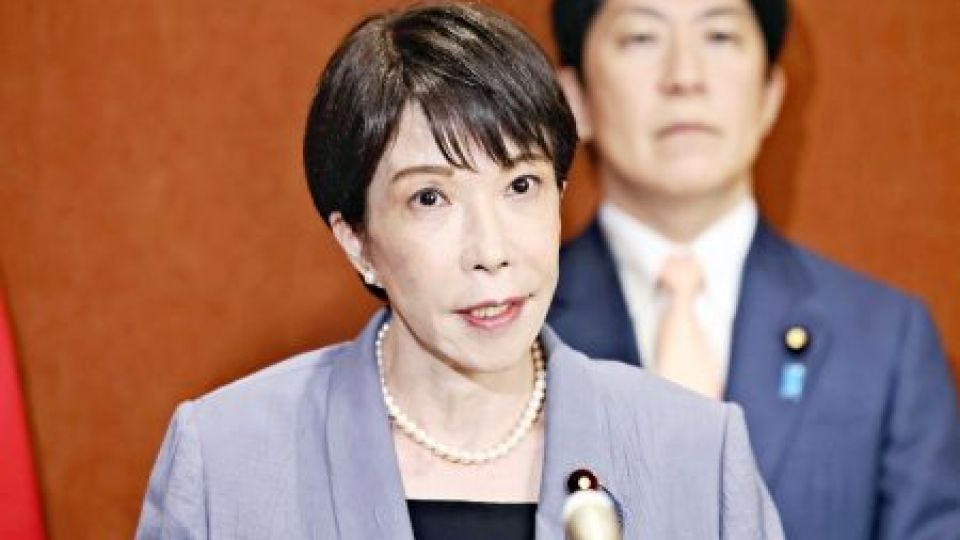
Referring to the joint statement by the leaders of Britain, France, Germany and Italy, Takaichi said in Rome on Monday, “We received a request for Japan to join the joint statement. We will sign on.”
The decision stems from a sense of urgency. “Japan, which relies on the Strait of Hormuz for the majority of its crude oil imports, cannot afford to do nothing when it comes to international contributions,” said a Japanese government source.
Mine clearance, which is mentioned in the statement, has been a forte of the MSDF — a result of Japan being surrounded on all sides by water. After the end of the 1991 Gulf War, the MSDF removed mines in the Persian Gulf.
Under police powers, Japan can remove mines left after fighting ends as obstacles hindering the passage of ships. On the other hand, removing mines before fighting ends could be interpreted as a use of force against another country.
That means Japan, which is prohibited by Article 9 of the Constitution from using force except in self-defense, cannot in principle remove mines before fighting ends.
In the deal between the United States and Iran, the nuclear issue has been put off, and depending on how future talks proceed, tensions could escalate again.
Japan “will not be forced to engage in activities prohibited by the Constitution,” said a senior Japanese Foreign Ministry official, referring to the joint statement’s stipulation that the signatories will act in accordance with their “constitutional requirements.” “At this stage, with only the end of fighting announced, [mine clearance] would be difficult.”
There are also practical constraints, such as the time required to dispatch naval vessels from Japan to the Middle East, leading some to view dispatching liaison personnel to Europe as a more realistic option.
“We’ve started brainstorming. We will think on our feet,” said a senior Japanese government official, suggesting the government will move forward with discussions based on the agreement to be signed on Friday.