

July 7, 2026
TOKYO – Japan-made denim is attracting attention around the world. Its appeal lies in aspects including its textured, uneven finish — with a distinctive hand-woven fabric look — and even luxury brands who participate in Paris Fashion Week in March are using the denim for their products.
Balenciaga, a French brand, used Japanese denim for a jacket featuring distressed details in places such as the sleeves during Paris Fashion Week.
Denim is produced in Japan as well as countries such as the United States, China, India and Turkey. Denim production in Japan is on a downward trend due to shifts toward fabrics with a high rarity value among industry players. However, Japanese artisans’ denim processing techniques are among the best in the world, attracting demand from luxury brands.
Denim produced on old-fashioned looms with low productivity are held in especially high regard as something that can only be made in the country. The looms were used worldwide from the 1950s to the 1970s but went out of fashion overseas in the efficiency-driven mass-production era.
In Japan, some of these looms remain in use, with craftspeople repairing and maintaining them. They take their time weaving the fabric on the machines while carefully examining the thread tension and the details of the uneven finish of the fabric.
The more you use the denim, the more you can enjoy its subtle fading and patina. In addition, thanks to a long history of indigo dyeing techniques and exceptional dyeing craftsmanship, Japanese denim can take on even the slightest variations in color.
Another strength lies in the finishing techniques. Using a file or other tools, artisans can make brand-new jeans look worn. There also are denim products that can stretch or have a “cool feeling on contact,” made on modern high-speed looms.
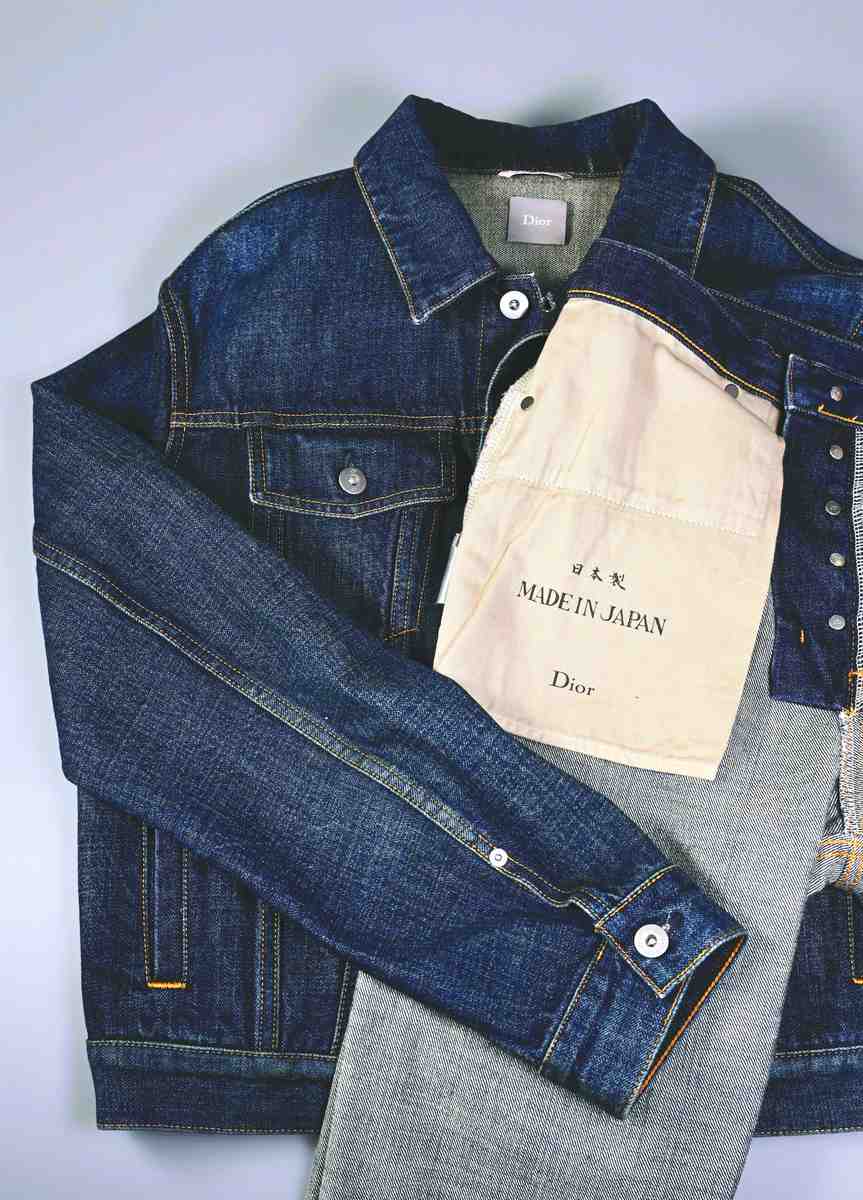
A Dior denim product bearing a “Made in Japan” label. PHOTO: THE YOMIURI SHIMBUN
Place of origin
Japanese denim products have also been captivating foreign tourists.
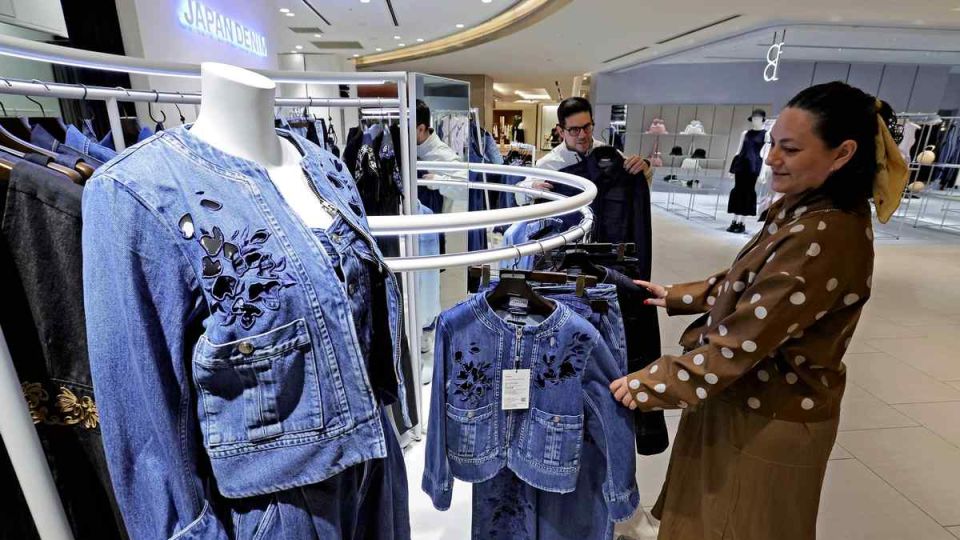
In early June, Australian Daniel Matheson visited Japan Denim, a specialty store for Japanese denim products in the Ginza Six shopping complex in Tokyo’s Ginza district. Matheson said his reason for coming to Japan was to buy denim products.
The store deals with denim products made in the Sanbi region, a major denim-producing area straddling Okayama and Hiroshima prefectures. Prices for jeans at the shop are mainly in the ¥30,000 range, and some items have a three-year wait for shipment. Although it is a small store with an area of less than 40 square meters, annual sales are said to be close to ¥300 million.
Another contributing factor for the denim’s popularity is that overseas brands and others began actively disclosing the origins of the fabrics they use. As environmental awareness began to spread within the industry around 2020, a greater emphasis was placed on supply chain transparency, including where and how products are made.
In 2022, luxury brand conglomerate LVMH announced that it will label its products with the place of origin when using Japanese fabric. In 2023, an LVMH group company formed a partnership with denim manufacturer Kuroki Co. in Okayama Prefecture. Half of Kuroki’s denim products are said to be for overseas markets.
The Yomiuri Shimbun
In January, French brand Dior drew attention after posting a video on social media showing an artisan at a denim factory in Okayama Prefecture performing a finishing process. Dior currently sells denim products worldwide with the “Made in Japan” label on them, which helps demonstrate the high quality of products.
Sayori Tanaka, a designer for Tanaka, a Japanese brand that uses domestically produced denim, said, “Japanese denim can offer a vintage texture and excellent comfort. The one-of-a-kind quality is being recognized overseas, but there’s still room for recognition to spread.”