

July 2, 2026
SHANGHAI/SHENYANG – Japanese companies are gaining a stronger foothold in the elderly care market in China, which is facing a rapidly aging population and declining birth rate.
Despite the deterioration in bilateral relations, Japanese products for the elderly — known for their ease of use and meticulous attention to detail — are well received. Some Japanese companies are also planning to expand their care facilities there.
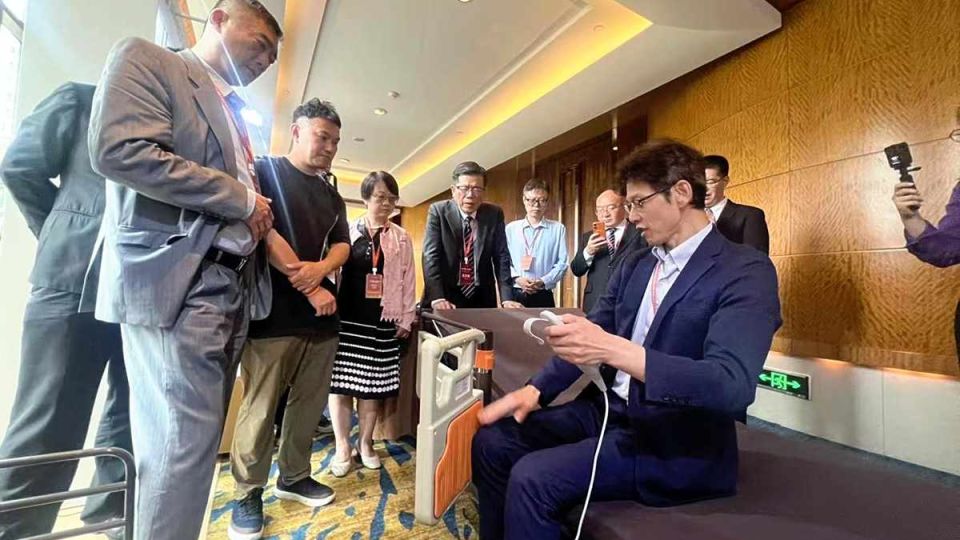
An event showcasing products for the elderly from both Japan and China was held in Shanghai on June 2. Organized by Changrun Elderly Care, a Chinese company that sells Japanese nursing care products in Shanghai, the event brought together approximately 220 companies involved in nursing care and senior care products. About 40 companies from Japan participated, introducing some 300 products, including walking canes that provide good stability, shoes designed to help prevent falls and easy-to-use bowls.
Sakura Yang, a resident of Shanghai who visited the venue, said she had previously purchased Japanese care products for her parents, both of whom are 90 years old. “Many Japanese products support the independence of the elderly, which makes them very appealing,” she said.
Zhuang Wende, chairperson of Changrun Elderly Care, stated, “Japanese products demonstrate meticulous attention to detail and are well-received in the Chinese market,” and expressed his belief that demand will continue to grow.
According to China’s National Bureau of Statistics, the number of people aged 65 or older in the country reached approximately 223 million in 2025, accounting for 15.9% of the total population. According to the Chinese newspaper, that number is projected to reach approximately 450 million by 2050.
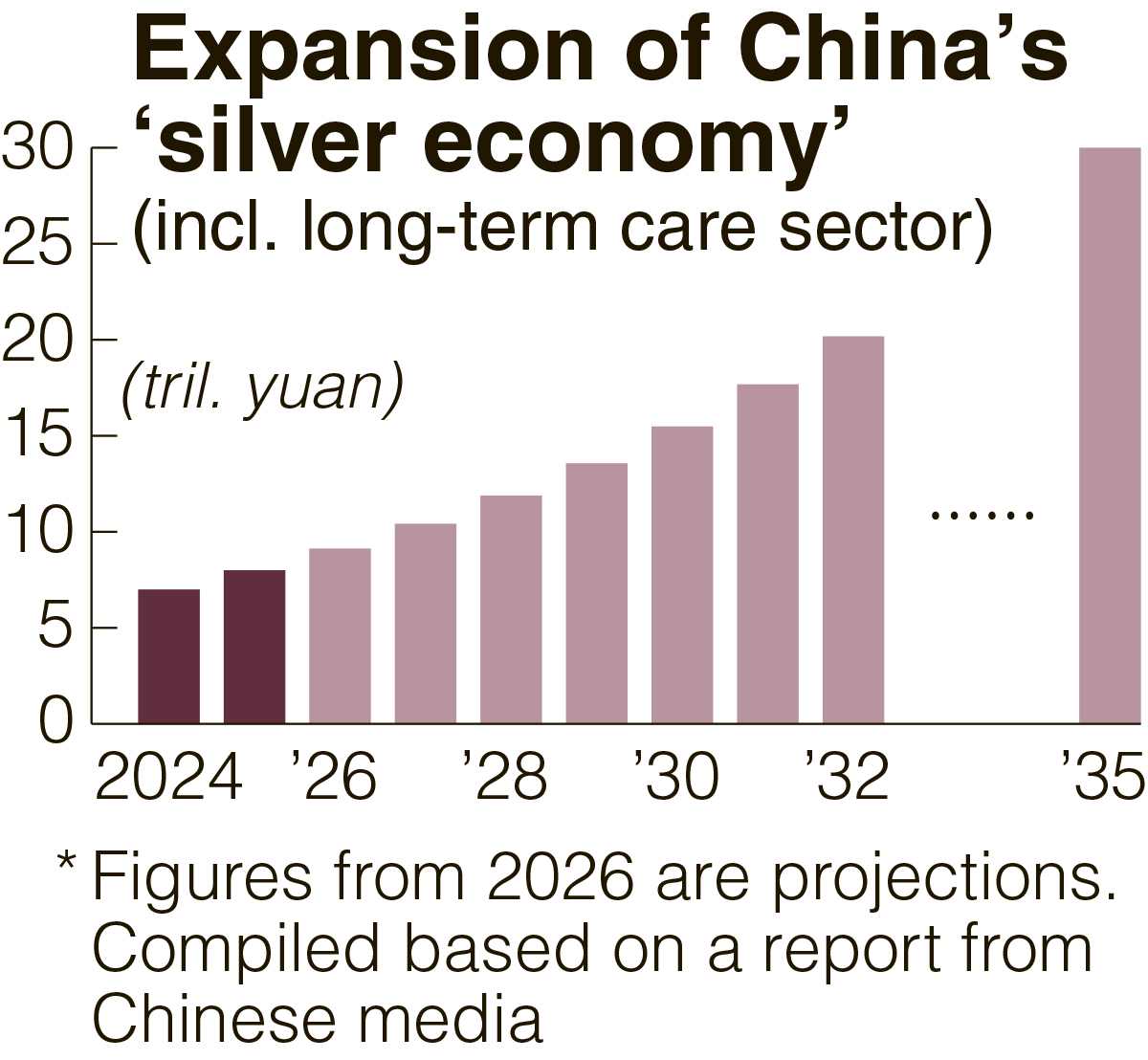
Consequently, the market for products for the elderly is expanding. The Xi Jinping administration has labeled this market the “silver economy” and is focusing efforts on promoting related industries. According to a report by Chinese media, the size of the market is projected to grow from 8 trillion yuan (approximately ¥188 trillion) in 2025 to 30 trillion yuan (approximately ¥700 trillion) in 2035.
Nursing care facilities operated by Japanese companies are also well-received. Medical Care Service Company Inc., which has its headquarters in Saitama City and entered the Chinese market in 2014, currently operates 16 facilities in cities such as Shanghai and Guangzhou. Its facilities specialize in dementia care, rare in China, garnering it a strong reputation. They are reportedly nearly always at full capacity.
The company plans to expand into Liaoning Province, which has a rapidly aging population, as early as this year. According to the Chinese magazine Caijing, the proportion of residents aged 65 or older in the province is 21.9%, the highest in the country, spurring demand for high-quality care services. The company also plans to expand into other regions, and is expected to double its total number of beds to approximately 5,000 as early as next year.
To cater to Chinese seniors who prefer a lively atmosphere, the company has assigned social workers and holds events almost daily, adapting its operations to local preferences. Grace Wang, general manager of the company’s local subsidiary, said, “Our approach — which incorporates Japanese care philosophies and methods while adapting to Chinese lifestyles — has been well received.”