

January 5, 2026
SEOUL – South Korea’s fashion companies are accelerating overseas expansion this year, increasing store counts and reinforcing offline strategies as growth opportunities at home continue to narrow.
Industry officials say K-fashion has the potential to grow into a major export category alongside K-food and K-beauty, supported by sustained global interest in Korean culture.
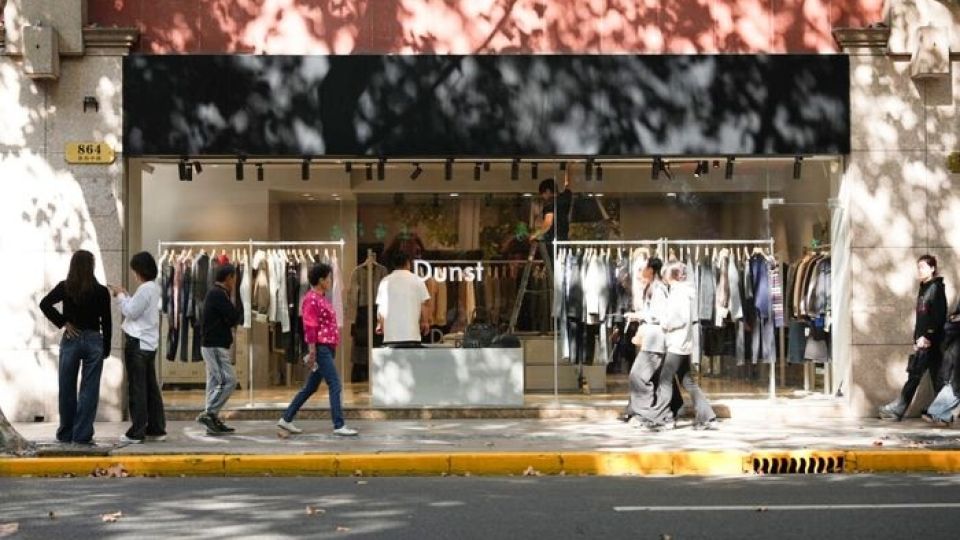
LF is expanding brand-by-brand in China, with the opening of a Hazzys flagship store in Shanghai this month. The company stated that localization tailored to national consumer preferences has driven performance, and it will continue to reinforce a premium image through department store-centered expansion. LF subsidiary CTDOTS’ young casual label Dunst is also testing demand with an immersive pop-up on Shanghai’s Huaihai Road through Jan. 14, translating the brand’s online sensibility into an experiential offline format aimed at younger consumers.
Industry insiders say overseas expansion is no longer optional. Sluggish domestic consumption, economic uncertainty and long-term demographic pressures have reduced room for growth at home. “For brands proven in Korea, overseas expansion has become essential to securing profitability,” one industry official said.

Musinsa Store Shanghai Anfu Road. PHOTO: MUSINSA/THE KOREA HERALD
Musinsa has emerged as a central player in this shift, leveraging both platform scale and physical retail. In China, Musinsa is pursuing a two-track offline strategy. On Dec. 19, it opened its first overseas multi-brand store, Musinsa Store Shanghai Anfu Road, in one of Shanghai’s most influential fashion districts. The store is positioned as a strategic offline space that combines the building’s heritage with Musinsa’s contemporary curation, offering K-fashion in a new way. “We plan to continue adopting localization strategies that coexist with Chinese local culture, enabling Korean designer brands and local consumers to connect naturally across major Chinese cities,” said a Musinsa official.
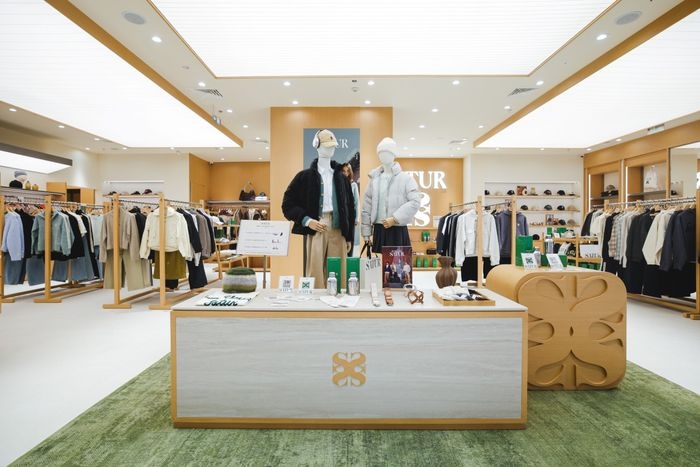
Satur’s offline store in Shanghai. PHOTO: SATUR/THE KOREA HERALD
Japan remains another priority market. Contemporary casual brand Satur is expanding its offline footprint in both Japan and China, positioning the two markets as springboards for wider Asian growth. Satur drew attention last October when its Harajuku flagship store recorded about 300 million won ($207,468) in sales within a week of opening. Building on that momentum, the brand plans to open a store at Osaka’s Lucua Mall in February and add another location at Nagoya Parco in the second half of this year.
In China, Satur opened its first store in Beijing’s Chaoyang district last November and has since launched six locations across key cities including Qingdao, Yanji, Beijing, Shanghai and Jinan. The brand plans to expand to as many as 30 stores in China this year to further strengthen its presence.
As Korean fashion companies deepen offline distribution in Japan and China, the focus is now on long-term brand building through experience-driven retail in prime locations.