

January 30, 2026
KARACHI – One night seven years ago, in the midst of one of Karachi’s hottest summers, Haris Ibrahim, who owns popular teashop Chai Master in Defence’s Phase VI, noticed a faint whimpering coming from beneath a parked car. When he knelt to investigate, he saw a small kitten with matted fur and a broken leg staring back at him. One of the first things he noticed was how malnourished it was.
He glanced around to look for its mother or any other cats in the surrounding area, but he didn’t see anything. After playing with the kitten for a short while, he left it with a bowl of milk under a tree. On his way home, he couldn’t shake the image of the small kitten limping around. The next day, he returned to find the cat under the same tree. He wondered if it had moved at all, then scooped it up and took it to the vet.
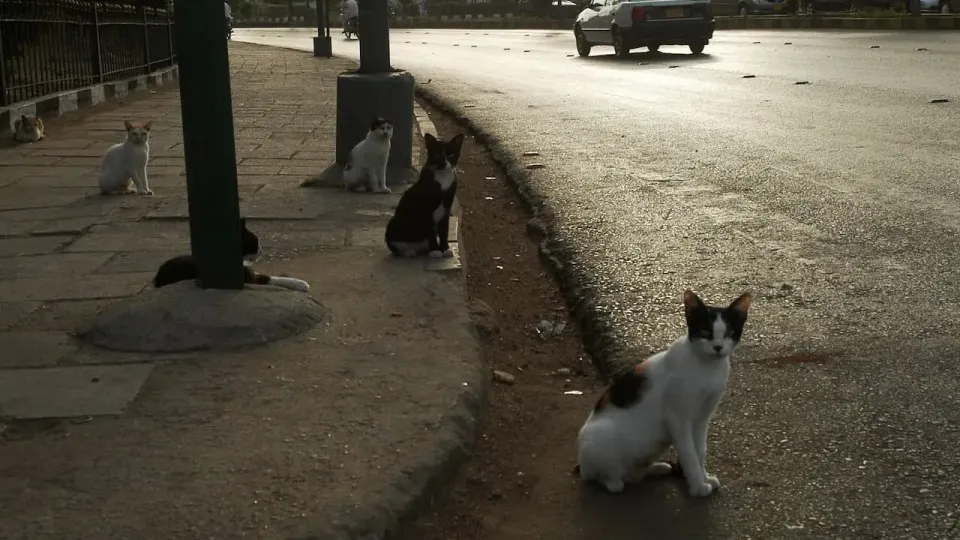
Over the last 10 years, Karachi has witnessed massive population growth, of both the human and animal kind. A Dawn report described the rising number of stray dogs as making daily life “unbearable” for residents of Karachi, highlighting the challenges faced by the city in managing its stray animal population. As this number continues to climb, along with the lack of governmental animal control programmes in place, much of the rescue work falls onto the residents themselves.
Many of the rescuers interviewed for this story are young people who have taken on the responsibility of caring for sick and injured animals while simultaneously balancing work and studies.
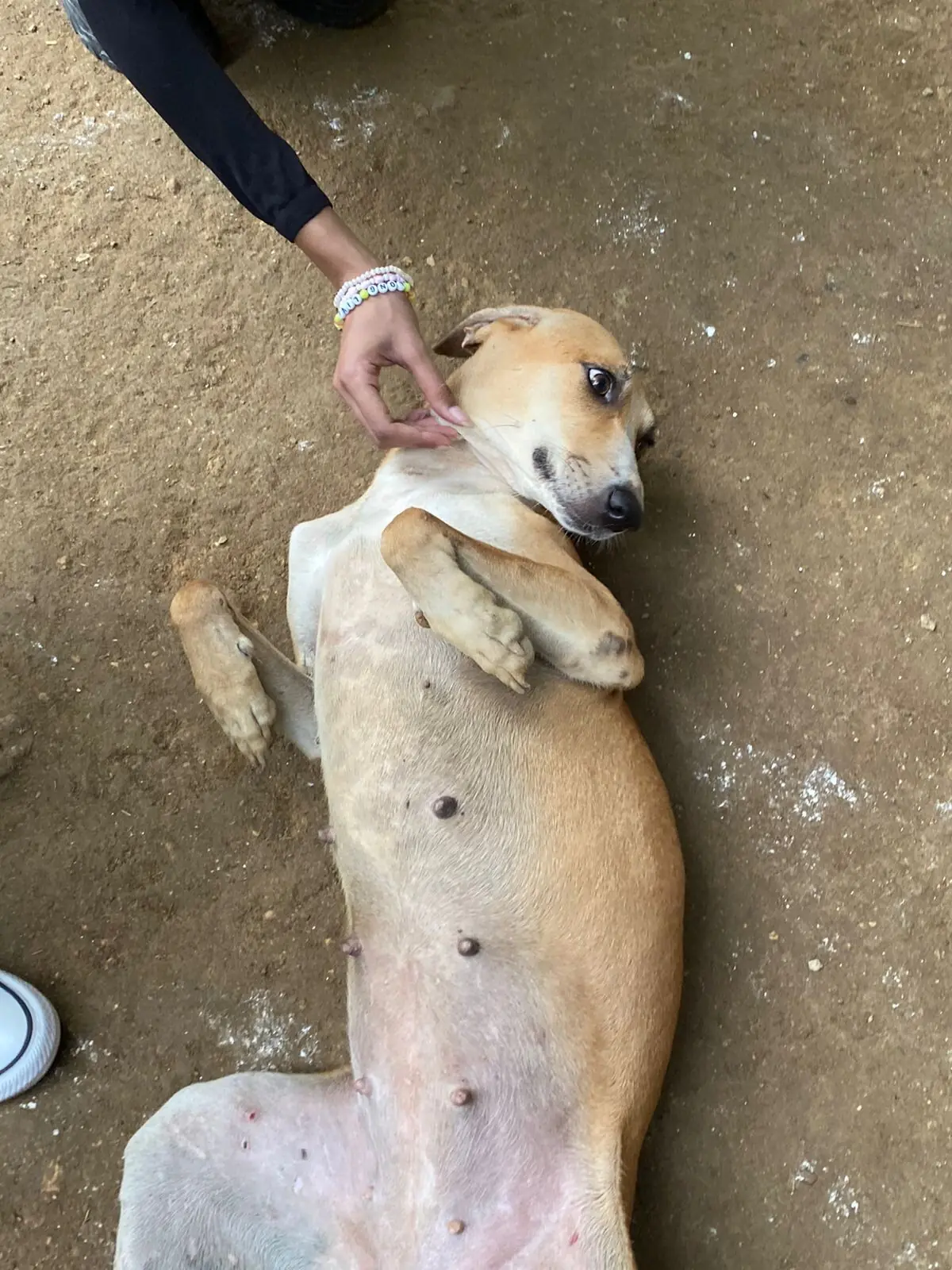
PHOTO: CONTRIBUTED/DAWN
From one kitten to a constant rescue mission
Chai Master’s Ibrahim is one of these people. What started as a spontaneous rescue seven years ago has now become a full-fledged rescue operation that he runs along with managing his teashop.
Rescuing animals was not something he envisioned for himself, but “if I don’t do it, who will?” In practice, however, the work proved demanding, with expensive medical bills and a heavy time commitment. “I have spent a lot of money on these animals,” he said, “everything comes out of the money I make at Chai Master.”
Not only has Ibrahim struggled with finances and paying vet bills, but he has also had to face extreme backlash about keeping the dogs he rescued around Chai Master. He recalled multiple instances where he was sent to the police station for getting angry at someone being cruel to one of the stray animals that hang out around the teashop. “I lost my shit,“ he admitted. “Like yesterday, I was talking to a customer when I heard the screams of a kitten. I looked up to see this guard with his foot on top of it! When I looked at him, he lifted his foot and kicked the kitten away like it was nothing.”
Ibrahim said he could not control his anger and screamed at the guard, who then turned out to be employed by a government official. In a matter of seconds, the police were called, and Ibrahim was dragged off to spend the night in a dark jail cell.
When students become the safety net
Fluff Club operates at the Indus Valley School of Art and Architecture but the students who run it do so on their own, with no support from the university. Their work includes feeding stray cats, making sure the dogs surrounding the university are spayed and neutered, and any sick or injured animals, including pigeons and eagles, are cared for.
Aamna Iftikhar, the current president of Fluff Club, spoke about how emotionally exhausting it can be to rescue animals and see them in distress. She also highlighted about the lack of emotional and financial support available to young rescuers. The cost of getting an animal spayed or neutered varies, she said, usually around Rs5,000 for a cat and Rs9,000 for a dog.
Transporting the animals to the vet is another financial burden. “For dogs, the transporter charges more since they can be aggressive, so it’s around Rs4,000, while for cats he charges us Rs1,500,” she said. “So the total cost with the spaying and neutering ends up being a lot more.”
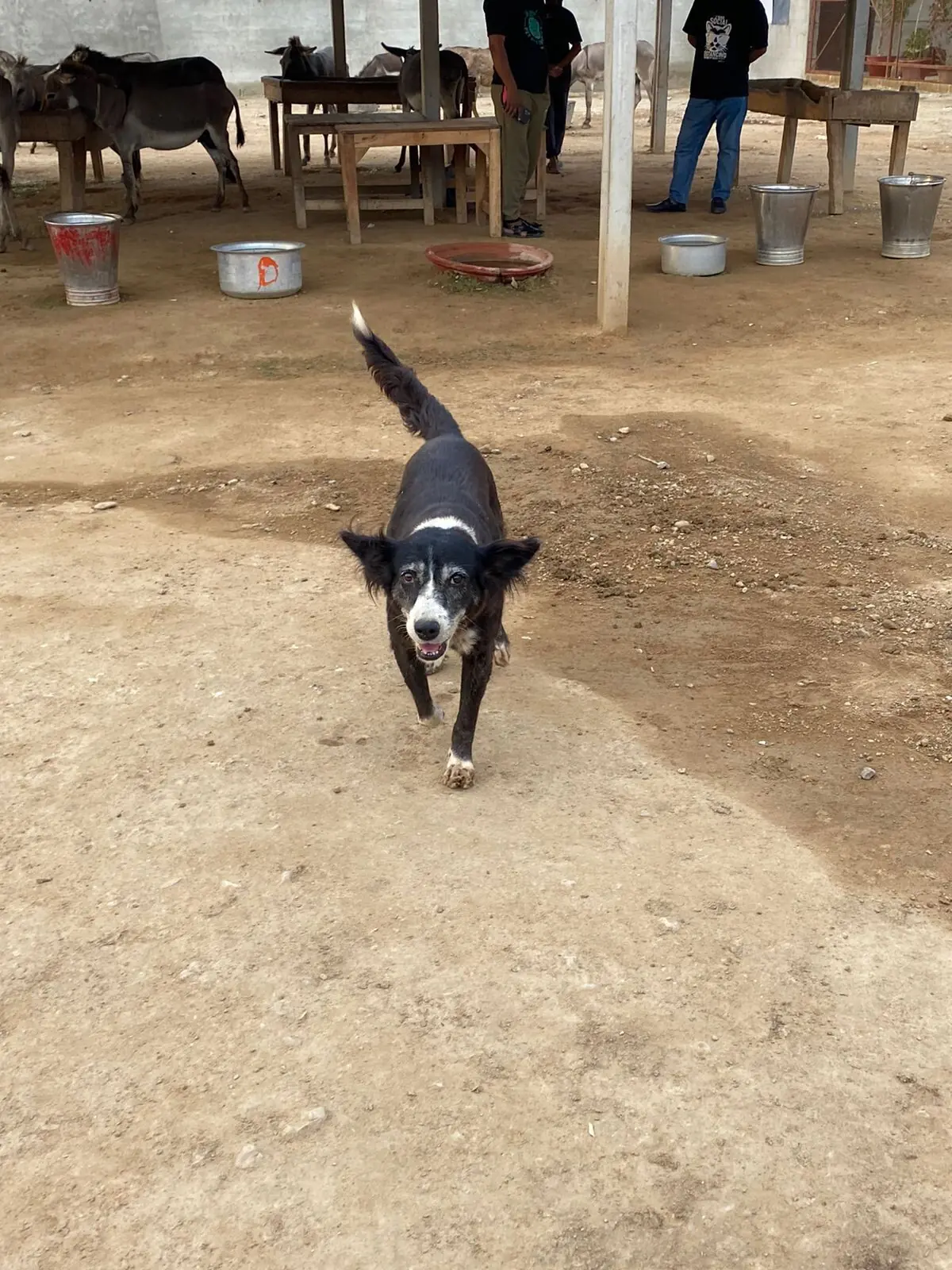
PHOTO: CONTRIBUTED/DAWN
Fluff Club also struggles with pushback for rescuing and housing stray animals. “One of the guards at IVS told us that some people had come and fed food laced with poison to Tiger, a stray dog that Fluff Club had rescued,” Iftikhar said.
“You just have to do it. No matter how exhausting it gets, these animals don’t have anyone to depend on; you just have to pull through for them.”
System error
Despite the dedication and hard work of these young rescuers, the broader system still fails to provide any sort of support. With a lack of animal control services, rehabilitation programmes and response teams meant to be provided by government organisations, much of this responsibility is left to private citizens.
Sumaira Hussain, a director at the Karachi Metropolitan Corporation (KMC), talks about the city’s approach to stray animals. Her division looks after the Rabies Control Programme Sindh, which is a project by the Sindh Local Government Department. It handles dog population control through spaying, neutering and vaccinating stray dogs. “The project has three deliverables. One is the population control and the management of stray dogs. Second is the vaccination of stray dogs, and the third is public awareness about rabies and stray dogs,” she said.
Hussain also explained their process of working with the stray dogs. “We trap them, neuter or spay them, vaccinate them, and then we release them to the same place from where they were picked up. This is the overall concept of the Rabies Control Programme project,” she said.
While the programme is being funded by the government, this division focuses only on areas that fall under the jurisdiction of the KMC. DHA and Clifton — where most of the young people we interviewed operate — do not, so the programme does not cover those areas.
Filling the gaps, one rescue at a time
Sharmeen Farooqi, a rescuer who started an organisation called Karachi Animal Human Union (KAHU), spoke about the work she was doing, including speaking with the Cantonment Board Clifton to establish a spay-neuter programme in its jurisdiction. She said they aim to neuter around eight to 10 dogs a day, reaching around 150 dogs a month, and hope to start as soon as possible.
Despite efforts being made to create initiatives, they are still limited, and this is where young rescuers step in.
At KAHU, Syed Shuja decided to start rescuing strays when he noticed that many of the shelters in the city did not have anyone available to conduct rescue operations for injured animals. He works mostly on the ground level, helping transport sick and injured stray animals from vets to shelters. Today, he manages to rescue and help at least five to six animals a day.
What organised rescue can look like
The Ayesha Chundrigar Foundation (ACF) also operates a rescue programme, albeit on a much larger scale. They started out in 2013 as an NGO dedicated to the welfare of animals in Pakistan. Before the ACF, there was not a lot of awareness or support for animals in Karachi, and its founding helped spread these initiatives across the city. It also relies on donations and is dedicated to offering care and sanctuary to abandoned, abused and stray animals all over Karachi.
What started as a small rescue operation has now become arguably the largest animal shelter in the city. The ACF has initiated several impactful programmes, such as a mass rabies vaccination campaign for stray dogs as well as a Trap, Neuter, Vaccinate and Release programme aimed at humanely controlling the population of stray dogs.
Last year, the foundation worked with the Sindh Wildlife Department to provide a safe space for monkeys rescued by the Customs department. An organisation like the ACF is proof that there is a future for stray animals in Pakistan.
Another young animal rescuer is Sana, who runs an Instagram page by the name of “Bezubaan Paltooo”. Sana started rescuing animals when she first noticed three abandoned kittens in the basement parking lot of her apartment. She tried finding a home for them, but after many failed attempts, decided to adopt them herself. This was four years ago.
Since then, Sana has rescued and saved the lives of at least 70 stray cats and dogs and tries to help any animal she comes across.
Sana struggles with finding funding for her rescue operations. She said she often receives DMs on Instagram from people who don’t understand why she chooses to rescue animals.
“People have asked me to stop collecting funds for animals,” she said. “They think that humans deserve more.” She often has to beg for donations on her Instagram story before someone donates a few rupees. “It’s not easy work being a student who rescues animals; most of the time, I have no choice but to pay from my own pocket,“ she explained.

PHOTO: CONTRIBUTED/DAWN
Still fundraising, still firefighting
The Animal Welfare Society at IBA is another student-led organisation that also struggles with finding funds for their rescue operations. “Most people don’t appreciate that we ask for donations or the fact that so much money is spent on the animals, but the sole purpose of our society is to make sure that every animal we come across is taken care of,” Sarah, who is the current CEO of the society, said.
The rise in young people stepping up to be first responders for injured and abandoned animals is not a coincidence; it is a direct result of a city where no formal systems exist to protect those who cannot speak up for themselves.
When the government fails to provide animal control services, rehabilitation facilities and response teams, the responsibility is pushed onto the citizens or replaced with the cruel and ineffective practice of culling.
When stray animals are left to suffer through unchecked breeding, road injuries and neglect, there is little choice left but for the youth to take matters into their own hands.
A lot of the rescuers interviewed for this article said they wished Karachi had a more centralised rescue system. Sana of Bezubaan Paltooo, said, “Living here, you see how rescuing often depends almost entirely on individual people, WhatsApp groups, Instagram pages, and personal funds. There’s no single helpline, no coordinated response, and no guaranteed follow-up care, hence everything becomes slower, heavier, and emotionally exhausting for rescuers.”
She added, “Only if every neighbourhood would take responsibility to just feed the animals around them would it make a huge difference.”
Sarah from IBA’s Animal Welfare Society also said she wishes “there was a more centralised facility and more emphasis was put on vaccination programmes for animals”.
For all of these young people, rescuing animals is not a form of activism but instead a reflex, something that they know they must do. “We don’t think about what kind of animal it is,” Iftikhar from Fluff Club said. “If we see an animal in distress, we know we have to help it.”
In the absence of centralised systems, that reflex is often the only option available.