

November 25, 2025
THIMPHU – The country’s health sector is facing a growing crisis as it loses trained professionals at an alarming rate, despite simultaneously expanding health services and establishing specialised centres.
The demand for experienced doctors, nurses, and technicians is rapidly increasing, but the supply is struggling to keep pace.
Over the last five years, 936 health professionals have left the system. A key concern is that 392 of those who left since July 2023 had five or more years of experience.
While about 1,550 new health professionals were recruited during the same period following the formation of the National Medical Services (NMS), only 22 of them were experienced. This has created a major experience gap, which could widen further if the trend of staff leaving for overseas work continues.
According to the Ministry of Health, only 4,555 of the country’s 5,975 approved health professional positions are currently filled, leaving a shortage of 1,420 professionals needed to meet minimum service standards. An analysis of the current workforce of 4,555 reveals a steep experience cliff. Of these, 1,911 have one to five years of experience, 801 have six to ten years, and 751 have 11 to 15 years. Only 323 health workers have 16 to 20 years of experience, while 769 have served for more than 20 years.
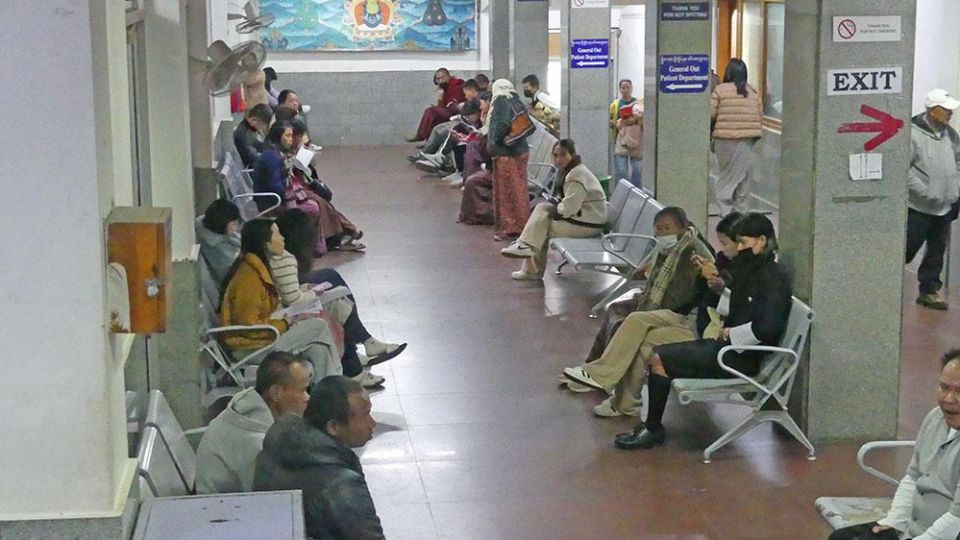
The shortage of seasoned professionals is directly impacting patients. Many report that healthcare quality is suffering, with increased waiting times and rising doubts about treatment decisions in both referral and district hospitals.
The experience gap is particularly visible in dzongkhags and remote areas, where young graduates often run services with limited supervision.
“The young staff are polite and hardworking, but sometimes they look confused,” said Tsheringla, 58, a recent patient at the Jigme Dorji Wangchuck National Referral Hospital. “When it comes to health, we feel safer when someone with many years of experience is checking us.”
Similarly, Suk Maya Rai, a mother from Tsirang said, “Experienced doctors give us confidence by accurately detecting and diagnosing diseases. We get concerned when junior staff seem unsure.”
A 32-year-old from Haa, Sonam Choden, said that sometimes only new staff members are on duty. “When it gets busy, junior staff often hesitate to make decisions.”
Despite the Ministry of Health’s ongoing efforts, many patients said that their trust is affected when seasoned professionals are unavailable.
“Experience matters for people like me because we feel safe the moment we walk into a hospital,” Sonam Wangchuk from Mongar said.
Another patient, Pema Wangchen, expressed a common frustration, “It’s difficult for ordinary people to get an appointment with a senior doctor. It feels as though only those with connections can get access.”
A civil servant said that with evolving disease patterns and new service delivery models, the need for skilled professionals has never been greater.
“We cannot completely stop health staffs from leaving, but a strong and attractive human resource development plan can help close the gap,” he said. “Addressing this is crucial to restoring public confidence.”
In response, the health ministry and NMS have developed a career pathway and performance management system designed to boost motivation, recognise talent, and prevent career stagnation.
Officials from the ministry said that the framework has been submitted to the Royal Civil Service Commission for review.
“The initiative is part of broader efforts to strengthen the health sector and ensure professionals are supported and incentivised throughout their careers,” an official said.
The system aims to define clear progression tracks, offer performance-based incentives, and acknowledges the skills and roles of different health worker categories.
The health ministry deloys health workers based on service range, catchment population, and facility overload across the country.
To strengthen lower-level facilities, the health ministry and NMS plan to implement monthly outreach visits by staff from higher-level facilities and deploy doctors and nurses to communities via Mobile Medical Units.
Bhutan also continues to benefit from international medical specialists who conduct targeted camps and provide training to local staff, extending the benefits of these partnerships.
According to health officials, the visiting doctors also train local staff, extending benefits beyond the camps.
“These collaborations reflect Bhutan’s commitment to equitable healthcare access and the value of international partnerships,” the health official said.