

June 5, 2026
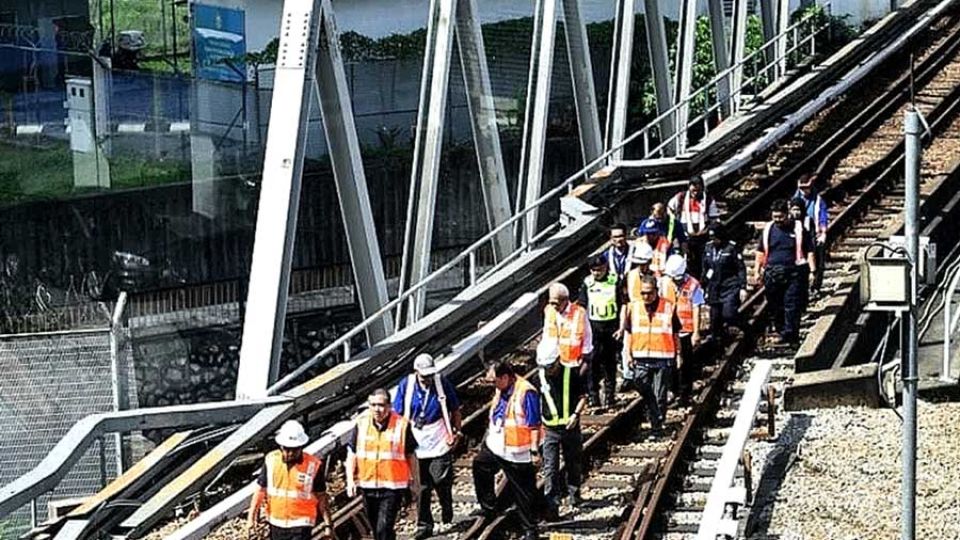
KUALA LUMPUR – The recent LRT derailment has once again sparked public debate about how major accidents are investigated in Malaysia.
Whenever a serious incident occurs—whether involving rail transport, industrial facilities, pipelines, public infrastructure, building failures or environmental disasters—the public expects answers.
More importantly, the public expects those answers to come from a source that is credible, transparent and independent.
The issue is not whether government officers are professional. Many are.
The issue is whether the current system provides sufficient independence and technical breadth when investigating incidents that may involve government agencies, regulators, government-linked companies or major national infrastructure operators.
Justice must not only be done; it must also be seen to be done. The same principle applies to accident investigations.
When an operator investigates itself, or when a regulator relies heavily on information supplied by the entity being investigated, questions inevitably arise.
Even if the findings are technically correct, public confidence may be weakened by perceptions of conflict of interest.
Malaysia should therefore consider establishing a framework for independent professional accident investigation panels for major incidents affecting public safety.
Such panels should comprise experts drawn from professional institutions, universities, private sector organizations and industry experts.
Depending on the nature of the incident, the panel could include engineers, occupational safety specialists, geotechnical experts, transport professionals, forensic investigators, risk management practitioners, environmental scientists and emergency response specialists.
Members should be selected based on competence, experience and independence.
They should have no direct involvement with the organization under investigation and should be required to declare any potential conflicts of interest.
The purpose of these investigations should be to identify all contributing factors and recommend measures to prevent recurrence.
Modern accident investigations recognize that disasters rarely result from a single failure. They usually involve a combination of technical, organizational, managerial and regulatory factors.
Independent panels are more likely to examine the entire chain of causation rather than focusing solely on the immediate technical failure.
Countries with mature safety systems have long recognized this principle.
Their accident investigation bodies operate independently from operators, regulators and political authorities.
Their findings are publicly available and their recommendations often drive significant improvements in safety standards and regulatory practices.
Malaysia already possesses considerable technical expertise within its universities, professional bodies and private sector organizations.
What is lacking is a formal mechanism to mobilize this expertise quickly and independently when major incidents occur.
Most importantly, independent investigations would strengthen public confidence.
Citizens are more likely to accept findings when they know that the investigation has been conducted by impartial experts rather than organizations that may be perceived as having a stake in the outcome.
Malaysia has reached a stage of development where public expectations extend beyond determining what happened.
The public also wants assurance that every possible lesson has been identified and every reasonable step taken to prevent a recurrence.
Independent professional accident investigation panels would be an important step towards achieving that objective.
Wong Soo Kan is Council Member of Federation of Malaysian Manufacturing, Selangor, and FMM Safety and Health Committee Chairman.