

July 14, 2026
TOKYO – Prices are soaring for general-purpose memory chips essential for electronic devices such as smartphones, computers and game consoles. This is due to declining supply as semiconductor manufacturers instead are ramping up production of advanced memory chips used in artificial intelligence applications. The price surge caused by the tight supply and demand balance is leading to an increase in end-product prices.
Passing on costs
“We will accelerate the shift toward high-priced, high-value-added products in order to secure profits amid the soaring price of memory chips,” said Shigeru Kobayashi, executive officer of Sharp Corp., at a briefing session on June 9. He oversees the company’s smartphone and computer businesses.
Sharp uses memory chips for storage media in its smartphones and computers. As supply shortages and price increases for memory chips have become increasingly noticeable since the start of this year, the company expects the operating profit for this business segment to fall by 30% year-on-year for the fiscal year ending March 2027.
The surge in memory chip prices is also affecting the business performance and product prices of other companies.
Canon Inc. estimates that its consolidated operating profit for the fiscal year ending December 2026 will decrease by ¥50 billion. Canon plans to pass on the cost increases to the prices of its key products, such as cameras and multifunction printers.

Impact of data centers
Looking at benchmark general-purpose memory chips, the prices of NAND flash memory, used for long-term data storage, in the January–March 2026 period was 2.3 times that of the October–December 2025 period, according to research firm TrendForce Corp. The prices of DRAM, used for short-term computer memory, also soared by 82.7%.
The underlying factor for the price surge is the increased demand for advanced memory chips for data centers due to the proliferation of AI. These types of chips, which are used to store the vast amounts of data needed by AI for various purposes including generating responses to user queries, have faster processing speeds and larger storage capacities. These chips are traded at higher prices than general-purpose memory chips. For semiconductor manufacturers, advanced chips are more profitable.
Under circumstances where production cannot keep up with demand, semiconductor manufacturers are prioritizing expanding production capacity for advanced memory chips over general-purpose ones. Kioxia Holdings Corp., which has a strong track record in the production of NAND flash memory, plans to make capital investments of about ¥470 billion a year on average from fiscal 2026 to fiscal 2028. South Korean companies Samsung Electronics Co. and SK Hynix Inc., which both are strong in the field of DRAM production, have also announced their respective capital investment plans.
‘The situation will continue’
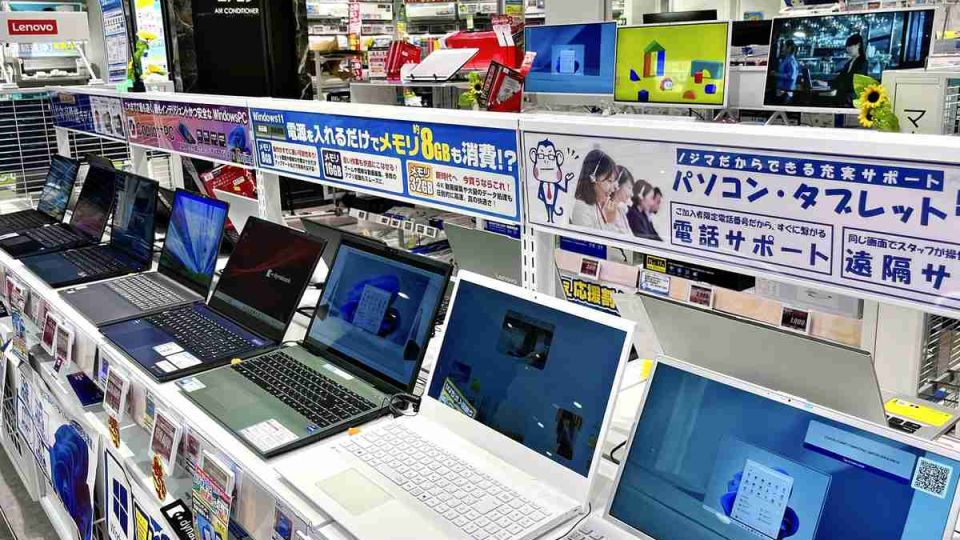
The surge in general-purpose memory chip prices is driving up the prices of end products such as smartphones, computers and game consoles.
According to U.S. research firm IDC Corp., global smartphone shipments for the January–March 2026 period fell 2.9% year-on-year to 293.8 million units, the first decline in about three years. Shipments by Chinese manufacturers, which have a strong foothold in the budget smartphone market, significantly declined due to memory chip price increases, which resulted in higher smartphone prices.
Regarding the outlook for memory chip supply and demand, Kioxia Managing Executive Officer Junichiro Yaguchi said at a briefing on June 2, “The tight supply and demand situation will continue until 2027.” Yaguchi added that many information technology companies are seeking long-term supply contracts, suggesting that demand will remain high for a while.
Yoshio Tamura, an IT analyst at research firm Counterpoint Research, said: “Semiconductor manufacturers are prioritizing the production of high-margin, advanced products for AI over those for smartphones and computers. The supply and demand balance will remain tight for the time being and prices will stay high next year as well. The prices of end products will further increase in the future.”