

April 28, 2026
SEOUL – A recent court ruling has reignited one of South Korea’s most sensitive social debates: whether military service should translate into tangible advantages in civilian life and, if so, who bears the cost.
Last week, the Seoul Administrative Court ruled that a personnel system granting higher starting ranks to employees with military service may constitute gender discrimination if it affects promotions.
The court said such practices place women, who are not subject to conscription, at a disadvantage when they perform the same work over the same period as men.
The ruling drew fierce debate because compulsory military service in South Korea is largely no longer seen only as a civic duty or national security requirement. It creates a real and concentrated disadvantage for men, but compensating for it through hiring or promotion can create a separate disadvantage for women.
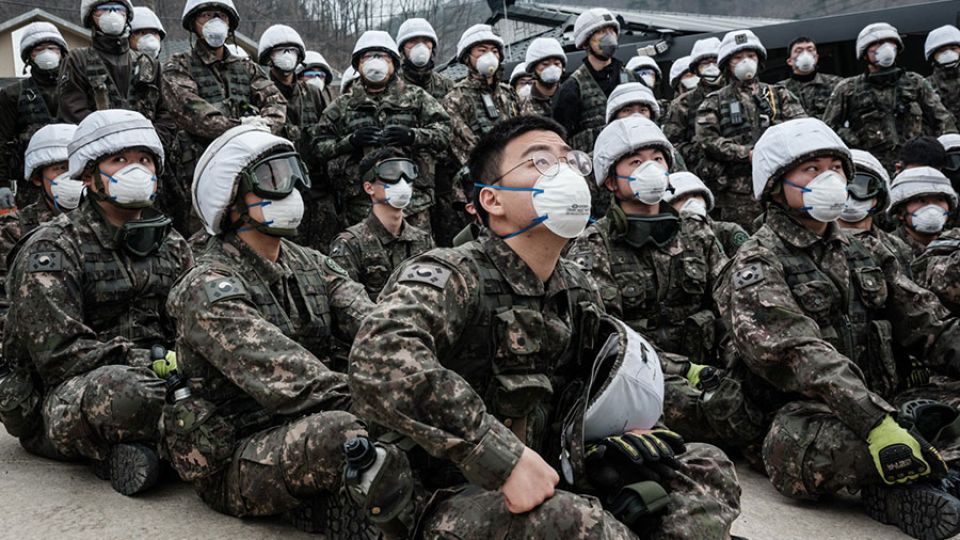
South Korea, which remains technically at war with North Korea, requires most able-bodied men to complete around 18 to 21 months of military service. Women can serve in the military as well, but are not obligated to do so.
For decades, this asymmetry was broadly accepted as a necessary burden of national defense. In recent years, however, many younger South Koreans have come to see it as a significant personal sacrifice with long-term consequences.
“I feel like I lost nearly two years of my life,” one man in his 30s told The Korea Herald. “While my female friends were building their careers, I was in uniform. If that time isn’t recognized in society, what was it for?”
He said his military obligations delayed his graduation and entry into the job market, affecting early career progression, compared to his female peers.
Such voices have been growing louder, particularly among men in their 20s and 30s. Many argue that without some form of compensation, whether through wages, hiring advantages or a promotion credit, the system is inherently unfair.
A 2025 survey by the Presidential Committee of National Cohesion found that 71 percent of men in their 20s and 30s said reinstating a preferential points system in hiring for those who had completed national service was “necessary.”
That preferential system granted those who had completed military service additional points in competitive recruitment exams. Introduced in 1961, the policy initially applied to public sector hiring and was later expanded to private companies in 1969.
The system remained in place for decades before being struck down by the Constitutional Court in 1999.
The court ruled that it violated constitutional principles of equality and merit-based hiring, as it disadvantaged women and people with disabilities who were not required to complete military service. The system ended when the decision took full effect in 2001.
Since then, the question of how to compensate young men for military service has persisted. Policy discussions have ranged from wage adjustments to recognizing service as work experience.
The debate intensified in the 2010s, as slower economic growth and rising youth unemployment increased competition for jobs. Experts attribute the shift to changing generational attitudes.
Compared to earlier generations, younger South Koreans tend to place greater emphasis on individual career paths and life planning, rather than collective notions of duty.
“In a context where stable employment and upward mobility have become more difficult, time itself is seen as a critical resource,” commented Lee Sang-min, a professor of sociology at Hanyang University.
“Military service is therefore increasingly viewed not only as an obligation, but as a period that interrupts individual trajectories.”
This shift in perspective has contributed to the perception among many young men that conscription represents an unavoidable but unfair loss, rather than a shared civic responsibility.
At the same time, the issue became more visible in online spaces, where discussions about conscription expanded into wider debates over fairness and gender equality.
“What began as a question of compensation has evolved into a question of recognition and status,” said Seol Dong-hoon, a professor of sociology at Jeonbuk National University. “That makes it easier for the issue to be mobilized in political and social conflicts.”
Experts say the persistence of the issue is partly due to how it is framed.
“When military service is tied to hiring or promotion, it tends to be understood as a zero-sum issue,” said Seol. “Any advantage given to one group is seen as coming at the expense of another, which makes compromise difficult.”
Research also suggests that many young men’s concerns are not necessarily rooted in a belief that society broadly discriminates against men. Instead, they reflect what some scholars describe as “sectoral disadvantage” — the perception that men face disadvantages in specific areas, such as conscription.
“When specific grievances are framed as evidence of overall gender inequality, they become easier to mobilize politically,” Seol added. “That process can deepen polarization, even if the original concern was limited to a particular issue.”
Critics argue that military service is a state-imposed duty between the individual and the government. Some also point out that women face structural disadvantages of their own, particularly in employment and career continuity.
This perspective was reflected in the 1999 ruling by the Constitutional Court of Korea, which found the preferential points system unconstitutional.
The court first ruled that the system lacked a clear constitutional basis. While the Constitution states that all citizens have a duty of national defense and should not face disadvantages for fulfilling that duty, the court interpreted this provision narrowly.
It said the clause was intended to prevent legal or institutional penalties, not to justify broad compensatory benefits for the economic or social effects of military service.
The court also characterized military service as a basic obligation required of citizens, rather than a form of “special sacrifice” that warrants additional rewards.
Extending benefits such as extra points in hiring exams, it said, went beyond preventing disadvantage and amounted to active compensation without constitutional grounds.
For policymakers, the challenge is to move beyond zero-sum frameworks. Some experts advocate for “non-zero-sum” policies that address specific grievances without disadvantaging another group, such as financial compensation, education benefits or career support programs that do not directly affect hiring or promotion outcomes.