

December 23, 2025
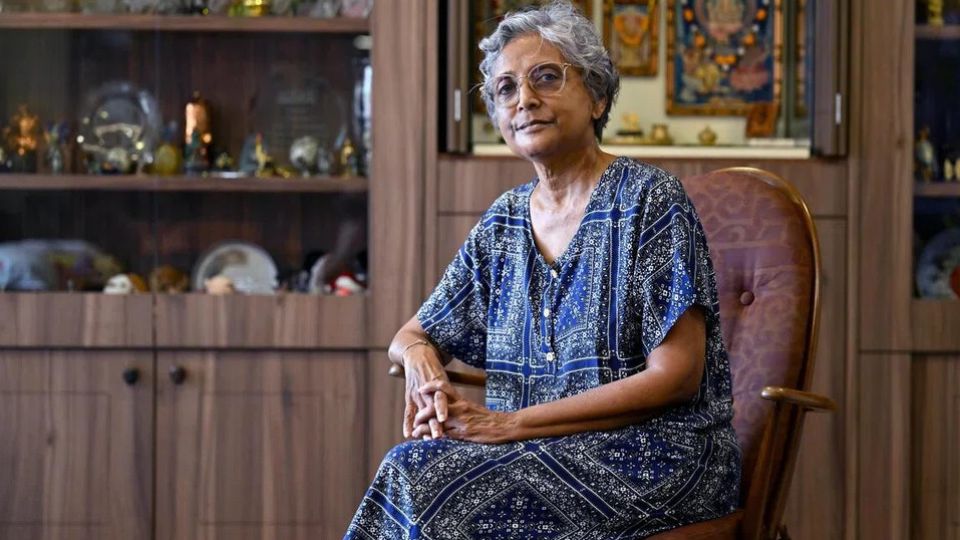
SINGAPORE – Mrs Malar Singam, 71, broke her jaw after an electric-bicycle rider knocked her down on a pavement at a mall on Dec 10.
She and her husband were supposed to fly to the US to celebrate their 50th wedding anniversary with their children a few days later.
Instead, she had to have jaw reconstruction surgery. Her jaw has been wired shut and she has been consuming a liquid diet through a straw since then.
When the accident happened, the couple were walking down a small flight of stairs to exit Pasir Ris Mall. Her husband Frank Singam, 74, was just a couple of steps behind her.
“I was watching her, and the next moment, when I looked up, I saw this guy coming down the path fast. I said, ‘Watch out, girl, watch out!’” said Mr Singam.
But the accident happened too quickly. Mrs Singam was struck on her back, pushing her forward to the ground. When she rolled onto her back and touched her jaw, she felt excruciating pain. All she saw was blood on her hand.
Mr Singam saw that the impact to her jaw had left her face slightly distorted.
The couple have been talking to the media to raise awareness of road safety involving riders of personal mobility devices (PMDs) since the Dec 10 accident.
“I hope that no seniors will ever go through what I went through,” said Mrs Singam.
The Active Mobility Act, which established rules for safer use of public paths among various users like PMD riders, came into force in May 2018.
According to the Land Transport Authority, accidents on paths have been on a general decline since 2019, with 104 such accidents in 2024, down from 303 in 2019.
Nevertheless, these accidents continue to result in severe injuries and even deaths.
Adjunct Assistant Professor Teo Li-Tserng, regional director of the Central Region (Singapore) Trauma Services (CRTS), which coordinates care across several hospitals for complex trauma cases, said that rib fractures are the most frequent injuries resulting from PMD accidents, followed by head injuries.
A recent case involved a PMD rider who rode against traffic with his pillion rider and collided with a car, suffering both head injuries and multiple rib fractures, he said. The pillion rider suffered only abrasions.
Prof Teo, director of Tan Tock Seng Hospital’s (TTSH) Trauma Centre, said that hospital admissions due to PMD- or personal mobility aid (PMA)-related injuries have remained relatively stable in the post-Covid period.
Based on combined data from 2022 to 2024, the centre records 15 to 16 admissions per year on average, for moderate to severe PMD/PMA-related injuries. These do not include minor injuries, which are managed in the emergency department or outpatient settings, according to Prof Teo.
He added that higher admission rates, as a result of these accidents, were seen among those aged 20 to 40 as well as those aged 50 to 70.
“Together, these two age bands account for about two-thirds of all admissions, suggesting risk is concentrated at both ends of the economically active population and the older adult group,” he said. Also, more than one-quarter of admitted patients were aged 65 years and above, underscoring the vulnerability of the elderly, particularly when injuries occur, he added.
Over at National University Hospital (NUH), there were around 80 PMD-related trauma cases over the past three years, and an average of five admissions a year for major trauma arising from PMD accidents.
Adjunct Assistant Professor Norman Lin, a consultant at the division of General Surgery (Trauma) at NUH, said a small proportion of PMD injuries can be deadly.
Citing a recent case in September, he said a man in his 30s was found unresponsive a distance away from his PMD. He had likely self-skidded or hit a kerb, which led to him falling off his PMD and hitting his head. He died a few days later.
Helmet-wearing can help prevent devastating head injuries like in the case cited, he said. Prof Teo advised riders to wear appropriately sized helmets at all times, no matter how short the journey is.
It is also important that riders wear appropriate attire, such as covered shoes instead of flip-flops, to reduce the chances or severity of foot and ankle injuries if they are involved in an accident, he said.
Similarly, donning a pair of jeans or track pants, instead of shorts, will help to reduce abrasions, he added.
To keep others safe, PMD riders should give way to pedestrians, who have the right of way on footpaths, said Prof Teo, who has heard PMD riders “claiming that pedestrians didn’t get out of the way”.
Also, he and other experts advised riders to have a horn or bell to alert fellow road users if they are at risk of a crash.
It is also important to stay alert and avoid using mobile devices while riding, said TTSH principal occupational therapist Chia Rui Min.
Mr and Mrs Singam did not make a police report regarding the accident, even though the e-bike rider was ready to go to a police station with them. The couple felt there was no need to, and Mr Singam wanted to focus on his wife and her recovery.
Mr Singam also described the Grab delivery man, who looked like he was in his 50s, as a “compassionate man of integrity”.
He tried to help Mrs Singam after he completed his job. “He said he had to deliver the food… He came back a few minutes later to try and see what he could do for her,” Mr Singam said.
The next time they saw him was at the hospital, when he and his wife visited Mrs Singam.
Mrs Singam said she will probably need three to six months to recover sufficiently to be able to chew her food like before. Mealtimes, for now, are slow affairs where she tries not to choke.
“As an older person, I want to be able to look after my health, so that I don’t give any problems to anybody and can live my life. That’s very important,” she said.
“(And) what if I have a bit of dementia, then what happens to me? Do I even know how to suck with a straw? What about those seniors who have no caregivers?”