

April 20, 2026
JAKARTA – Pertamina has significantly raised the prices of several nonsubsidized fuel products effective Saturday as blockades in the Middle East and economic sanctions continue to roil the global oil market.
The price of RON-98 Pertamax Turbo gasoline in Jakarta was upped to Rp 19,400 (US$1.13) per liter, a steep increase from Rp 13,100.
Diesel variants saw even sharper adjustments, with Dexlite climbing from Rp 14,200 to Rp 23,600 per liter and Pertamina Dex rising from Rp 14,500 to Rp 23,900.
However, the state-owned oil and gas company confirmed that the prices of subsidized fuels Pertalite and Biosolar remained unchanged at Rp 10,000 and Rp 6,800, respectively.
RON 92 Pertamax and Pertamax Green are also maintained at Rp 12,300 and Rp 12,900 per liter.
The fuel price hike reflects mounting pressure on global supply chains.
Bhima Yudhistira, executive director of the Center of Economic and Law Studies (CELIOS), said the sharp hike in nonsubsidized fuel prices, particularly the 65 percent surge in Pertamina Dex, would ripple through the broader economy and propel inflation.
He noted that Pertamina Dex powered not only private vehicles but also heavy equipment and industrial machinery.
“Therefore, there will be a transmission to inflation,” he told The Jakarta Post on Sunday, adding that consumers of Pertamax Turbo and Pertamina Dex may now shift to more affordable alternatives.
“The supply of other fuels must be maintained and should not decrease sharply due to shifts in consumption.”
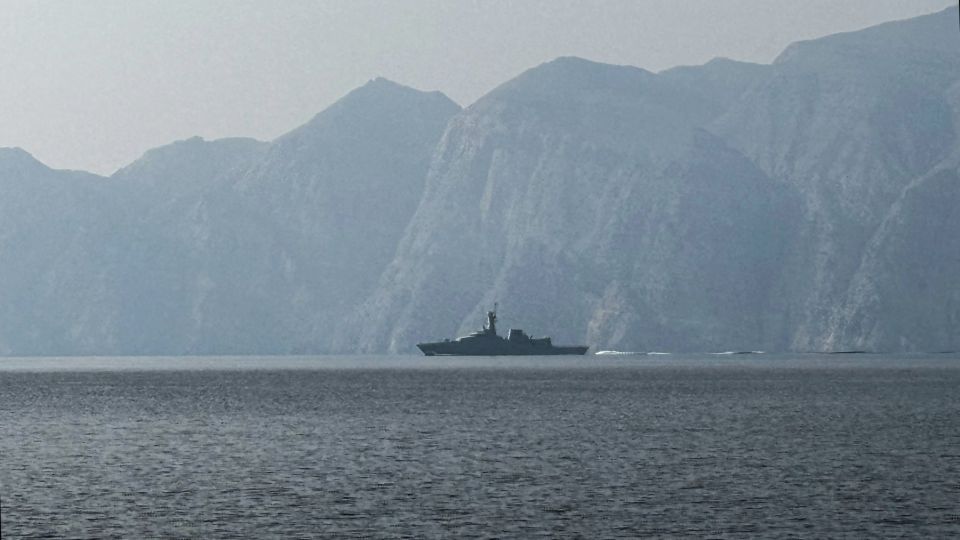
Global crude prices are hovering around US$90 per barrel, well above the state budget assumption of $70. With maritime traffic through the Strait of Hormuz largely halted and many oil and gas production facilities in Gulf states damaged or destroyed, supply disruptions and elevated prices are expected to persist.
“The impact on energy security must be mitigated,” Bhima said, calling on the government to accelerate free public transportation outside Java and prepare compensation packages, including wage subsidies and electricity discounts for industries, to protect purchasing power and prevent layoffs.
Putra Adhiguna, managing director at the Energy Shift Institute, said the price adjustment were largely symbolic, given the small share these fuels represented in Pertamina’s overall sales volume.
“Pertamax Turbo, for example, is much smaller than Pertamax, let alone Pertalite,” he told the Post on Sunday.
He added that the impact on the state budget was relatively small and the move could be understood as a way to communicate the gravity of the fuel crisis to the public. Looking ahead, Putra warned that supplies could tighten further as tankers that departed Hormuz at the onset of the conflict begin arriving at destinations worldwide, with the real impact on availability only starting to be felt.
“The conflicting news from the US does not change the fact that today, the world’s real oil supply is facing the biggest crisis in history,” he said.
The price adjustments also reflect financial considerations at the state energy firm.
Mohammad Faisal, executive director of the Center of Reform on Economics (CORE), pointed out that, while fuel subsidies were ultimately covered by the government, Pertamina typically bore the initial payment, making it necessary to maintain cash flow by adjusting prices for premium products consumed by upper-income groups.
“In my view, this is about distributing the burden. People with a relatively strong purchasing power should no longer receive much assistance from the government,” he told the Post on Sunday.
In response to a continued US naval blockade, Iran said Saturday it had re-imposed “strict control” over the Strait of Hormuz, reversing its declaration a day earlier that the strategic waterway was open.
Washington said its blockade of Iranian ports remained in force, with more than 20 ships turned back since Monday as pressure mounts for a broader deal, AFP reported on Sunday.
According to ship-tracking data reviewed by AFP, a handful of oil and gas tankers crossed the Strait of Hormuz early Saturday during the brief reopening, but others retreated, and by late Sunday afternoon tracking platforms showed hardly any vessels transiting the waterway.
The French news agency also cited a United Kingdom maritime security agency, which said Iran’s Revolutionary Guards (IRGC) had fired at one tanker.
Separately, AFP noted that security intelligence firm Vanguard Tech reported the force had threatened to “destroy” an empty cruise ship that was fleeing the Gulf.
Speaking at a diplomatic forum in Turkey, AFP quoted Iranian Deputy Foreign Minister Saeed Khatibzadeh as saying the “Americans cannot impose their will over Iran” with a siege, and suggested the blockade was a violation of the ceasefire that merited “repercussions”.
Pertamina’s shipping and logistics arm, PT Pertamina International Shipping (PIS), has confirmed that two of its vessels, the Pertamina Pride and Gamsunoro, are still stuck in the Arabian Gulf, unable to transit the Strait of Hormuz following Iran’s renewed closure of the waterway.
PIS acting corporate secretary Vega Pita stated on Sunday that the company was closely monitoring the “highly dynamic situation” in the critical maritime chokepoint.
Just a day earlier, PIS said it was preparing safe passage plans following Iran’s announcement of the waterway’s reopening.
“PIS continues to coordinate intensively with various parties, including the relevant ministries and authorities, while preparing a safe passage plan,” Vega told the Post on Sunday.
She stressed that the safety of crew members, the security of the vessels and the protection of their cargo remained the company’s top priority. “We hope that conditions in the route will soon improve and be conducive, so that the Pertamina Pride and Gamsunoro can safely resume their voyages.”
Foreign Ministry spokesperson Yvonne Mewengkang told the Post on Sunday that the government continued to closely monitor developments in the region, including the volatile situation in the Strait of Hormuz, in coordination with the Indonesian Embassy in Tehran and other relevant authorities.
She noted, however, that several technical aspects and operational mechanisms on the ground needed ironing out before the vessels could safely resume their voyages. “The safety of the crew and the security of the ships and cargo are our immediate priorities.”
In a parallel development aimed at stabilizing volatile energy markets, the United States Treasury has extended a waiver on Russian oil sanctions, allowing the legal purchase of Russian crude stranded at sea, through May 16.
Th move follows pressure from Asian nations grappling with the economic shock of the Iran war, Reuters reported Saturday. “As negotiations [with Iran] accelerate, Treasury wants to ensure oil is available to those who need it,” a Treasury spokesperson said on Friday.