

March 18, 2026
SEOUL – Samsung Electronics and SK hynix took center stage at Nvidia’s GPU Technology Conference, unveiling next-generation AI memory technologies as competition intensifies to supply the backbone of the global artificial intelligence boom.
At the four-day event in San Jose, Samsung revealed a physical version of its next-generation high-bandwidth memory chip, HBM4E, for the first time — underscoring its push to close the gap in the high-stakes AI memory race.
The seventh-generation chip is designed to deliver speeds of up to 16 gigabits per second per pin and bandwidth of up to 4 terabytes per second, positioning it as a key component for next-generation AI systems.
Samsung said it is accelerating development of HBM4E based on technological capabilities built through mass production of sixth-generation HBM4 and its 1c DRAM process technology.
The tech giant also displayed a range of memory and storage products expected to be used in Nvidia’s next-generation AI platform, Vera Rubin.
HBM4 is only one of several Samsung components expected to be used in the system. The company also showcased SOCAMM2 memory modules designed for CPUs and the PM1763 storage device used in servers.
The products were displayed in a booth section dubbed the “Nvidia Gallery,” alongside Nvidia’s Vera Rubin system.
Samsung said it can supply multiple core components used in AI servers, not just HBM.
“We can provide a total solution that connects key components across AI servers,” a Samsung Electronics official said.
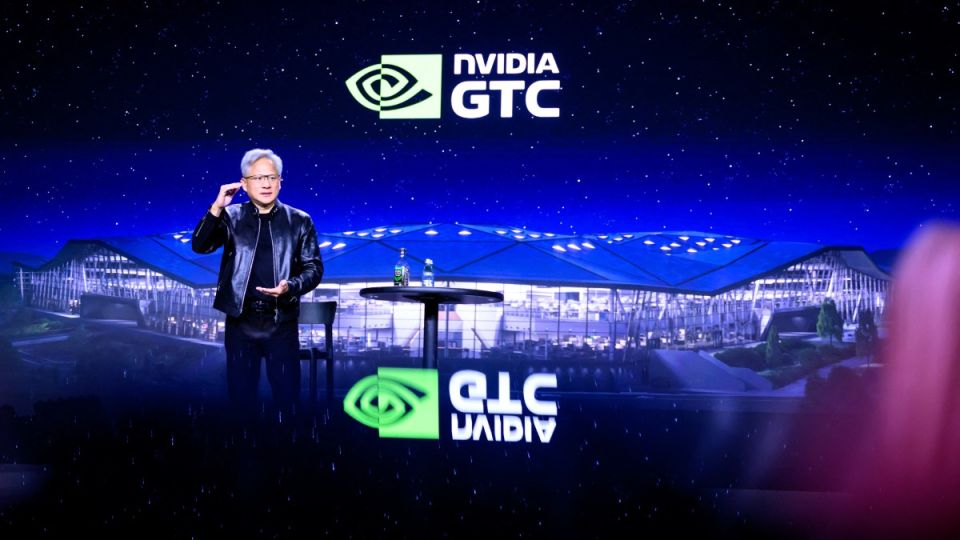
During his keynote speech at GTC 2026, Nvidia CEO Jensen Huang also highlighted cooperation with Samsung. Introducing Nvidia’s inference-focused chips, Huang said Samsung is manufacturing the Groq 3 language processing unit, or LPU, for the company.
“I want to thank Samsung, who manufactures the Groq 3 LPU chip for us, and they’re cranking as hard as they can. I really appreciate you guys,” Huang said.
The chip will be integrated into Nvidia’s next-generation AI system based on the Vera Rubin architecture, with shipments expected to begin in the second half of the year, likely around the third quarter, the US chip giant chief said.
The Groq 3 LPU works alongside Nvidia’s Vera Rubin graphics processing unit to improve inference performance and efficiency. Huang’s remarks confirmed that Samsung’s foundry division is producing the chip.
SK hynix also took part in GTC 2026 under the theme “Spotlight on AI Memory,” showcasing its latest AI-focused memory technologies and products.
The memory chipmaker displayed HBM4 and fifth-generation HBM3E products that have been used in Nvidia GPUs, underscoring its role as a key supplier of memory for AI accelerators.
SK hynix also presented an enterprise solid-state drive with liquid-cooling technology developed in collaboration with Nvidia. The US chip giant’s AI supercomputer DGX Spark equipped with SK hynix LPDDR5X memory was also on display.
SK Group Chairman Chey Tae-won and SK hynix CEO Kwak Noh-jung attended the conference along with other senior executives.
The company said its executives plan to meet with global big tech firms during the event to exchange views on AI technology developments and infrastructure changes while exploring mid- to long-term cooperation.
“Based on our memory technology capabilities spanning the entire AI landscape, we will work with global partners to shape the future of AI,” an SK hynix official said.
Meanwhile, Chey mentioned the possibility of listing SK hynix American depositary receipts on US markets for the first time, speaking with reporters at the conference.
“It would allow us to be exposed not only to Korean shareholders, but also to US and global investors, helping us become a more global company,” Chey said.
An ADR allows overseas companies to trade shares indirectly on US exchanges, making it easier for American investors to buy and sell the stocks and improving access for global investors.
In January, SK hynix said in a regulatory filing that it is reviewing various options to enhance corporate value, including a possible listing on US markets, though no decision has been finalized.