

June 11, 2026
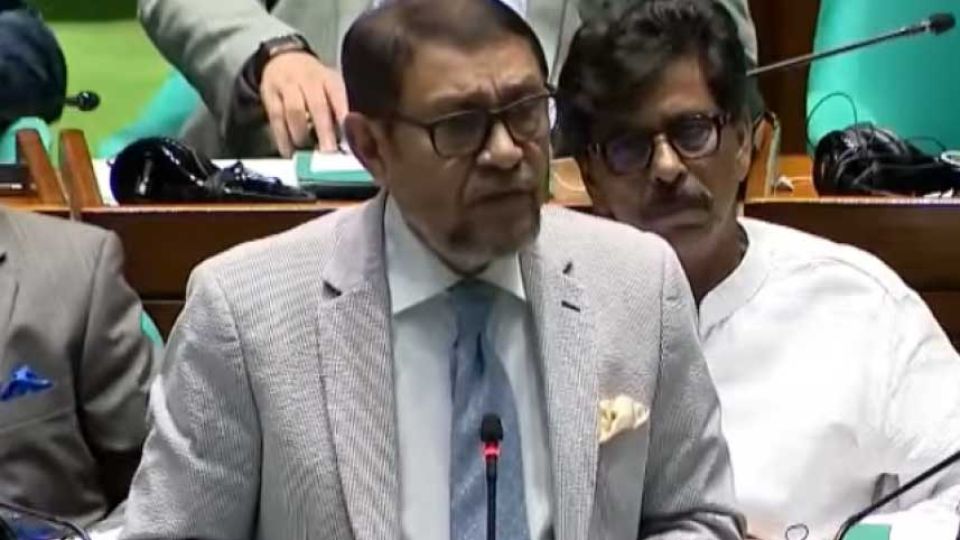
DHAKA – There are significant vacancies in the healthcare workforce across government hospitals and rural health facilities in Bangladesh, Health and Family Welfare Minister Sardar Md Sakhawat Husain told the parliament today.
Replying to a question from Khairul Kabir Khokon, MP from Narsingdi-1, the minister provided updated figures on sanctioned posts and existing vacancies for doctors, nurses and health workers in public hospitals.
According to the minister, 9,407 of the 41,806 sanctioned posts for doctors are currently vacant. Among nurses, 5,032 of 49,501 sanctioned posts remain unfilled. In the case of health workers, 8,784 of 26,544 approved posts are vacant.
The health minister also informed parliament about staffing shortages at the upazila and union levels across the country.
At upazila health complexes, there are 13,211 sanctioned posts for doctors, of which 7,429 are filled. Among nurses, 13,809 posts exist, with 12,146 filled. For other staff, 3,186 posts have been approved, of which 2,120 are filled.
There are 1,314 sanctioned posts for doctors, with 670 vacant, at union sub-health centres. For midwives, 1,312 posts exist, of which 466 are vacant. Among other staff, 2,627 posts have been approved, with 915 vacant.
At union health centres, there are 3,167 sanctioned posts for doctors, of which 1,707 remain vacant. For Sub-Assistant Community Medical Officers (SACMOs), 3,165 posts exist, with 1,520 vacant.
The minister said filling vacant posts is an ongoing process.
Recruitment under the 45th BCS is underway for 450 assistant surgeons, while 1,682 assistant surgeons are being recruited under the 46th BCS, 1,331 under the 47th BCS, and 650 under the 50th BCS.
He added that recruitment for senior staff nurses is also continuing through the Public Service Commission.
In addition, as part of the government’s election manifesto, the Ministry of Health and Family Welfare plans to recruit 100,000 health workers in phases, he added.
The minister said the recruitment process would be completed as quickly as possible to fill vacant posts across the health sector.
Community clinics record around 16 crore patient visits annually
In response to a separate question from MP Nilofar Chowdhury Moni, the health minister highlighted the role of community clinics in delivering primary healthcare services across the country.
He said a total of 14,460 community clinics are currently operational at ward level, providing free primary healthcare, family planning services and nutrition support to underprivileged populations, including mothers, children, adolescents and the elderly.
According to the minister, community clinics record around 16 crore patient visits annually.
On average, each clinic receives 35 to 40 patients a day, resulting in roughly 5 lakh visits nationwide every day.
Each community clinic distributes 22 types of essential medicines free of charge. On average, a clinic receives 10 cartons of medicines annually, with each carton valued at Tk 24,790. This amounts to medicines worth approximately Tk 247,900 per clinic each year, while the total annual supply nationwide stands at about Tk 358.46 crore.
The minister said community clinics provide a wide range of services, including maternal and child healthcare, antenatal and postnatal care, reproductive health and family planning services, treatment for common illnesses, first aid for minor injuries, immunisation, nutrition screening and counselling, and screening and referral for non-communicable diseases such as diabetes and hypertension.
He said the clinics also play a key role in identifying high-risk cases and referring patients to upazila health complexes and higher-level facilities for advanced treatment.
The minister added that the community clinic programme has evolved into a social movement with active community participation, contributing to improved health awareness, behavioural change and preventive healthcare practices in rural areas.
The initiative has helped reduce maternal and child mortality rates and is contributing to the achievement of Sustainable Development Goal 3 (SDG-3), which seeks to ensure healthy lives and promote well-being for all at all ages, he said.