

January 30, 2026
ISLAMABAD – Pakistan on Thursday opposed the use of force and coercive measures against Iran, stressing that disputes should be resolved through dialogue and diplomacy as Western pressure on Tehran intensified with a continuing US naval build-up in the Gulf and fresh European designations and sanctions.
The Pakistani position was articulated across official engagements and public statements, including a telephone call between Prime Minister Shehbaz Sharif and Iranian President Masoud Pezeshkian, contacts between the two foreign ministers, and remarks by the Foreign Office spokesperson at the media briefing.
In a statement issued by the Prime Minister’s Office, PM Shehbaz “underscored the importance of sustained dialogue and diplomatic engagement for promoting peace, security and development in the region”.
Separately, the Foreign Office said Deputy Prime Minister and Foreign Minister Ishaq Dar spoke with his Iranian counterpart Abbas Araghchi, conveying concern over the evolving situation and reiterating Pakistan’s position.
Mr Dar “expressed concern over the evolving regional situation and underscored that dialogue and diplomacy remain the only viable way forward”, the Foreign Office said in a statement.
At the weekly media briefing, Foreign Office spokesman Tahir Andrabi expanded on Islamabad’s stance, linking it explicitly to opposition to force, sanctions and external pressure.
“Pakistan has always advocated for peace and diplomacy to settle all outstanding issues. Our advocacy for peace diplomacy continues and this remains our stated position,” he said. “This region cannot afford war, turmoil because this in essence stops the economic development and prosperity. So, we hope that peace and diplomacy will prevail. We oppose the use of force. We are against coercive measures against Iran and interference in its internal affairs,” he added.
Referring to the nuclear issue and multilateral diplomacy, the spokesman said Pakistan supported efforts anchored in international law, citing the Joint Comprehensive Plan of Action (JCPOA) and subsequent UN Security Council resolutions, including resolutions presented at the Council in September last year.
He also cited a recent UN Human Rights Council resolution on Iran that opposed the use of force and called for upholding the UN Charter, noting that “we subscribe to these positions, and we will continue to do so”.
Islamabad’s emphasis on dialogue came as the European Union significantly hardened its stance on Iran and the build-up of US forces in the Gulf continued.
EU foreign ministers on Thursday unanimously agreed to designate Iran’s Islamic Revolutionary Guard Corps (IRGC) as a terrorist organisation. At the same time, the Council of the European Union adopted a fresh sanctions package over human rights violations and Iran’s military support for Russia’s war in Ukraine, adding 15 individuals and six entities to its blacklist.
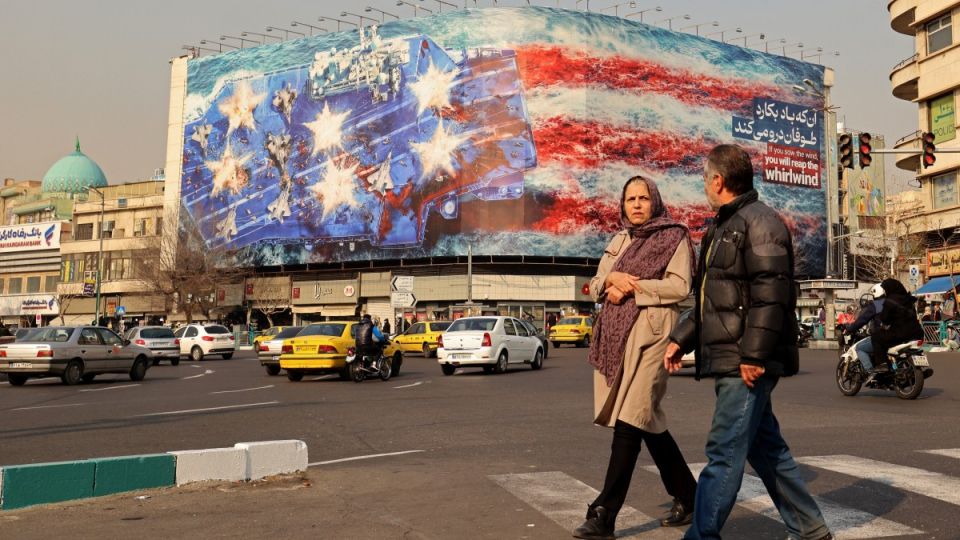
Moreover, a significant American military build-up in the Middle East is underway, which has been described by analysts as the largest since the 2025 strikes.
The US has deployed the USS Abraham Lincoln carrier strike group, accompanied by three destroyers and more than 5,000 troops, joining existing assets including F-15E Strike Eagles and THAAD and Patriot missile systems, raising total US forces in the region to around 50,000 by late January.
Meanwhile, the Trump administration is hosting senior defence and intelligence officials from Israel and Saudi Arabia for talks on Iran this week, American news website Axios reported on Thursday.
‘Crushing response’
Iran’s army chief Amir Hatami on Thursday vowed a “crushing response” to any attack, according to state television, which reported 1,000 “strategic drones” had joined the combat regiments.
Saudi Arabia, the United Arab Emirates, Qatar and Oman have pressed for dialogue while signalling they will not allow their airspace, territory or waters to be used for military action against Iran, because of fears of retaliation and economic disruption.
Turkiye on Thursday said it would offer to mediate between Washington and Tehran during an upcoming visit by Iranian Foreign Minister Abbas Araghchi, after Ankara’s top diplomat urged Washington to start nuclear talks with Tehran.
“It’s wrong to attack Iran. It’s wrong to start the war again. Iran is ready to negotiate on the nuclear file again,” Turkish Foreign Minister Hakan Fidan told Al-Jazeera.
Nato member Turkiye is also weighing contingency plans along its 530-kilometre border with Iran should the dispute escalate, a senior official told AFP.
Iran ally Russia on Thursday also said that “the potential for negotiations is not exhausted”.
“Any use of force can only create chaos in the region and lead to very dangerous consequences,” Kremlin spokesman Dmitry Peskov told journalists.
Egyptian Foreign Minister Badr Abdelatty in a call with his French counterpart Jean-Noel Barrot stressed the need for “the resumption of dialogue between the United States and Iran regarding the Iranian nuclear file”, Cairo said.