

July 15, 2026
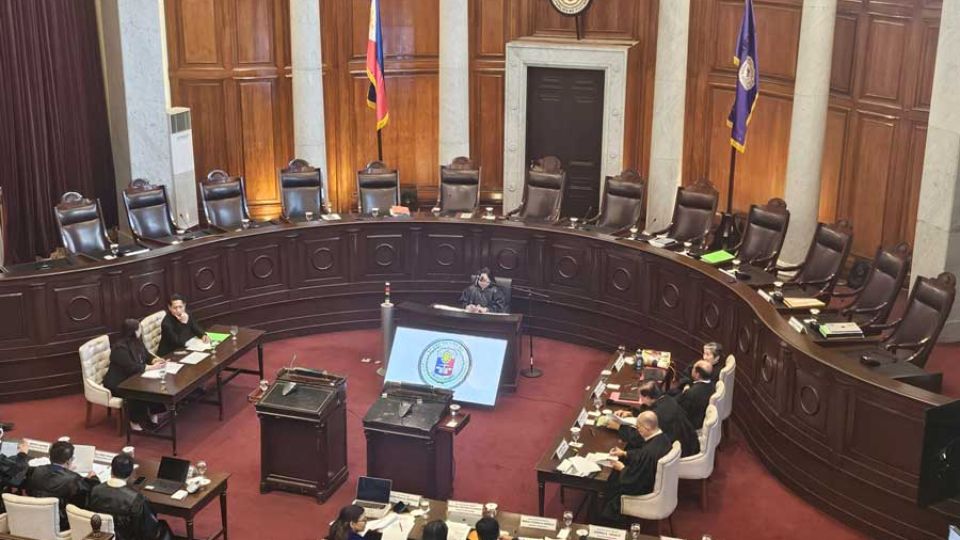
MANILA – In a demonstration of making the law accessible to the public, the Supreme Court (SC) has released a major criminal law ruling written entirely in the national language.
In a 26-page decision penned by Associate Justice Maria Filomena Singh of the Third Division, the Court denied the appeal of the child abuser designated by the SC as GGG269811 to protect the identity of the victim, the granddaughter of his common-law wife.
The SC affirmed the three counts of statutory rape and one count of sexual assault against the nine-year-old victim, designated by the SC as AAA269811.
“The prosecution has clearly shown, from the categorical testimony of AAA 269811, that GGG269811 committed the crime of sexual assault… This Court has no reason not to favor the clear and unequivocal account of AAA269811 regarding what happened to her. Again, her account was candid and credible,” the SC said.
GGG269811 has been meted with the penalty of reclusion perpetua or up to 40 years imprisonment, as well as civil indemnity, moral damages, and exemplary damages for a total of P300,000 per count to acknowledge the betrayal of trust by a public figure.
Traditionally, the court processes, decisions, and orders are in English. However, recently the SC stated that language is an essential tool for access to justice, as legal jargon, along with the English language, has alienated ordinary litigants, leaving them dependent on their lawyers and translators.
Utilizing the national language brings judicial reasoning closer to the public, and fosters trust in the impartiality and transparency of the judiciary in line with the judiciary’s Strategic Plan for Judicial Innovation (SPJI).
While full decisions in Filipino is rare, this is not entirely unprecedented.
In 1989, there was People v. Bartolome Barranco, which was penned by the late Associate Justice Emilio Gancayco.
This was followed by People vs. Ventura Vinuya in 1999, also involving a child abuse case. Then, in May 2026, the SC, also through Singh, wrote a decision in Filipino in the Velarde vs. Court of Tax Appeals case.
At the Court of Appeals, from 2010 to 2024, Associate Justice Apolinario Bruselas Jr. has written rulings in Filipino.
The release of the recent ruling came just weeks before the country celebrates the Buwan ng Wika.