

May 28, 2026
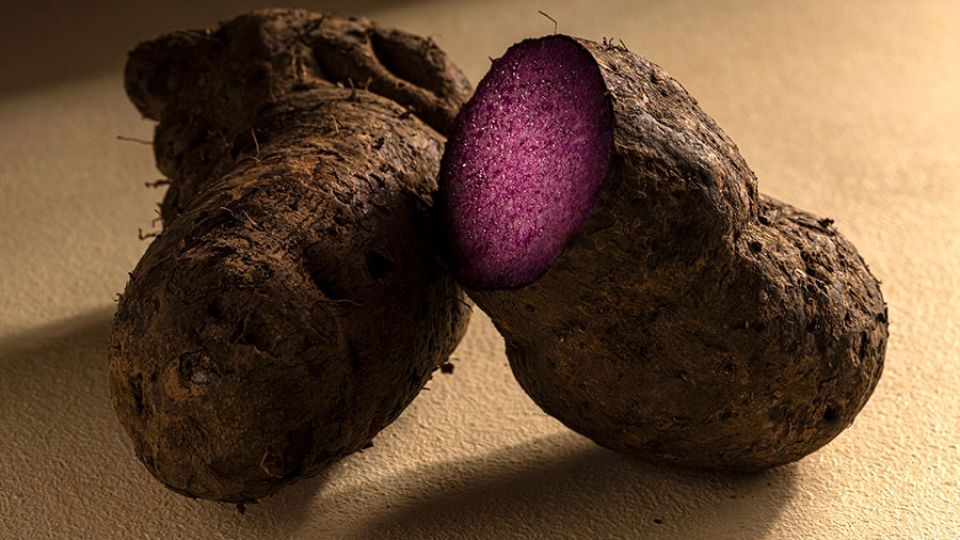
MANILA – In the Philippines, ube is a staple. In the United States and everywhere else, it’s the trendiest flavor to hit after matcha. And while ube has been on the international food scene since the mid-2010s, when non-Filipino lifestyle publications named ube as a “hot Instagram trend”, the once-nascent food fad now seems to be reaching its peak after Starbucks chains in countries such as the US and the UK have now launched drinks featuring the local purple tuber.
As Filipino food abroad has been finally seizing its moment in recent years after having been touted incessantly as the “next big thing,” the rise of ube appears to be an indicator of our local cuisine finally hitting the mainstream.
However, the reality of this “good news” seems to be more complicated.
For James Zarsadiaz, a Filipino American history professor at the University of San Francisco, the popularity of ube abroad and being peddled by large corporations such as Starbucks appears to come at the expense of having its identity diluted.
“We are losing ube’s Filipino identity abroad. Many in the US have heard about ube, they know the ingredient but they don’t make the connection that it is part of Filipino culture,” Zarsadiaz says, adding that while the intention is not to gatekeep the ingredient to foreign audiences, it was important for businesses capitalizing on the trend to honor the origin and cultural meaning of ube to Filipinos both in the homeland and in the diaspora—a staple crop and a fixture in celebratory dishes and special occasion treats.
“We are losing ube’s Filipino identity abroad. Many in the US have heard about ube, they know the ingredient but they don’t make the connection that it is part of Filipino culture”
Already, we are seeing non-Filipino influencers sipping on their Starbucks “oob” drinks, much to Filipinos’ chagrin. And it still continues to be confused with other tubers such as taro or sweet potato, which only adds to the identity crisis.
The country’s star export?
In the past years, the Philippines was always just on the cusp of harnessing the promise and opportunities ube presented, perpetually poised to turn ube into its star export—with a report from 2023 finding that ube still had an “untapped export potential” especially as a high-value product.
Figures from the Department of Trade and Industry show that shipments of purple yam reached US$3.06 million in 2025, nearly double its exports in 2024 at US$1.4 million.
While an impressive jump, the Philippines needs to act quickly before being left behind in maximizing its own crop, with countries such as China and Vietnam already growing ube and, in instances, filling the Philippines’ own shortfalls in supply.
We are already struggling to keep up with demand: According to the Philippine Statistics Authority, 13,535 metric tons of ube were produced in 2022, down from over 15,000 metric tons in 2021.
These challenges are not lost on those working with ube farmers as they strive to maintain a sustainable supply.
“The increasing global interest in ube presents both an opportunity and a responsibility,” AtoANI, an agricultural venture that runs the Bohol Ube Project, says. “Through the Bohol Ube Project, we are working closely with farmer groups in Bohol who have 20 to 30 years of experience growing ube, while also engaging younger farmers to ensure continuity of knowledge and long-term sustainability of the industry.”
“The increasing global interest in ube presents both an opportunity and a responsibility,” AtoANI, an agricultural venture that runs the Bohol Ube Project, says
“At the same time, we are strengthening our processing capabilities to develop ube products that match the requirements of international markets. This includes aligning product specifications with intended applications. We are also coordinating with government agencies and academic institutions to support both production and innovation,” they say, adding that their goal is to increase ube tuber production while continuously improving processing to meet export demand—strengthening the ube value chain by supporting farmers, improving processing, and developing export-ready products.
Camelle Morta Singh, who founded the initiative Lunti at Lila Co that works with distressed corn farmers in Pangasinan by pivoting to ube, shared similar experiences.
From growing their coverage from one hectare to 12 hectares and producing a yield of 17 to 20 tons per hectare annually, Singh finds that even their impressive growth is not enough to meet the ravenous demand for ube.
“Now the challenge is scaling. Buyers are coming to us. I thought 12 hectares would be enough, but it’s not. To meet demand, I need to produce around 100 tons per month,” she says, adding that the time it takes to grow ube—about a year—presents difficulties in meeting that demand.
Even attempts to process raw ube into finished products are challenging. “If you process ube into powder, the yield is very low. In our trial, 50 kilos of raw ube produced only one kilo of pure ube powder,” Singh says.
For AtoANI, producing high-quality ube also requires respecting the natural growth cycle of ube instead of accelerating it.
“Our approach is rooted in aligning this market demand with sustainable production systems. Through the Bohol Ube Project, we focus on developing processed ube products tailored to export markets, particularly in Europe, where there is strong and increasing interest,” they say.
“Our approach is rooted in aligning this market demand with sustainable production systems. Through the Bohol Ube Project, we focus on developing processed ube products tailored to export markets”
For both Singh and AtoANI, growth also begins by expanding the opportunities beyond their communities.
“We work with international buyers who understand the realities of ube production and value sustainably sourced ingredients. At the same time, through AtoANI’s FaaS model, we activate idle land by connecting landowners to market opportunities, while providing crop planning, technical support, and direct market access. This model also creates additional income streams for smallholder farmers, who can cultivate these lands as part of the production system,” AtoANI says.
Meanwhile, Singh has launched the Ube Skwela program, a training program for aspiring ube farmers, with Lunti at Lila helping purchase their crops upon harvest.
Protecting Philippine ube
As countries such as China capitalize on their ability to grow and harvest at scale, immediately meeting demand at more competitive rates, the Philippines has its work cut out for it. So, what now?
For AtoANI and Singh, it would be difficult for the Philippines to try to catch up to the level of scale of China and other countries, with infrastructure and supply constraints. Instead, it’s about focusing on what we can offer—organically and sustainably grown premium produce.
As countries such as China capitalize on their ability to grow and harvest at scale, immediately meeting demand at more competitive rates, the Philippines has its work cut out for it. So, what now?
“Importantly, many of our export partners require ube to be grown using sustainable and regenerative practices. This aligns with our capacity-building efforts, where we train both experienced and new farmers in heritage-based and regenerative farming methods. In doing so, we ensure that increased production is not only scalable, but also environmentally responsible and fully aligned with market requirements,” AtoANI says.
While other countries may scale production, the Philippines, particularly Bohol, has a distinct advantage in authenticity and quality, they added, with ongoing efforts by Bohol’s provincial government to secure Geographical Indication (GI) recognition for Bohol’s ubi kinampay variety, reflecting its unique characteristics, heritage, and growing conditions.
It would be similar to how Italy has recognitions for its products, such as Parmiggiano-Reggiano, France for Champagne, and India for Darjeeling tea, which could help in protecting against mislabeling and other misleading claims.
“We have shared product samples with international buyers and hosted visits from interested European buyers, whose feedback consistently highlights a preference for Philippine-grown varieties. Notably, we are also seeing a shift in sourcing behavior, one European buyer that previously sourced from China, who contacted us, is now exploring the Philippines specifically for products made from regeneratively grown Philippine ube, reflecting the growing importance of sustainability in purchasing decisions,” AtoANI says, adding that the Philippines can remain competitive by focusing on three key factors: quality, sustainability, and alignment with market needs.
“While other producers may compete primarily on volume, our strength lies in delivering high-quality, sustainably grown ube with a strong cultural and geographic identity, qualities that are increasingly valued in global markets.”
“The opportunity for the Philippines is to grow volume in a way that does not compromise quality or sustainability, ensuring that as we expand, we continue to deliver the standards that differentiate Philippine ube in the global market,” it adds.
However, the government should play a role here, too. “First, the government needs to regulate the export of raw ube. It’s already happening: Raw ube is being sent abroad. That allows other countries to propagate it. Second, the government should proactively support farmers, especially those with existing knowledge, so this can be shared throughout communities, and not wait for farmers to approach them. Third, financial support needs to be timely and sufficient. Delays make it ineffective,” Singh says.
“First, the government needs to regulate the export of raw ube. It’s already happening: Raw ube is being sent abroad”
“To fully unlock the industry’s potential, stronger and more intentional collaboration between government and private enterprises is essential. Efforts should not only aim to increase production but also to build processing capabilities that meet specific market requirements in terms of quality, format, and volume,” AtoANI adds.
It’s a long way ahead, but it’s not too late for the Philippines to turn the tides on ube.