

March 24, 2026
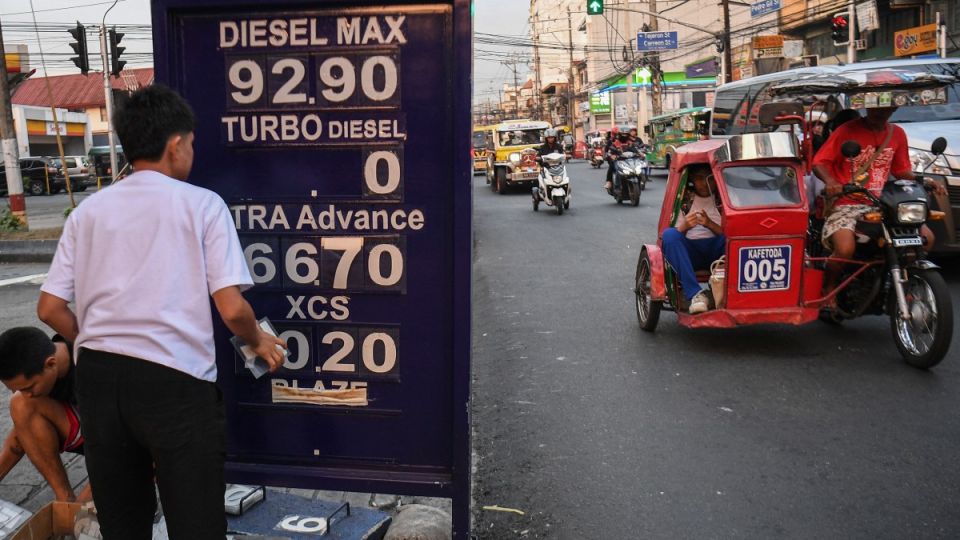
MANILA – Energy Secretary Sharon Garin’s candid admission of a potential “worst-case scenario” of fuel depletion is not merely a bureaucratic warning—it is a stark declaration that the Philippines stands at the precipice of an unprecedented national crisis. With the government acknowledging only 50 to 60 days of fuel supply remaining since tensions escalated on February 28, every Filipino household faces an existential threat that extends far beyond the inconvenience of rising pump prices. The specter of complete fuel depletion looms ominously over April and the months that follow, and the gravity of this situation cannot be overstated.
Let us be unequivocal: a fuel supply collapse would systematically dismantle the infrastructure upon which modern life depends. Secretary Garin herself acknowledged the terrifying reality: “Worst case really is we won’t have enough, or we won’t have any.” This is not hyperbole. This is the government’s own assessment of the abyss we are approaching. “If we don’t have any diesel or any oil, our public transportation won’t go. Our sea, air transport will be affected.” She might have gone further—without fuel, our entire civilization grinds to a halt.
The government’s announcement that it is considering securing one to two million barrels of oil as a contingency supply is, frankly, too little and far too late. This represents a desperate scramble after months of complacency. The fact that the Philippines has historically relied on private companies to maintain fuel reserves—a 15-day replenishment cycle—reveals a shocking lack of strategic planning. We have known for decades that fuel security is critical to national survival, yet we have left ourselves dangerously exposed.
Moreover, the government’s willingness to “pay whatever premium” for emergency supplies is a tacit admission that we will face astronomical fuel prices in the months ahead. Every household now will bear this cost through skyrocketing prices for food, transportation, electricity, and medicine. We Filipinos are justifiably proud of our resilience through typhoons, financial collapse, pandemics, and countless calamities. Every time, history confirms we did survive. But today, history is a dangerous teacher. We face a crisis unlike any in its past—one that cannot be survived through the mechanisms that have always worked before. An extended oil shortage triggered by the closure of the Strait of Hormuz would expose a fundamental vulnerability: our total systemic dependency on oil that cannot be quickly replaced, cannot be imported from unaffected regions, and cannot be compensated for by adaptation or community spirit alone.
We must stop assuming that resilience alone will save us. We must begin planning as if our survival depends on it—because it does.
In past crises, we faced challenges that, however severe, retained some element of workaround. In the 1997 Asian Financial Crisis, the peso collapsed but oil imports could still arrive; the economy could be restructured. In the 2008 food crisis, rice prices soared but alternative crops could be planted, and aid flowed in. In Typhoon Yolanda, one region was devastated but others sent help. In COVID-19, the economy contracted but people could shift to remote work and deliveries.
Without oil, Government collapses: Police cars sit idle, Military operations cease. Officials cannot reach offices. The state apparatus that coordinates crisis response becomes immobilized. Without oil, food distribution breaks down, trucks cannot move, farmers cannot reach fields, markets cannot stock shelves. And within weeks, hunger spreads,. Water systems fail because pumps run on diesel and cities become thirsty. Power generation stops, thermal plants that provide baseload power shut down and blackouts cascade. Healthcare fails, ambulances cannot run. generators power down and hospitals become warehouses of the dying, not healing.
Imagine the possible sequences happening within weeks or months.. Oil supplies tighten. Panic buying begins. Diesel prices spike to P150 per liter and other fuels up 60%. The government announces rationing. Black markets emerge. Long-distance trucking becomes sporadic. Food shipments from provinces slow. Supermarket shelves begin to empty. Hospitals report fuel shortages. Inter-island shipping halts. Mindanao and the Visayas face acute shortages. Agricultural production stalls—farmers cannot reach fields, cannot transport harvests. Hunger begins in rural areas.
This is not a sectoral crisis. This is a “civilizational crisis”—a moment when the basic infrastructure of modern society seizes up.
We import approximately 95% of our oil. Compare this to other countries that have invested in energy independence, and recognized that energy security is national security. Our former national leaders from 1986 or from Cory, FVR, Erap, Pnoy, Digong and until today, Bongbong, practically did nothing . We drifted along, assuming global oil markets will always supply us, that prices will remain manageable, that alternatives will appear when needed.
After April, the question is no longer “when will oil return?” Will supplies resume in weeks? Months? Years? But “will our society hold together?”
This is not speculation. This is the logical outcome of removing a foundational resource from a system built entirely upon it. The geopolitical closure of the Strait of Hormuz has no clear endpoint. The uncertainty itself becomes destabilizing.
When people cannot foresee an end to deprivation, social behavior shifts fundamentally. Early-stage cooperation and sacrifice give way to panic and self-preservation. After 2-3 weeks of sustained scarcity, the Filipino tradition of bayanihan erodes. Neighbors compete rather than cooperate. Hoarding replaces sharing. Rumors and conspiracy theories flourish.
Social media, which can amplify both truth and falsehood at the speed of light, becomes a vector for panic. False narratives spread faster than official communication can counter them. Trust in institutions evaporates. When trust collapses and uncertainty persists, the risk of mass unrest rises exponentially. History shows revolutions and violent upheavals are not triggered by absolute deprivation but by the loss of hope that deprivation will end. We are facing exactly this condition.
And the saddest thing, our nation drifts toward this crisis unprepared, not because the threat is unknown, but because the present political system is structurally incapable of responding to it. Most politicians from both sides, Pro-Marcos or pro-Duterte, even incentivize crisis response thru their gimmickry rather than uniting and helping in its solutions.
And today, we do not have the luxury of waiting for political consensus or perfect planning. If it is total systemic collapse, there may be nothing left to endure with.
The time for half-measures and political theater has passed. The time for real preparation, real investment, and real leadership is now.
The whole nation must immediately act. Not because crisis is certain, but because the stakes of being wrong is too high to be ignored. Our survival depends on it. (next)
Call to all families to take action
In the coming weeks, various analyses and commentaries about this crisis will hound us. Critics may even call this writer a fear-monger , doom-sayer, a pessimist or alarmist.
But if they wanted me to think that government, both administration and opposition, can help us in the weeks ahead, I don’t think so. Which is why I am calling on all of Filipino families to begin preparations this week. Not next month. Not when the crisis seems more imminent. This week.
Have your own family meeting. Discuss the possibility of an oil crisis. Create a plan. Assign roles and responsibilities. Establish communication protocols. Start storing supplies. Buy first weeks’ worth of extra food and water.
Organize your trusted neighbors for a preparedness discussion. Form a crisis response committee. Establish a communication network. Start planning collective projects.
Learn a skill. First aid. Food preservation. Water purification. Gardening. Bicycle repair. Basic carpentry. Every skill you learn increases your value to your community and your capacity to contribute to collective survival.
Every Filipino household must understand what lies ahead. April 2026 may mark the beginning of the most severe crisis this nation has faced in decades. Without immediate and decisive action, without massive fuel reserves secured at any cost, and without honest communication about the severity of the situation, we face the prospect of a nation brought to its knees by fuel scarcity.
This is not a time for reassuring platitudes. This is a time for truth, urgency, and extraordinary measures. The government must act now, or we all will pay the price in hunger, unemployment, and suffering.