

January 23, 2026
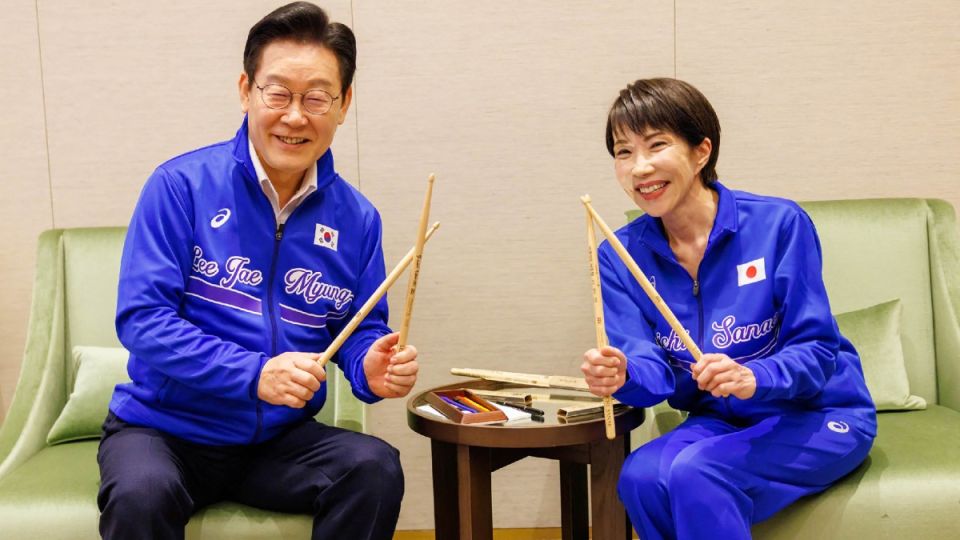
SEOUL – A week ago, South Korea’s President Lee Jae Myung and Japan’s Prime Minister Sanae Takaichi drummed to “Golden” from “KPop Demon Hunters” and BTS’ 2020 smash single “Dynamite.” It’s not the first time that K-pop has been so prominently displayed in the flexing of Korea’s soft power. However, this particular event was especially memorable and full of symbolism of the past and future of Korea-Japan relations. It also highlighted the leaders’ deft diplomatic skills.
I am reminded that when Japanese Prime Minister Takaichi was first elected I read many stories about how she was a “huge BTS fan.” Somehow, I knew this would one day become relevant to her diplomatic strategy.
This news story received overwhelming positive coverage in the Western press. As a K-pop and Hallyu fan, I was excited by this meeting, but also somewhat bewildered by the exchange. I do not usually quote the Daily Mail, but their Instagram post stated, “It’s kind of surreal, but it actually happened,” which exactly describes what I felt. On the surface, it seemed like a simple and innocent jam. Upon further inspection, every detail about it seems purposeful and planned.
What inspired this duet? According to the prime minister’s post on X, she described that “when we met at APEC last year, (Lee) said it was his dream to play the drums, so we prepared a surprise.” It turns out Takaichi had been a drummer in a heavy metal band in her younger days. I’m no drummer, but when watching their performance, it’s pretty obvious that she’s experienced, while the Korean president is a novice.
They both played on Pearl drum sets, an iconic brand of drums manufactured in Japan starting in April 1946. The equipment is so widely used in pop and rock music and ubiquitous on stage that I didn’t notice it at first. Their duet took place in Nara, Japan, Prime Minister Takaichi’s hometown.
Still, they performed two well-known K-pop songs — recognizable not only to both leaders, but also to anyone watching their performance. It’s a clear sign of Korea’s dominance in pop music production. Japan is a major consumer of Hallyu, and BTS previously dominated its Oricon singles chart. “Golden” also reached No. 7 on the Billboard Japan Hot 100 in November 2025.
Additionally, Lee gave Takaichi a drum set made by Markers, a Korean brand that began its production in 2017. He also presented traditional drums from a Korean lacquerware artisan. I guess he wanted to express that Korea, in the past and the present, had its own traditions separate from those of Japan.
The strangest part of their appearance together was that during their performance, they wore matching blue tracksuits embroidered with the name “Lee Jae Myung.” I could not figure out what this meant. Were they part of his new rock band or on the same softball team? Certainly, the choice of blue is symbolic as well.
I am enamored with K-pop, but I am no expert on international relations between Korea and Japan. So, I asked my colleague Charles McClean, an assistant professor of political science at Yale University, what he thought of this unique meeting.
He explained that this was particularly memorable because “Takaichi Sanae and Lee Jae Myung are not the kind of pairing that typically produces warmth in Japan-Korea relations. A conservative Japanese leader and a liberal Korean president would, in the past, more often have clashed over history than bonded over culture.”
He believes that Japan is a fan of the Korean Wave and that K-pop “enjoys deep and generally broad appeal.” Takaichi herself is a fan of BTS, so she uses it to “signal openness to a more future-oriented relationship.”
Of course, Japan became first enamored with Korean TV dramas via 2002’s “Winter Sonata.” It didn’t reach Japan until 2004, but was a big hit in Japan and prompted many viewers to visit locations in the film. I don’t think anyone can see a bicycle on the small island of Namiseom and not immediately think of the show.
McClean explains that “this kind of cultural diplomacy lowers the emotional temperature for a relationship long defined by challenging historical issues. In a moment of regional uncertainty … (a) shared appreciation for popular culture may offer a surprisingly durable foundation for trust-building between Tokyo and Seoul.”
Will there be more joint performances by the leaders of South Korea and Japan? I don’t know. But, I suspect that we’ll see Takaichi at one of the BTS concerts in Japan singing along to “Spring Day” or “Bapsae.”
After all, one of the perks of being a head of state is the ability to get tickets to BTS concerts on one’s own turf.
Grace Kao
Grace Kao is an IBM professor of sociology and professor of ethnicity, race and migration at Yale University. The views expressed here are the writer’s own. — Ed.