

March 26, 2026
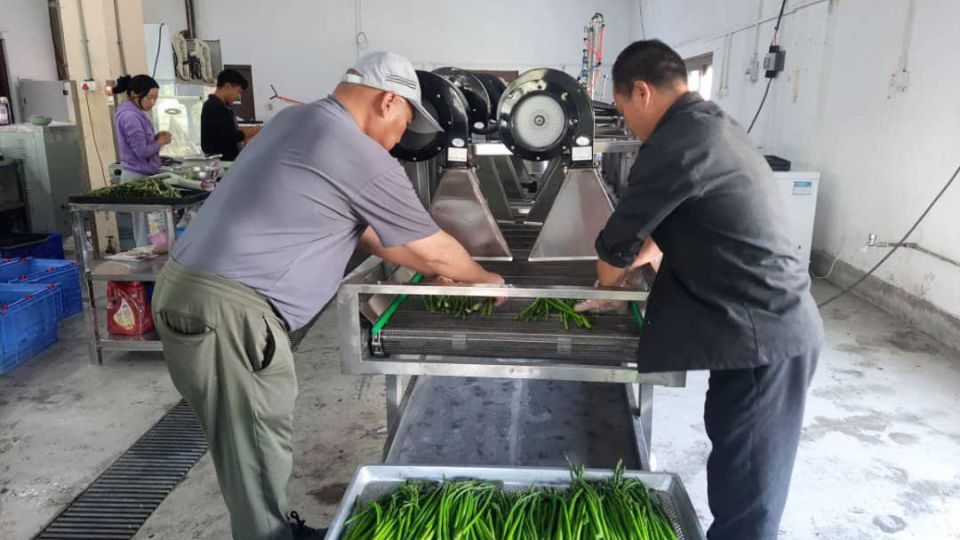
THIMPHU – A bundle of asparagus wilts within a week after harvest, but blast freezing can preserve it for over seven months.
This shows what post-harvest technology can achieve. But in Bhutan, where large volumes of agricultural produce never reach the market, such solutions are still far from the reach of most farmers.
According to studies cited in the Bhutanese Journal of Agriculture under the Ministry of Agriculture and Livestock, more than 40 percent of fresh fruits and vegetables are lost to poor post-harvest handling.
Every year, farmers lose an estimated 8,250 metric tonnes of crops, valued at Nu 171.75 million to wildlife.
Together, these losses expose deep cracks in the agricultural value chain, eroding farmers’ incomes and threatening national food security.
“Fresh produce is highly perishable and fragile, it requires careful handling and post-harvest management,” said Sujan Pradhan, Principal Post Production Technologist at the National Post Harvest Centre (NPHC) in Paro.
He identified high temperatures, low humidity, and physical injury as the primary causes of spoilage.
The stakes are global. Worldwide, approximately 1.05 billion tonnes of food are wasted annually, which equates to about 79 kilogrammes per person.
“Economic losses for farmers, increased greenhouse gas emissions, reduced food availability, and environmental degradation are major impacts of post-harvest losses,” Sujan Pradhan added.
In Bhutan, the challenge is magnified by a changing climate. Between 2016 and 2022, the country recorded over 32 extreme weather events, from rice blast and heavy monsoon rains to windstorms, hailstorms, and flash floods.
A Senior Agriculture Expert and Consultant warned of a direct link between climate volatility and food security.
“Changes in rainfall and temperature patterns stress agricultural production and increase uncertainty for those dependent on it.” The expert said that even a one percent change in climate reduces food security by 0.043 percent in the short run and 0.165 percent in the long run.
Scientists predict temperatures will rise by 0.8 degrees celsius by the end of the century, accompanied by a 30 percent increase in rainfall. By 2050, agricultural yields could drop by 17 percent, market prices could surge by 20 percent, and consumption could decline by three percent as production patterns shift.
Amid this uncertainty, post-harvest management has emerged as a critical line of defense. It includes the scientific methods, tools, and innovations that preserve produce after harvest, reducing losses while safeguarding food safety and quality.
Yet adoption remains limited.
“Post-harvest work in the country is machine and cost-intensive, yet it brings higher returns than traditional practices,” said Pema Dakpa, an Agri-food Technologist and founder of Jola Enterprise.
He cited multiple barriers, stating, “Insufficient knowledge prevents farmers from fully using these technologies.” Climate-smart agriculture and post-harvest practices, he added, require significant upfront investment, but “limited access to credit slows adoption of climate-smart practices by increasing financial strain.”
The constraints are compounded by low agricultural activity.
Bhutan has approximately 277,000 acres of arable land, which is just eight percent of its total land area and only 23 percent of that is under cultivation. Public investment in agriculture declined between 2010 and 2021, actual spending averaged only 87 percent of planned budgets.
Although infrastructure is available, it remains underutilised. The country has more than 15 cold storage facilities, each with a capacity exceeding 100 metric tonnes, yet most operate well below their potential.
“The government should expand post-harvest management beyond a single NHPC.” While facilities exist, their effective use is limited,” Pema Dakpa said.
Efforts are underway to bridge the gap. The NPHC is promoting solar-powered cold storage units – portable, energy-efficient systems with capacities of five to ten metric tonnes, expected to roll out next year.
In one study, the centre processed 2,500 bundles (1,666 kilogrammes) of asparagus, freezing them at minus 45 degrees Celsius for two hours before transferring them to storage at minus 18 degrees celsius, maintaining a rigorous cold chain throughout.
The government has also pledged to establish cold storage facilities, warehouses, and auction yards across dzongkhags.
An online auctioning system launched last year aims to strengthen market linkages and improve price discovery.
Attention is also turning to packaging and processing, technical disciplines that extend far beyond aesthetics.
“Vegetables should have a moisture content of seven to 10 percent, while fruits should maintain 16 to 20 percent for optimal storage and transport,” Pema Dakpa said.
Crop quality remains another hurdle. Bhutanese potatoes, now in their seventh generation of cultivation, are adequate for domestic consumption but unsuitable for processing or export.
To address this, the National Centre for Organic Agriculture has begun importing climate-resilient potato clones from the International Potato Centre in Peru, along with new varieties from Nepal. Among them is Yusi Maap-2, currently under evaluation at multiple sites.
Agriculture remains a lifeline for nearly 86,000 people in the country, two-thirds of whom are women.