

July 1, 2025
SEOUL – One day in late 2017, after work at the Pentagon, then-US Secretary of Defense James Mattis quietly slipped into the National Cathedral in Washington. Mattis directed his security detail to allow him to enter alone so he could pray and reflect.
“What do you do if you’ve got to do it?” Mattis asked himself. “You’re going to incinerate a couple million people.” He had been in enough wars to know what one on the Korean Peninsula would entail. Now the question for him was how to fulfill his duty knowing his decisions might have epic consequences.
President Donald Trump’s maximum pressure on North Korea included not only draconian economic sanctions but verbal assaults against Kim Jong-un, including “fire and fury” and “nuclear obliteration.” Only the president could authorize the use of nuclear weapons, but Mattis believed the decision would rest on his recommendation.
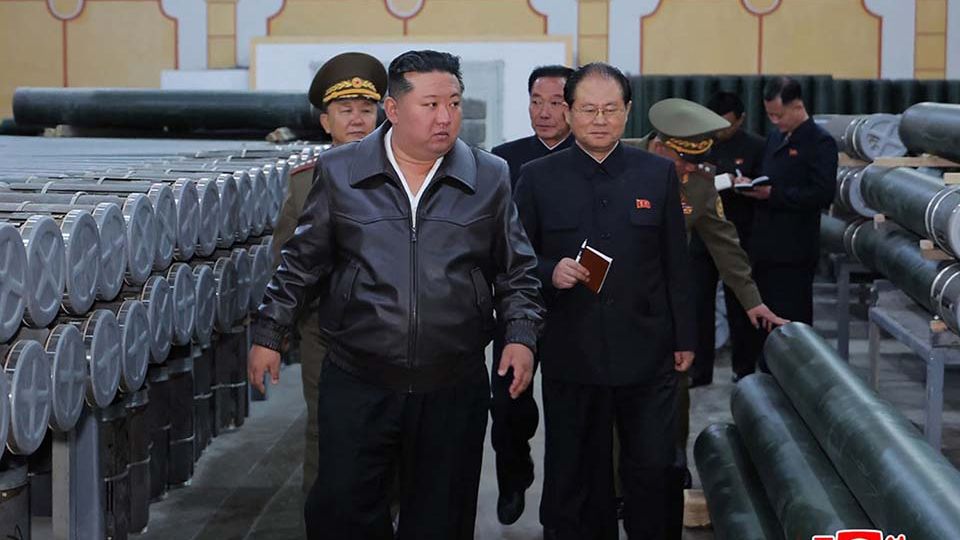
By then, the North Korean leader possessed, for the first time, both nuclear weapons and intercontinental ballistic missiles that could carry a nuclear warhead to the US homeland. Kim had been launching missiles at an alarming rate during the first year of Trump’s presidency, including an unprecedented ICBM on July 4. The North conducted its sixth nuclear test — its most recent one to date — two months later.
In his 2020 book, “Rage,” Washington Post journalist Bob Woodward describes Mattis returning to the cathedral several more times that year “to find peace before the moment came.” Woodward writes that, when he walked out of his last visit, Mattis had cleared the decks: “I’m ready to go to work. I’m not going to think any more about the human tragedy.”
Fortunately, things soon transpired in an entirely unexpected way. Kim offered to participate in the Winter Olympics to be hosted by South Korea in February 2018, setting off a whirlwind of cross-border exchanges, which would culminate in the first-ever summit talks between the United States and North Korea.
In the past six years — from the “no deal” in Hanoi in February 2019 to Trump’s return to the White House for his second term earlier this year — the geopolitical matrix surrounding this peninsula has become tremendously more complicated. Inter-Korean relations as well as ties between Washington and Pyongyang have hit rock bottom. North Korea has noticeably strengthened its position with its renewed partnership with Russia, while the intensifying rivalry between the US and China is fundamentally rocking the global order.
Against this volatile backdrop of international politics, it is with much interest — no doubt with caution as well — that one observes the North’s unusual response to recent events that carry far-reaching significance. Amid the chaotic government turnover in the South and the US airstrikes on Iran’s three key nuclear facilities, Pyongyang has responded with rarely seen restraint and composure.
In the unstable wake of the US strikes in Iran, the North Korean Foreign Ministry expressed its serious concern and denounced the US government for violating Iran’s territorial integrity and the United Nations Charter, but did not mention support for Tehran. The response is unexpected given Pyongyang’s decadeslong friendly relationship with Tehran. The two countries are widely suspected of sharing weapons technology and underground construction know-how.
It can be assumed that Kim Jong-un fears the US capability to carry out precision strikes using bunker-buster bombs. It can also be conjectured that Trump’s unilateral action has only hardened Kim’s determination to further accelerate his nuclear program and deepened his mistrust of Trump’s North Korea policy. But it is too early to discern Kim’s total calculus of the Middle East while developments in the region remain fluid.
No less important, the North has shown reasonable prudence in responding to events in the South. Even when former President Yoon Suk Yeol and his defense chief were accused of trying to provoke the North into a military response to justify martial law, the North remained silent. In the past, such an allegation would have likely triggered bombastic rhetoric and threats.
President Lee Jae-myung has quickly changed the political climate just weeks into his tenure. His picks for key Cabinet posts handling inter-Korean affairs send an explicit message. Chung Dong-young, the unification minister nominee, and Lee Jong-seok, now head of the National Intelligence Service, are known for their pro-detente activities under previous liberal administrations and have expressed commitments to inducing a thaw.
Experience tells us that a breakthrough with the North should be cloaked in cautious optimism. We can expect Lee’s pursuit of peace will continue. Ideally, Kim should respond and take the path to economic development to save the North Korean population from dire poverty — and keep a nuclear nightmare on the Korean Peninsula at bay. The X factor may be the US.
Trump makes no secret of his desire for the Nobel Peace Prize. After taking an outsized role in the Middle East, perhaps he will reengage on the Korean Peninsula, where he often claims he prevented a major war. That could mean an unreliable partner for the Lee administration. Trump likes the spotlight on him alone and insists on setting terms.
Trump’s overture to Kim signifies a rare window of opportunity, but with risks of uncertainty. That burden will fall on Lee, who will have to take cautious steps — one at a time — resolutely and steadfastly toward peace.
Lee Kyong-hee is a former editor-in-chief of The Korea Herald. The views expressed here are the writer’s own. — Ed.