

June 1, 2026
PHNOM PENH – The Angkor Archaeological Park’s long-running wildlife reintroduction programme has entered a new phase with the introduction of two porcupines, marking the first time the species has been brought into the protected ecosystem as part of ongoing biodiversity restoration efforts.
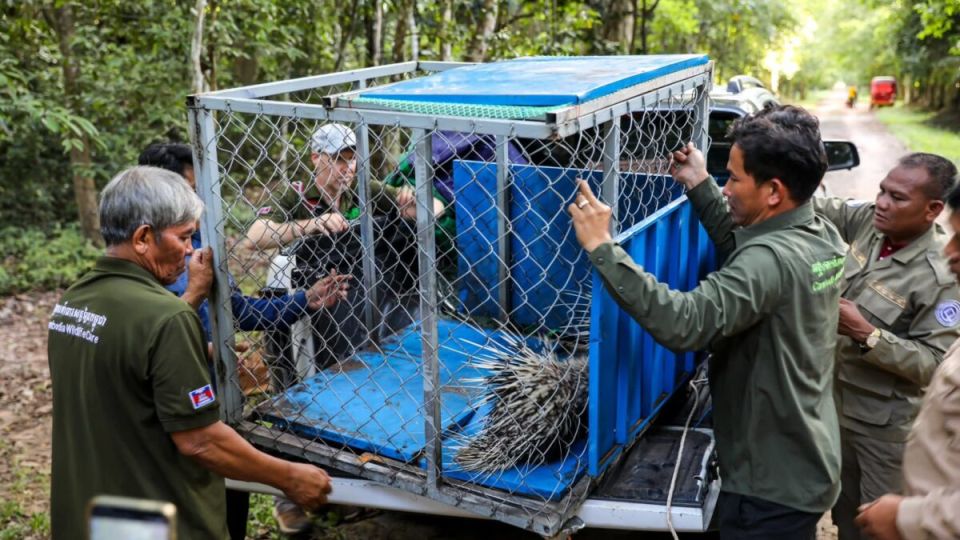
The Cambodia Wildlife Conservation organisation (CWC) presented the two individuals to the Apsara National Authority (ANA) on May 25, for temporary acclimatisation before their planned release into the Angkor forest.
CWC director Try Sitheng said the porcupines were originally obtained from a military commander stationed in O’Smach commune, Oddar Meanchey province.
“The animals had been kept in captivity for several years before being voluntarily transferred for conservation purposes,” said Sitheng.
He said the commander had initially raised three animals, but one died of old age.
Following increased security pressures along the Cambodia–Thailand border and his responsibilities in military service, the officer decided to entrust the remaining two animals to CWC to ensure their safety.
Sitheng was quoted by the ANA as saying that “the decision to relocate the animals to Angkor reflects a broader conservation vision aimed at integrating wildlife protection with eco-tourism”.
“The goal is not only for visitors to see ancient temples when they come to Angkor, but also to experience Cambodia’s natural heritage and wildlife,” he said.
Nick Marx, a wildlife expert with CWC and biodiversity adviser to the ANA, explained that the animals cannot be released immediately into the wild and must first undergo a period of acclimatisation to adapt to their new environment.
“This is the first time porcupines have been brought in for release into the Angkor forest,” he said, adding that careful preparation is essential to ensure survival and successful reintegration into the ecosystem.
Marx also highlighted the ecological importance of the animals, noting their role in seed dispersal through fruit consumption, which helps maintain forest regeneration and biodiversity balance.
ANA deputy director of water, forestry and infrastructure management Chou Ra Dina said porcupines are already present in the Angkor forest, and the addition of two more individuals is expected to strengthen the population.
He expressed hope that the newly introduced animals would eventually integrate with existing wildlife and contribute to breeding in the future.
Since 2013, the Angkor wildlife reintroduction initiative — implemented in cooperation between the ANA, the Forestry Administration and Wildlife Alliance — has successfully released multiple species into the protected landscape.
These include pileated gibbons, red muntjacs, silvered langurs, common palm civets, smooth-coated otters, leopard cats, oriental pied hornbills, great hornbills, wreathed hornbills, peafowl, water monitors and Sunda pangolins, many of which have since established breeding populations.
Conservationists say the latest introduction reflects the continued expansion of Angkor’s ecological restoration strategy, which aims to strengthen biodiversity within one of Cambodia’s most iconic cultural landscapes.